What happened
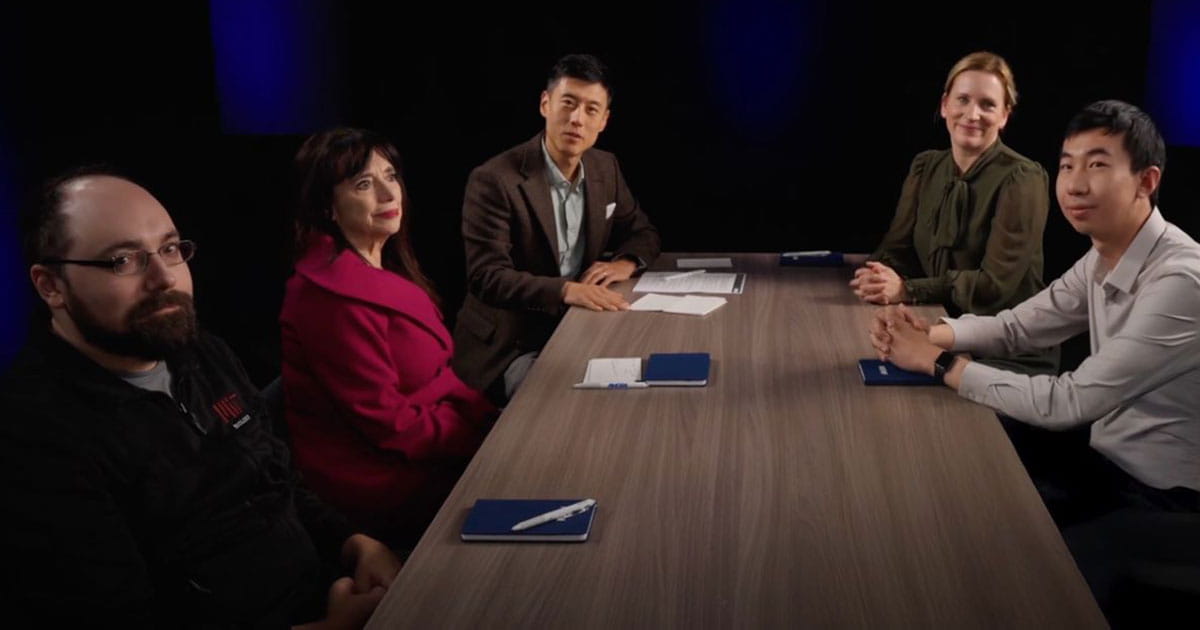
Amgen and leading academic institutions held a roundtable conversation (Meeting the Moment) exploring how AI is shaping drug discovery. The discussion underscores that while AI can help teams analyze complex data, generate hypotheses, and identify patterns, it does not replace the scientific process.
Why it matters
Developing a new medicine typically takes more than a decade. AI offers the potential to help researchers learn faster, but key challenges remain—including predicting how drugs behave in the human body and ensuring safety. The conversation highlights that real progress depends on high-quality data, deeper biological understanding, and expertise and judgment of scientists working alongside these tools.
What to watch
Amgen is investing in this direction through a recent South San Francisco lab expansion designed to support the Design, Make, Test, Analyze (DMTA) process, which brings together chemistry, biology, automation, and data science to generate insights faster and better connect decisions across the research process.
Summaries like this, in your inbox every morning.
The article frames AI in drug discovery as a tool to accelerate learning rather than replace human scientific judgment. Charles Lin, executive director of Research at Amgen, notes that medicines entering the clinic today often began their journey 10 to 15 years ago, underscoring the long timelines that motivate the search for faster approaches. The roundtable discussion identifies a structural shift in the industry: drug discovery increasingly depends on connecting insights across biology, chemistry, data science, and automation to understand how molecules behave over time and across complex biological systems.
The body emphasizes that the hardest questions—safety and real-world effectiveness—span multiple stages of research and cannot be solved by technology alone. By highlighting the importance of the full lifecycle of drug discovery (a cycle of designing, testing, and refining molecules), the article suggests that AI's value lies not in isolated computational gains but in enabling teams to learn from each iteration and connect decisions across the research process. Amgen's South San Francisco lab expansion exemplifies this philosophy, physically co-locating the disciplines needed for the DMTA cycle rather than treating them as separate functions.
Pick your industry and the AI tools you use, and get news related to your work every day.
Free · 30 seconds with Google · unsubscribe anytimeWhat is AIToday? →
Ask AI anything about this article. The AI reads this article, earlier AIToday articles, and Wikipedia, and cites its sources. Q&As are published on this page for other readers too.
OpenAI introduced the Rosalind Academic Plan, giving eligible academic labs at U.S

Wells Fargo hired an AI executive based in San Francisco, a move The Business Journals describes as part of em…

Amazon launched two Bee "personal AI" devices on Thursday: the $74.99 Bee Frontier wristband and the $99.99 Be…

Apple released MLX today, which runs the 816B-parameter Muse Spark Open on four Mac Studios at over 36 tokens…

Bloom Energy stock fell 4% to $229.83, still up 165% year to date, while Caterpillar slipped 3% to $727.55 and…
LogicMonitor announced its 2026 Elevate Award winners at its Elevate Community Conference in Chicago, honoring…