
What happened
Apple researchers introduced a method to measure how LLMs update beliefs from evidence, finding some approaches are near-Bayesian while others use learned heuristics.
Why it matters
Surprisingly, heuristic updates often outperform optimal Bayesian updates on tasks, suggesting LLMs' internal world models are misspecified; the measure could diagnose issues in LLM-powered systems.
What to watch
The study suggests that non-Bayesian updates may be better for downstream performance, pointing to a potential trade-off between statistical optimality and practical utility.
Summaries like this, in your inbox every morning.
The study from Apple introduces a method to quantify how LLMs update their probabilistic beliefs, comparing it to the Bayesian ideal. This is crucial as LLMs are used in domains like medicine and law, where uncertainty is inherent and decisions must be rational. The finding that heuristic updates often outperform Bayesian ones suggests that the models' internal representations are misspecified, meaning they don't perfectly match reality. This is a counterintuitive result, as Bayesian updates are mathematically optimal for information processing. The diagnostic potential of the measure could help developers identify and fix issues in LLM-powered systems, though the study stops short of proposing specific fixes. The research underscores the need for better understanding of how LLMs handle uncertainty, rather than assuming they follow classical probability rules.
Pick your industry and the AI tools you use, and get news related to your work every day.
Free · 30 seconds with Google · unsubscribe anytimeWhat is AIToday? →
Ask AI anything about this article. The AI reads this article, earlier AIToday articles, and Wikipedia, and cites its sources. Q&As are published on this page for other readers too.
ElevenLabs completed a $300 million employee tender at a $22 billion valuation, and co-founder Mati Staniszews…

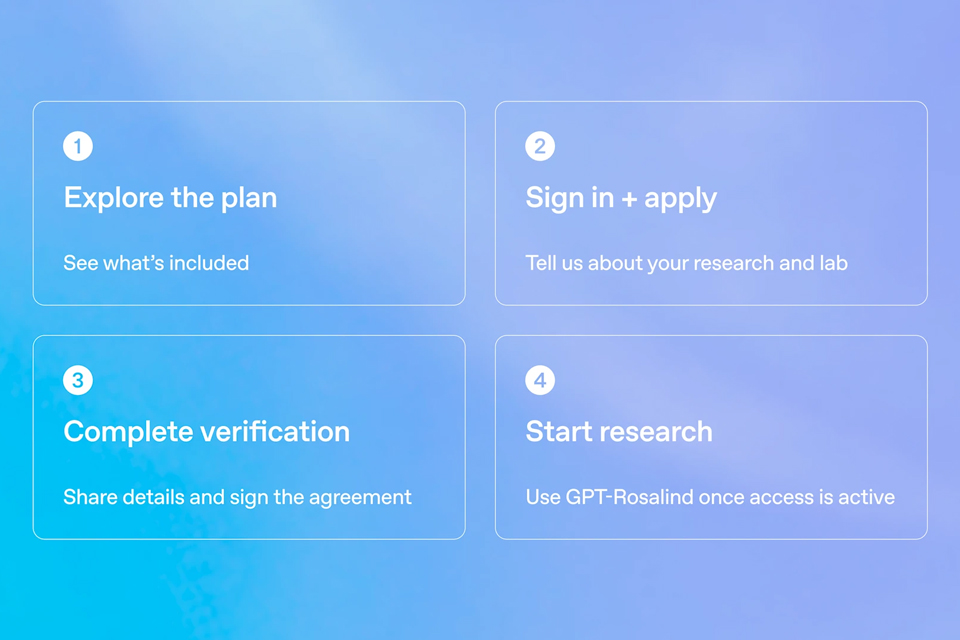
On October 15, OpenAI announced the Rosalind Academic Plan, giving approved US university labs free access to…
A Qiita article compared automated red-teaming methods for LLM apps — GCG, PAIR, and TAP — using mock implemen…

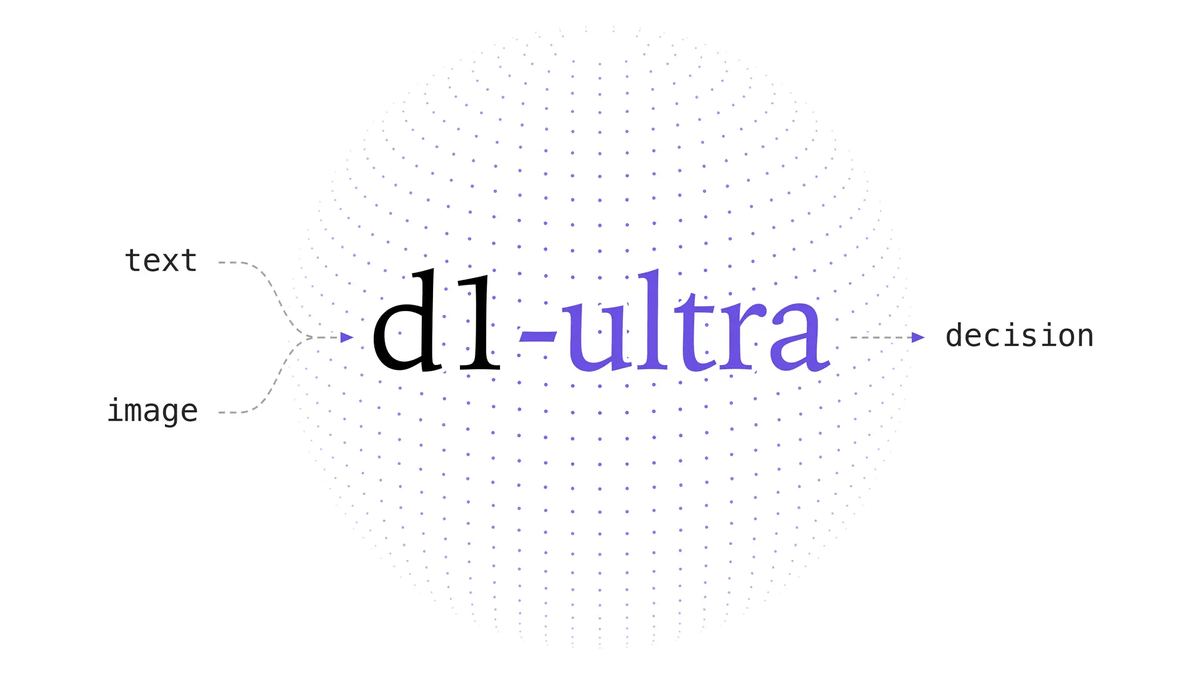
Liquid AI released d1-ultra on October 15, 2026, an upgraded open-weights decision model that averaged 76.7 ac…
Circlia started a proof-of-concept for TASTE SIGNAL: visitors to Holland Village Cafe FUKUOKA taste cookies an…

In a webinar hosted by French Mathematical Society president Isabelle Gallagher, Fields Medal winner Hugo Dumi…

