What happened
Qualcomm Technologies and BMW Group announced a multi-year agreement for Qualcomm to provide compute silicon—including Snapdragon Digital Chassis solutions, Snapdragon Elite automotive platforms, and AI accelerators—for BMW's next-generation digital cockpit and advanced driver assistance and automated driving systems through the next decade.
Why it matters
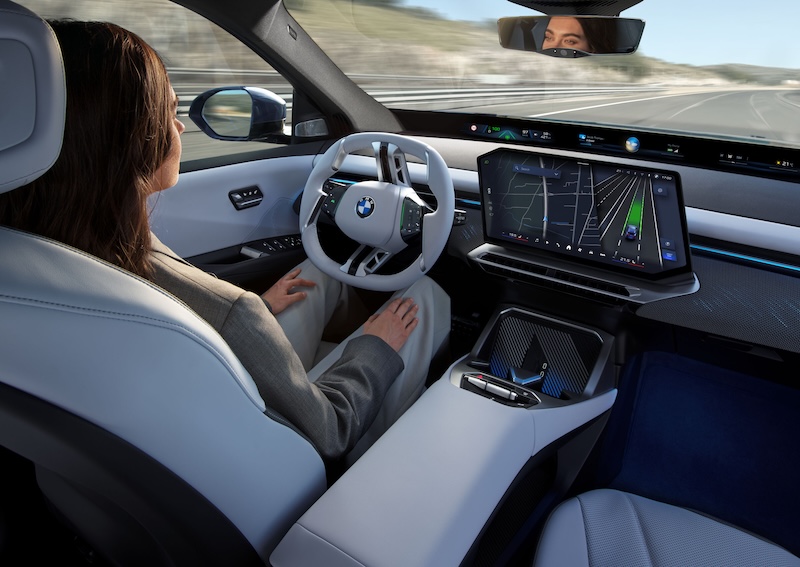
The deal builds on years of technical collaboration and most recently the November 2025 commercial launch of Snapdragon Ride Pilot in the BMW iX3, which powers BMW's Symbiotic Drive experience that integrates the driver into the automated driving system. The agreement positions Qualcomm as BMW's lead compute silicon provider for a critical vehicle generation at a time when AI-powered autonomous driving is becoming central to automotive strategy.
What to watch
The Snapdragon Digital Chassis is built on more than two decades of Qualcomm investment in automotive-grade silicon and software, and is designed to enable the vehicle to function as a unified intelligent system by allowing purpose-built solutions to work together on a common architecture.
Summaries like this, in your inbox every morning.
Qualcomm and BMW's agreement represents a significant validation of Qualcomm's automotive compute strategy at a moment when autonomous driving and AI integration have become central competitive battlegrounds in the vehicle industry. The deal is not a new partnership but rather a formalization and expansion of existing collaboration that stretches back years and has already yielded a commercial product: the Snapdragon Ride Pilot launched in the BMW iX3 in November 2025. That launch demonstrates both companies' commitment to translating their technical work into delivered features in real vehicles.
The breadth of the agreement—spanning digital cockpit, driver assistance, and automated driving systems—positions Qualcomm's Snapdragon Digital Chassis as the computational backbone for BMW's next-generation vehicles. Qualcomm's framing of the partnership emphasizes the architectural coherence of its platform: solutions purpose-built for individual domains yet designed to work together, enabling the vehicle to function as a unified intelligent system. This integration approach may matter more than any single chip as automakers increasingly rely on coordinated AI processing across multiple vehicle functions.
Pick your industry and the AI tools you use, and get news related to your work every day.
Free · 30 seconds with Google · unsubscribe anytimeWhat is AIToday? →
Ask AI anything about this article. The AI reads this article, earlier AIToday articles, and Wikipedia, and cites its sources. Q&As are published on this page for other readers too.
In Q2, billionaires or their funds sold six 'Magnificent Seven' AI stocks

Nvidia was rising early Friday, even as the wider chip sector kept falling, Barron's reported

ElevenLabs completed a $300 million employee tender at a $22 billion valuation, and co-founder Mati Staniszews…

On October 15, OpenAI announced the Rosalind Academic Plan, giving approved US university labs free access to…

JR Central announced the S0系 on October 16, its first full model change since the N700S, with commercial servi…

Neostellar Capital principal Evan Schlossman said CoreWeave's $103.7 billion in remaining performance obligati…


