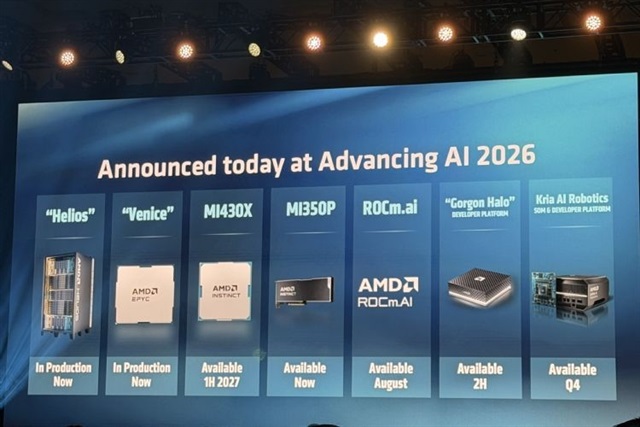
AMD has launched ROCm.ai, a new development platform aimed at making it easier for developers to build agentic AI applications on AMD hardware. The platform claims to achieve up to 3.3x inference performance gains. This move is part of AMD's strategy to build a competitive software ecosystem around its AI chips, directly challenging NVIDIA's dominant CUDA platform.
Summaries like this, in your inbox every morning.
Sign up free →What happened
AMD unveiled ROCm.ai, a new AI-native development platform, at its Advancing AI 2026 event. The company reports the platform delivers up to 3.3x inference gains and is designed to accelerate agentic AI development.
Why it matters
AMD is building its software ecosystem to compete with NVIDIA's CUDA, which has dominated GPU programming for years. A stronger software layer makes AMD's AI hardware more attractive to developers and reduces switching costs for companies considering alternatives to NVIDIA.
What to watch
ROCm.ai is part of AMD's broader effort to expand both its AI hardware portfolio and software offerings. Success depends on whether developers adopt the platform and whether it meaningfully closes the gap with CUDA's ecosystem maturity.
AMD announced ROCm.ai at its Advancing AI 2026 event, positioning it as a purpose-built platform for agentic AI development. The company reports that ROCm.ai delivers up to 3.3x inference gains, a figure meant to highlight performance advantages for workloads running on AMD's AI hardware. The launch is part of a broader AMD strategy to fortify its AI software ecosystem and directly counter NVIDIA's long-standing CUDA dominance. CUDA has been the de facto standard for GPU programming and machine learning development for over a decade, creating significant switching friction for developers and enterprises already invested in NVIDIA's tools and libraries. By bundling hardware expansion with software platform improvements, AMD aims to make its AI chips a more complete and competitive offering. The success of ROCm.ai will depend on developer adoption and whether the platform matures quickly enough to rival CUDA's depth and stability.
AMD's ROCm.ai launch reflects a strategic pivot in the competition for AI dominance. While NVIDIA has long held a lead through CUDA—a comprehensive software platform that makes its GPUs easier to program—AMD has historically struggled to match that ecosystem depth. By introducing ROCm.ai as an AI-native platform, AMD is attempting to lower the barrier for developers to build on its hardware and reduce the switching costs that lock customers into NVIDIA's stack. The reported 3.3x inference performance gain is a concrete technical claim designed to demonstrate practical value. This move signals that AMD understands software ecosystem strength is as important as raw hardware capability in winning enterprise and developer adoption.
AI-summarized, only the topics you pick — one digest a day via Email, Slack, or Discord.
Free · takes 30 seconds · unsubscribe anytime
No comments yet. Be the first to share your thoughts!
Log in to join the discussion


Get curated AI news from 200+ sources delivered daily to your inbox. Free to use.
Get Started FreeFree · takes 30 seconds · unsubscribe anytime
1 minute a day. The AI essentials.
200+ sources · Email / LINE / Slack