What happened
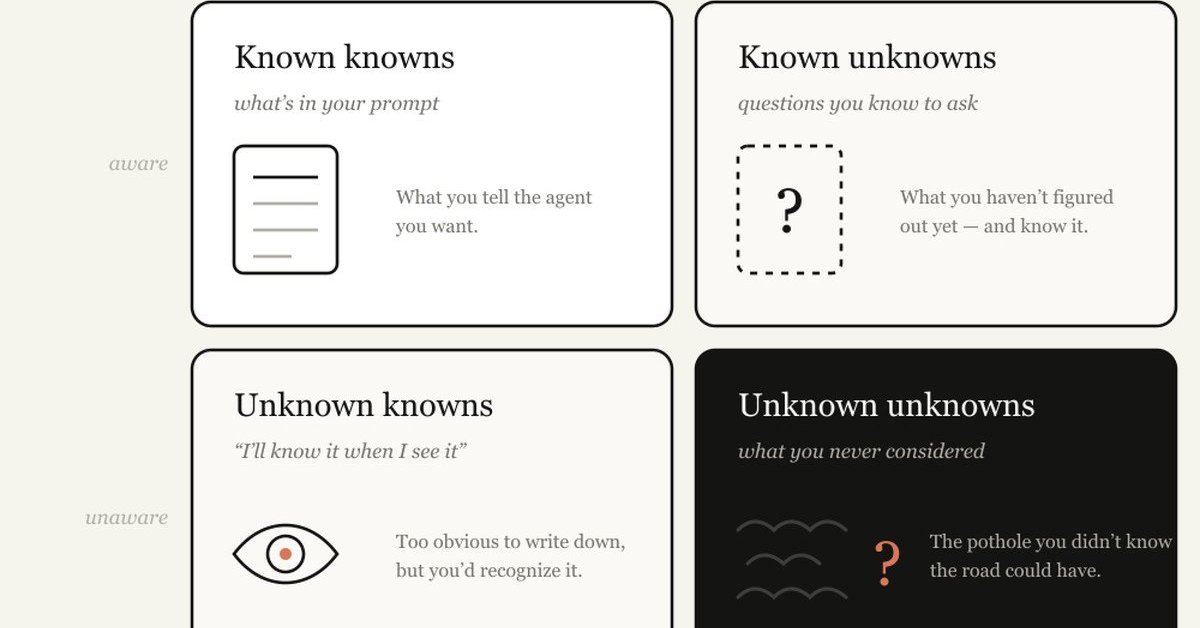
Anthropic published a usage guide for Claude Fable 5 on July 6, outlining how engineers can improve their work with the AI model by identifying and reducing "unknown elements"—gaps between what they know and what the codebase actually requires. The company's engineer Tariq Shihipar described a four-category framework (known knowns, known unknowns, unknown knowns, unknown unknowns) to surface hidden constraints before and during implementation.
Why it matters
When users give vague instructions to AI coding tools, the AI cannot see the real-world constraints embedded in existing code—much like a map cannot capture every geographic obstacle. By clarifying these blind spots upfront, developers can reduce costly revisions later and make more effective use of Fable 5 during both planning and execution phases.
What to watch
Shihipar recommends starting each project by asking Claude to help identify what you don't yet know, then using brainstorming, prototyping, and AI interviews with reference materials to fill gaps. He also suggests documenting exceptions, creating post-implementation explainers, and turning AI changes into quizzes to verify understanding of what was actually built.
Summaries like this, in your inbox every morning.
Anthropic's guidance reflects a practical challenge in AI-assisted software development: the gap between what a human can articulate in a prompt and what an AI actually needs to know to write correct code. The framework Shihipar outlines—borrowed from Donald Rumsfeld's epistemological distinctions—applies that abstract concept to the concrete work of coding. The emphasis on surfacing blind spots before implementation mirrors standard software engineering practice (requirements gathering, design review), but suggests that AI tools require unusually explicit articulation of context and constraints.
The post-implementation techniques (documenting exceptions, creating explanatory artifacts, quizzing the model) suggest that even with careful upfront planning, deviations and misunderstandings will occur. By building records and verification into the workflow, developers can understand what the AI actually changed and explain it to colleagues or stakeholders—addressing a real friction point in teams adopting AI coding tools. Anthropic's focus on cost avoidance (preventing rework) rather than speed gains also signals a mature, pragmatic pitch: the value is not magical acceleration, but reduced waste through clearer communication with the tool.
Pick your industry and the AI tools you use, and get news related to your work every day.
Free · 30 seconds with Google · unsubscribe anytimeWhat is AIToday? →
Ask AI anything about this article. The AI reads this article, earlier AIToday articles, and Wikipedia, and cites its sources. Q&As are published on this page for other readers too.
Vinci4D provides chip-design simulation software that trains on physics equations instead of customer data, an…
SEMI President and CEO Ajit Manocha told DIGITIMES that the semiconductor industry reached the US$1 trillion r…

CoreWeave fell more than 25% this week, its debt yield briefly rose above 16% on Thursday, and SK Hynix droppe…

Nvidia's AI Enterprise lists at $4,500 per GPU annually, and paid subscriptions add supported software, securi…

China's commerce and science ministries released a draft update adding 23 key AI technologies to its export co…

Anthropic told investors this week that it is making 85% gross margins, a figure the columnist calls a cash co…