
What happened
Industry leaders at the PLM Road Map and PDT North America 2026 conference in May identified three persistent disconnects: data remains foundational yet messy for most organizations; users report confidence in validating AI outputs as low as 5%, while solution providers estimate 33% (a 6-fold gap); and solution providers remain optimistic while practitioners express caution. Speakers from Boeing, Eaton, and Cummins shared their journeys, emphasizing AI as augmentation rather than replacement.
Why it matters
A keynote speaker noted that 60% to 75% of PLM projects fail to achieve their original goals, and AI projects face the same pitfalls unless foundational governance, data quality, and process issues are addressed first. For enterprises, the stakes are significant—Eaton reported that while individual AI initiatives save millions of dollars, enterprise-level impact remains around 6%, suggesting that isolated pilot projects do not yet translate to systematic transformation at scale.
What to watch
The industry consensus frames AI in PLM as Augmented Intelligence—human decision-makers in the loop, not wholesale replacement. Data quality and governance are identified as the gating issues; without both, according to speakers, further investment is described as theater. Cummins characterized current AI tools as intelligent without connected product knowledge, a gap enterprises are working to close.
Summaries like this, in your inbox every morning.
Pick your industry and the AI tools you use, and get news related to your work every day.
Free · 30 seconds with Google · unsubscribe anytimeWhat is AIToday? →
Ask AI anything about this article. The AI reads this article, earlier AIToday articles, and Wikipedia, and cites its sources. Q&As are published on this page for other readers too.
Amazon introduced Bee Frontier, a wearable personal AI, for $74.99 in Onyx, Lavender and Sage, and Bee Eclipse…

Wall Street ended down sharply, with worries about the AI trade and high oil prices weighing on the market

Citi has become the latest US bank to restrict AI agents from accessing accounts, per the Financial Times

Dell says its AI Data Platform uses a four-engine architecture and a Unified Semantic Layer to connect siloed…
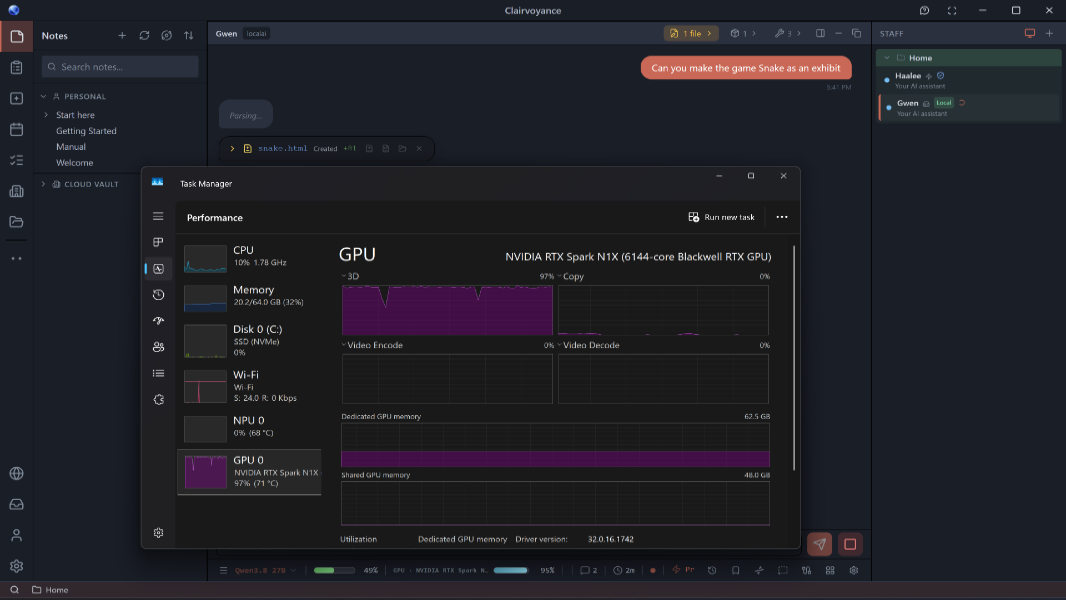
Microsoft and Nvidia are promoting RTX Spark, a new class of Windows PCs for local AI, with a top configuratio…
Microsoft AI CEO Mustafa Suleyman told employees that MAI-Base-2, announced Thursday, is a stronger pre-traine…