
AWS has introduced the AI-DLC (AI-driven development lifecycle), a new software development methodology that places AI models at the center of every phase—from planning and design through coding, testing, and deployment—rather than using them as auxiliary tools.
The framework treats AI as an active collaborator that continuously maintains project context, asks clarifying questions, and autonomously executes tasks while humans retain oversight and approval authority.
This represents a fundamental shift from human-centric methodologies like Agile, allowing organizations to streamline team structure and reduce handoffs by collapsing traditional phase boundaries into continuous, non-linear workflows.
What happened
AWS's Raja SP coined the term "AI-driven development lifecycle" (AI-DLC) in 2025 and published a whitepaper outlining ten principles and a framework that treats large-language models as active collaborators throughout every step of software development, rather than as isolated code-generation tools.
Why it matters
Unlike previous methodologies such as Agile and Scrum—which were built around human coordination—the AI-DLC reimagines the entire development process around machine-human collaboration. AI agents ask clarifying questions, maintain project context, propose designs, generate and validate code, and manage deployment autonomously while humans retain supervisory approval. This potentially allows smaller, more integrated teams to handle the complexity of enterprise systems that once required separate specialist teams.
What to watch
The framework is standardized around AWS tools like Kiro and Amazon Q Developer, but can also integrate with other agentic platforms such as IBM Bob and Claude Code. Organizations are encouraged to adopt the rituals and embed AI-DLC into their own orchestration tools gradually, minimizing disruptive overhauls.
Ask the AI about this article →
The AI-DLC emerges from the recognition that AI fundamentally changes the constraints and possibilities of software development. Earlier methodologies—from Waterfall to Agile—were designed to coordinate human effort within human cognitive and organizational limits. By contrast, the AI-DLC asks what development would look like if AI had always existed as a core participant. The ten principles Raja SP outlines reflect this inversion: rather than bolting AI onto existing workflows, the methodology centralizes design disciplines (Domain-driven design, Behavior-driven development, Test-driven development), continuously preserves context across the entire project lifecycle, and automates handoffs between traditional phases.
The framework's three phases—inception, construction, and operations—blur the boundaries that separate planning from design from implementation. In the inception phase, mob elaboration (a collaborative ritual between human teams and AI systems) translates business intents into user stories and units of work. Steering files, stored as markdown documents, act as persistent constraints and rules that AI agents follow throughout all phases. During construction, AI agents can propose architectures, schemas, and code autonomously, with humans validating and refining. In operations, AI extends beyond deployment to treat production systems as continuous feedback loops. This structure suggests that organizations adopting AI-DLC may reduce the need for handoffs between specialist teams—since AI can maintain context across disciplines—and compress the traditional feedback loops that plagued earlier waterfall and even Agile approaches.
For example, today's edition would include:
AI-summarized, only the topics you pick — one digest a day via Email, Slack, or Discord.
Free · takes 30 seconds · unsubscribe anytimeWhat is AIToday? →
Ask AI anything about this article. Q&As are published on this page for other readers too.
Israeli startup DataAgent Ltd

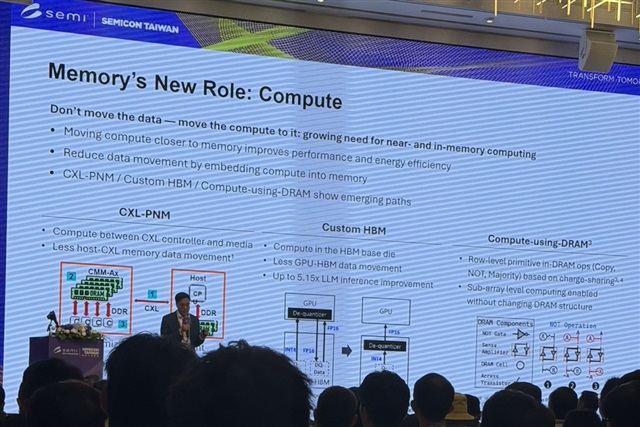
SK Hynix presented a custom HBM concept at SEMICON Taiwan 2026, where compute functions are placed in the base…
Nvidia reported earnings that were both remarkable and boring, reflecting its focus on avoiding a consolidated…

Anthropic has agreed to a $35bn cloud-computing contract with Lambda, a Nvidia-backed cloud provider

The Supreme Court of Japan has included about ¥60 million in its fiscal 2027 budget request for AI-related exp…

The Consumer Affairs Agency said Tuesday it will use generative AI to analyze about 900,000 annual consultatio…