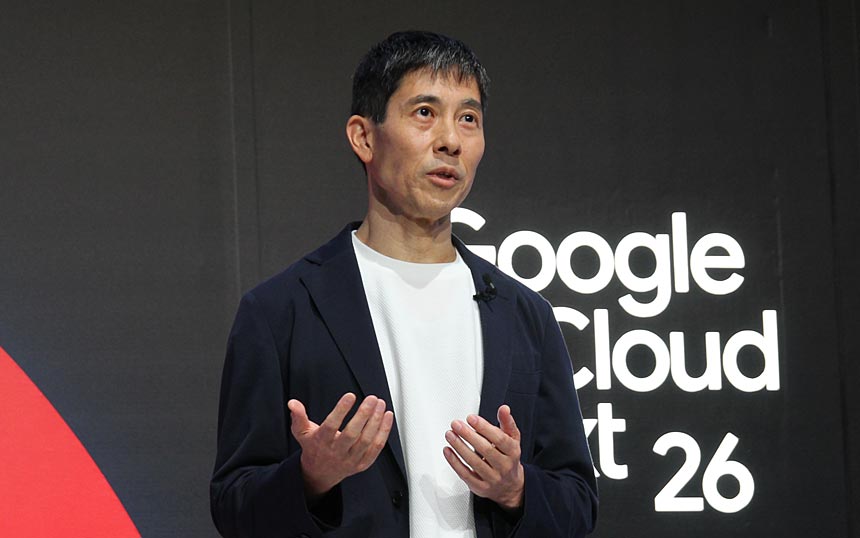
NTT Docomo has committed to fully automating its marketing operations through AI agents by 2027.
The company plans to develop AI systems sharp enough to handle complex marketing tasks while earning the trust and buy-in of field employees—a critical factor for adoption at a large telecom organization.
What happened
NTT Docomo announced plans to fully automate its marketing operations using AI agents by 2027, with the goal of creating sharp, capable AI systems that field employees will trust and accept.
Why it matters
The company is moving to deploy AI agents across its marketing function — a significant shift for a major telecom operator managing complex customer relationships and campaigns. Success here could serve as a model for how large enterprises integrate AI into traditionally human-driven business processes.
What to watch
The 2027 deadline is when Docomo intends to complete this transition; the company's ability to build AI agents that satisfy both performance and employee acceptance will determine whether this automation strategy succeeds at scale.
NTT Docomo, one of Japan's largest telecommunications companies, has declared its intention to fully automate marketing through AI agents by 2027. The company's stated goal is not simply to deploy automation but to create AI agents that are sharp and capable enough to earn the confidence of current marketing employees—a recognition that organizational acceptance is as important as technical performance. The company describes its aim as building AI agents that field employees will find persuasive and reliable, suggesting that user trust and practical utility in the marketing workflow are central to the strategy. This move positions Docomo within a growing cohort of large enterprises experimenting with AI-driven automation of complex business processes, where the challenge extends beyond model performance to organizational readiness and workforce integration.
NTT Docomo's announcement reflects a broader shift among large enterprises toward embedding AI agents into core business functions beyond customer service and technical support. The company's explicit focus on building systems that field employees will accept suggests the organization recognizes that technical capability alone is insufficient—buy-in from the workforce affects implementation success. By targeting 2027, Docomo is committing to a multi-year roadmap rather than a rushed rollout, which may indicate either the complexity of retraining marketing processes or a deliberate pace to manage organizational change. The emphasis on creating "sharp" AI agents speaks to performance requirements: marketing decisions often depend on nuanced customer insights, campaign timing, and business context, so the AI must handle real-world complexity that generic systems cannot.
AI-summarized, only the topics you pick — one digest a day via Email, Slack, or Discord.
Free · takes 30 seconds · unsubscribe anytime
Ask AI anything about this article. Q&As are published on this page for other readers too.
Silicon Motion announced a private placement of US$1 billion in aggregate principal amount of 0% convertible s…

Sundar Pichai, CEO of Alphabet and Google, announced on August 11 that the Gemini app's monthly active users (…
A new platform called frontier.fast has launched an open competition where anyone can submit code patches to m…

An AI system generated a research draft that strengthened a mathematical bound related to the Riemann hypothes…
Researchers published findings showing AMIE (Video), a Gemini-based AI system, performed at or above the level…
After former lead writer Stella Sacco posted on Bluesky that Saber replaced her with ChatGPT midway through de…

The AI news that matters, in one minute each morning.
Sign up free