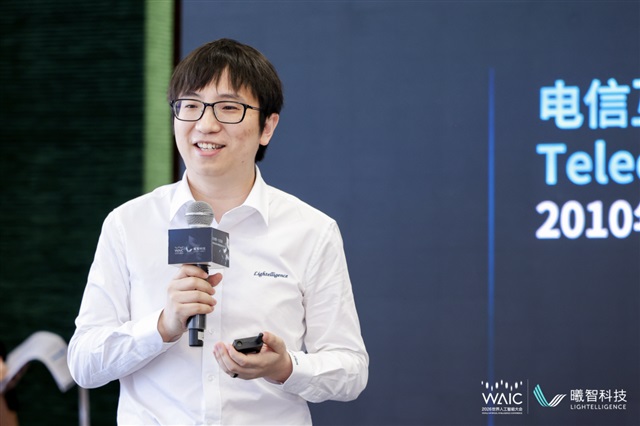
Lightelligence is reframing AI infrastructure's core challenge: the problem is no longer making chips faster, but moving data efficiently. The company is positioning optical interconnects, optical switching, and optical computing as the solution, with founder Yichen Shen outlining this strategy at WAIC 2026.
Summaries like this, in your inbox every morning.
Sign up free →What happened
Lightelligence is positioning optical interconnects, optical switching, and optical computing as the next foundation of AI infrastructure, arguing that the industry's biggest challenge has shifted from faster chips to moving data efficiently across systems.
Why it matters
As AI workloads scale, the bottleneck is no longer chip speed but the ability to move massive amounts of data between processors and across data centers. Optical approaches (using light instead of electrical signals) could reduce energy consumption and latency in these data transfers — a critical concern for large-scale AI deployment.
What to watch
Lightelligence founder and chairman Yichen Shen presented this vision at WAIC 2026, signaling the company's strategic focus on photonic computing (computing with light) as a potential differentiator in AI infrastructure competition.
Lightelligence, led by founder and chairman Yichen Shen, is proposing a fundamental reorientation of how the AI industry thinks about infrastructure bottlenecks. Traditionally, the focus has been on raw compute — making chips faster, denser, and more capable. However, Lightelligence argues that this framing has become outdated. The company contends that the industry's biggest challenge has shifted from faster chips to moving data efficiently across systems. To address this, Lightelligence is positioning three technologies as the foundation of next-generation AI infrastructure: optical interconnects (light-based connections between components), optical switching (routing data using light), and optical computing (performing computation directly with photons). By presenting this vision at WAIC 2026, Shen is signaling the company's strategic bet that photonic (light-based) approaches will become essential as AI systems scale. The implication is that future AI infrastructure will not be defined solely by the speed of silicon, but by the ability to move, switch, and process data optically — a transition that could unlock significant gains in energy efficiency and throughput.
The shift Lightelligence describes reflects a maturing recognition in AI infrastructure: as neural networks grow exponentially in scale, the energy and time cost of moving data between compute units and across data centers increasingly dominates total system performance. Electrical interconnects — the current standard — face inherent bandwidth and power limits as data volumes multiply. Optical approaches, which encode information in photons, offer higher bandwidth density and lower latency per bit. By positioning this transition as the next frontier, Lightelligence is staking a claim in a new hardware layer of AI infrastructure — one that sits between the chip itself and the data-center network. Founder Yichen Shen's presentation at WAIC 2026 signals that the company sees this architectural shift not as speculative but as the inevitable next phase of scaling.
AI-summarized, only the topics you pick — one digest a day via Email, Slack, or Discord.
Free · takes 30 seconds · unsubscribe anytime
No comments yet. Be the first to share your thoughts!
Log in to join the discussion




Get curated AI news from 200+ sources delivered daily to your inbox. Free to use.
Get Started FreeFree · takes 30 seconds · unsubscribe anytime
1 minute a day. The AI essentials.
200+ sources · Email / LINE / Slack
