What happened
Meta introduced Muse Ember, its first model trained using flagship Muse Wonder. Meta says it matched Anthropic's Claude Haiku 5.5 on the Artificial Analysis Index at about a third the price and outperformed OpenAI's GPT-6 Luna.
Why it matters
Muse Ember is optimized to run the smaller sub-tasks that frontier models delegate to agents, so businesses assembling AI workflows may get comparable results for substantially less spend.
WHO IT HITSCompanies building AI agent workflows that split large requests into smaller tasks will see a cheaper option for the sub-task layer. Teams comparing entry-level models from Anthropic and OpenAI now have a third choice priced at roughly a third of Claude Haiku 5.5.
Summaries like this, every morning.
Meta's pitch for Muse Ember rests on a specific architectural role rather than raw capability. Applications increasingly use frontier LLMs such as Muse Wonder as part of AI ensembles: the frontier model splits a user request into smaller tasks and hands them to agents powered by a lower-cost model. Meta says Muse Ember is built for that second role, which explains why the company emphasizes price parity with Claude Haiku 5.5 over outright benchmark leadership.
The evaluation details Meta shared point the same way. On most benchmarks, Muse Ember's results were only a few percentage points better than Haiku and Luna; the outlier was AutomationBench-AA, a collection of 657 tasks spanning popular cloud applications such as Gmail and Salesforce, where it recorded a 17% lead. Whether that gap holds outside Meta's internal testing is not established by the announcement.
Muse Ember is also notable as the first AI Meta trained using Muse Wonder, its flagship model, though Meta did not specify which part of the workflow was automated. The company's stated capabilities — a 1 million token context window, image, audio and video inputs, and responses up to 512,000 tokens — target lengthy business documents rather than consumer chat.
Pick your industry and the AI tools you use, and get news related to your work every day.
Free · 30 seconds with Google · unsubscribe anytimeWhat is AIToday? →
Ask AI anything about this article. The AI reads this article, earlier AIToday articles, and Wikipedia, and cites its sources. Q&As are published on this page for other readers too.
Bay AI Inc. launched with $50 million — a $37 million Series A led by Battery Ventures and a $13 million seed…

Kora Systems, led by Cyanogen co-founder Kirt McMaster, unveiled a Linux-based desktop OS that runs AI models…

Google unveiled TPU 8tx, built with AMD for confidential training and inference, and TPU 8i Max, which combine…

Anthropic will offer 825 million Class A shares at $70 to $78 each, raising $57.75 billion to $64.35 billion…
IPROS announced five free 20-minute sessions at AI-Industry World 2026, covering Microsoft 365 Copilot, busine…

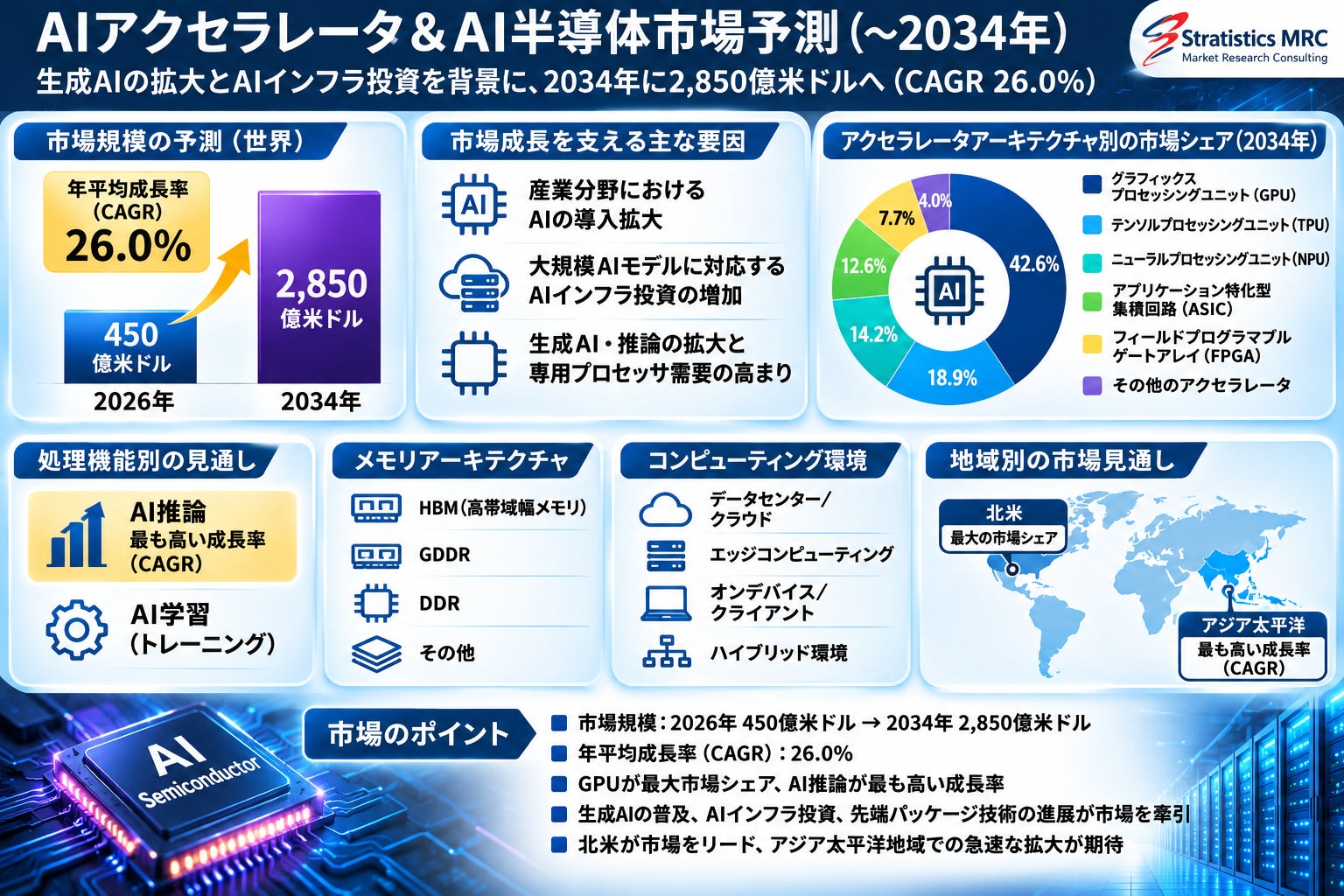
Stratistics MRC forecasts the AI accelerator and AI semiconductor market will reach $285 billion by 2034, up f…