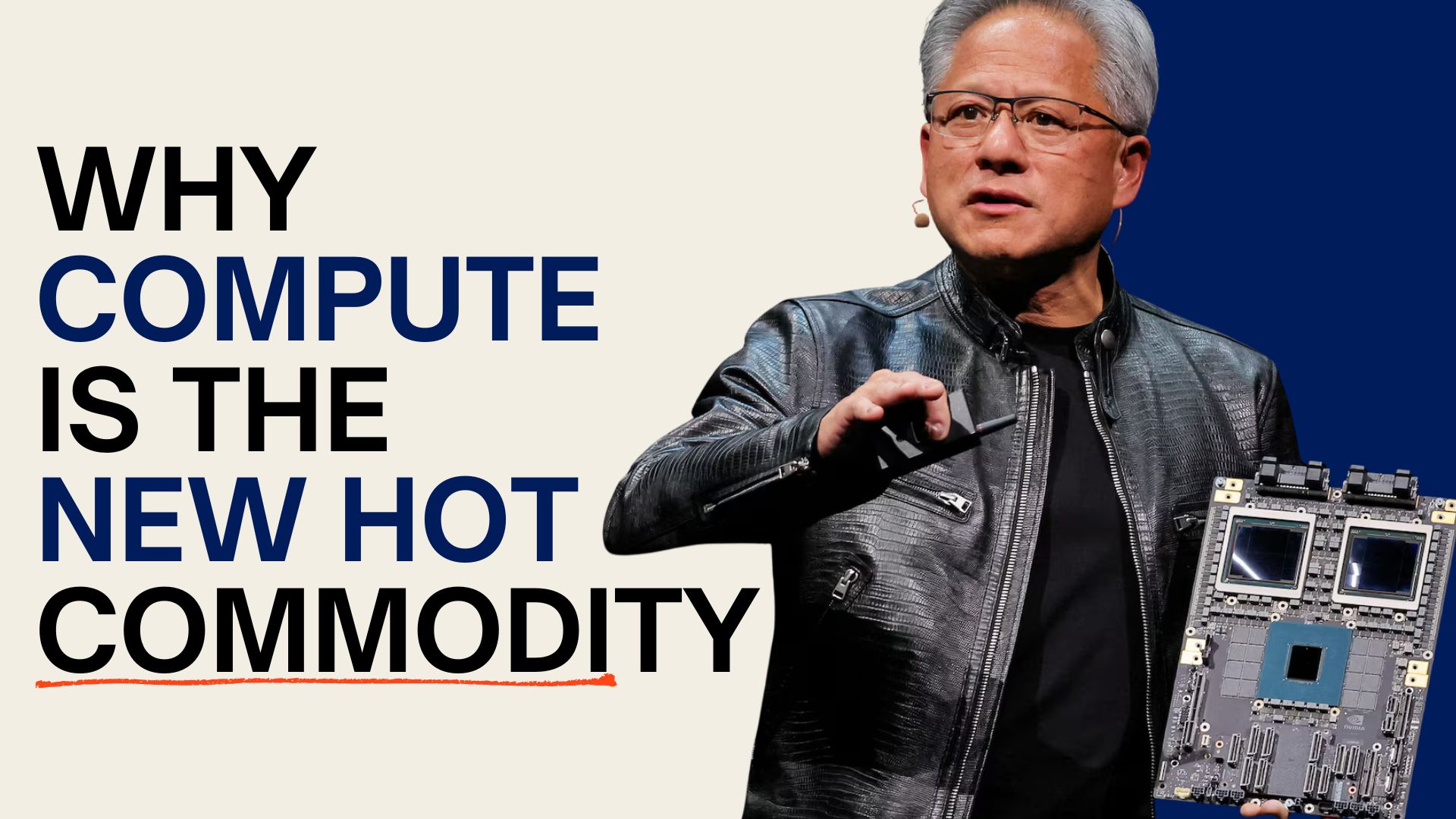
Nvidia CEO Jensen Huang has persuaded major Wall Street investors—BlackRock, Apollo, and Blackstone—to treat semiconductor compute as a tradable commodity through a $500 billion initiative.
By rebranding chips from depreciating technology into financed infrastructure assets, Huang is opening the door for banks to finance AI buildout and markets to eventually trade compute hedges, much like oil or electricity.
This shift could create new investment opportunities and allow AI companies to protect themselves against rising compute costs.
What happened
Nvidia CEO Jensen Huang convened partners including BlackRock, Apollo, and Blackstone for a new $500 billion initiative and positioned Nvidia's AI chips as an "investable asset" and "infrastructure asset" rather than depreciating technology—a framing that signals compute is beginning to behave like a scarce economic input that can be financed, contracted, priced, and hedged.
Why it matters
If compute becomes standardized and priced like a commodity (similar to oil or electricity), financial firms can finance AI infrastructure buildout, companies can sign longer-term contracts, and markets could eventually develop hedging instruments for compute costs—opening an entirely new asset class for Wall Street and potentially changing how AI companies manage their operating expenses.
What to watch
CoreWeave, a public-market infrastructure company that sits between chipmakers and companies consuming compute, may offer the most direct exposure to this shift; crypto markets are already experimenting with compute derivatives—Lighter's exchange introduced an H100 compute index allowing companies to hedge compute costs onchain.
Jensen Huang, Nvidia's CEO, made a significant strategic announcement this week by presenting compute—not just chips—as an investable commodity to Wall Street. Working with partners BlackRock, Apollo, and Blackstone, he outlined a $500 billion initiative to reshape how compute is understood and financed. The centerpiece of his pitch was a simple but profound reframing: "The computer is now part of the infrastructure, like electricity, like the internet," Huang told CNBC. Rather than selling chips that historically depreciate once newer technology arrives, Nvidia is now marketing its AI infrastructure platform as "an investable asset, an infrastructure asset."
Historically, chips have behaved like technology—each generation obsoletes the last. But the AI boom has disrupted that pattern. Nvidia's H100 chips became so crucial to AI workloads that even older hardware retained unusually strong pricing power, acting more like scarce infrastructure than mere components. Huang is formalizing this dynamic by arguing that compute should be treated like oil, electricity, or metals: a resource that can be financed, contracted at predictable prices, and eventually hedged through derivatives markets. As the article notes, "If AI infrastructure can produce durable revenue streams, then banks can finance it and investors can own it. If access to compute becomes standardized enough, companies can sign longer-term contracts around it. And if the price of compute becomes an important enough input cost, markets can eventually develop ways to hedge it."
Crypto markets are already experimenting with compute derivatives. Vlad Novakovski, founder of Lighter, told Coinage that his exchange introduced an H100 compute index, enabling traders to speculate on compute prices and, more importantly, allowing AI companies to hedge their compute costs onchain. "If you're building a fully autonomous agent, you can actually hedge the cost of your own compute onchain," Novakovski explained. This mirrors existing practice in traditional markets: airlines hedge fuel because they depend on it, manufacturers hedge metals, farmers hedge crops. If AI companies become equally dependent on compute, they may eventually seek the same protection.
The financial services industry has centuries of experience turning economically vital resources into investable markets. It finances oil wells, power plants, pipelines, warehouses, and telecommunications networks, then creates futures, swaps, and other derivatives to help companies manage exposure to volatile costs. CoreWeave, a public-market infrastructure company that operates the layer between chipmakers and compute consumers, stands to benefit most directly from this shift. The article positions CoreWeave as "the most obvious public-market example" of exposure to the infrastructure monetization trend. Huang's $500 billion partnership signals that major financial institutions now view compute infrastructure as a legitimate asset class worthy of the same financial engineering applied to traditional commodities for the past century.
For years, Nvidia has profited from surging demand for its chips as companies build AI infrastructure. But Jensen Huang's latest move signals a strategic inflection: rather than simply selling chips that depreciate, Nvidia is now positioning compute itself as a financial asset. This reframing is not merely semantic—it opens the door for Wall Street's traditional playbook to apply to AI infrastructure the way it has applied to oil, electricity, and telecommunications for centuries.
The shift hinges on a simple observation: AI chips have defied the historical rule of technological depreciation. During the recent boom, older Nvidia H100 chips retained unusually strong pricing power because demand for compute capacity was so intense. Huang is formalizing this insight by treating compute as scarce infrastructure that must be financed, contracted, and eventually hedged. The $500 billion partnership with BlackRock, Apollo, and Blackstone suggests major financial institutions are already convinced. If compute becomes standardized enough, companies can lock in longer-term contracts; if price volatility rises, derivatives markets could emerge to help AI firms manage exposure—much as airlines hedge fuel costs.
Crypto markets are already moving in this direction. Lighter's H100 compute index is an early experiment in allowing companies to hedge compute expenses onchain. While that may sound exotic, it points toward a future where autonomous AI agents could manage their own compute budgets, creating an entirely new category of financial instruments. CoreWeave, which operates the infrastructure layer between chipmakers and compute consumers, stands to benefit directly from this structural shift. The broader implication is that the AI boom's first phase—selling chips—may be giving way to a second phase where access to compute becomes the primary monetizable resource.
AI-summarized, only the topics you pick — one digest a day via Email, Slack, or Discord.
Free · takes 30 seconds · unsubscribe anytime
Ask AI anything about this article. Q&As are published on this page for other readers too.
Bank of America flagged that Broadcom's chip-financing vehicle could reach $370 billion of senior debt by mid-…
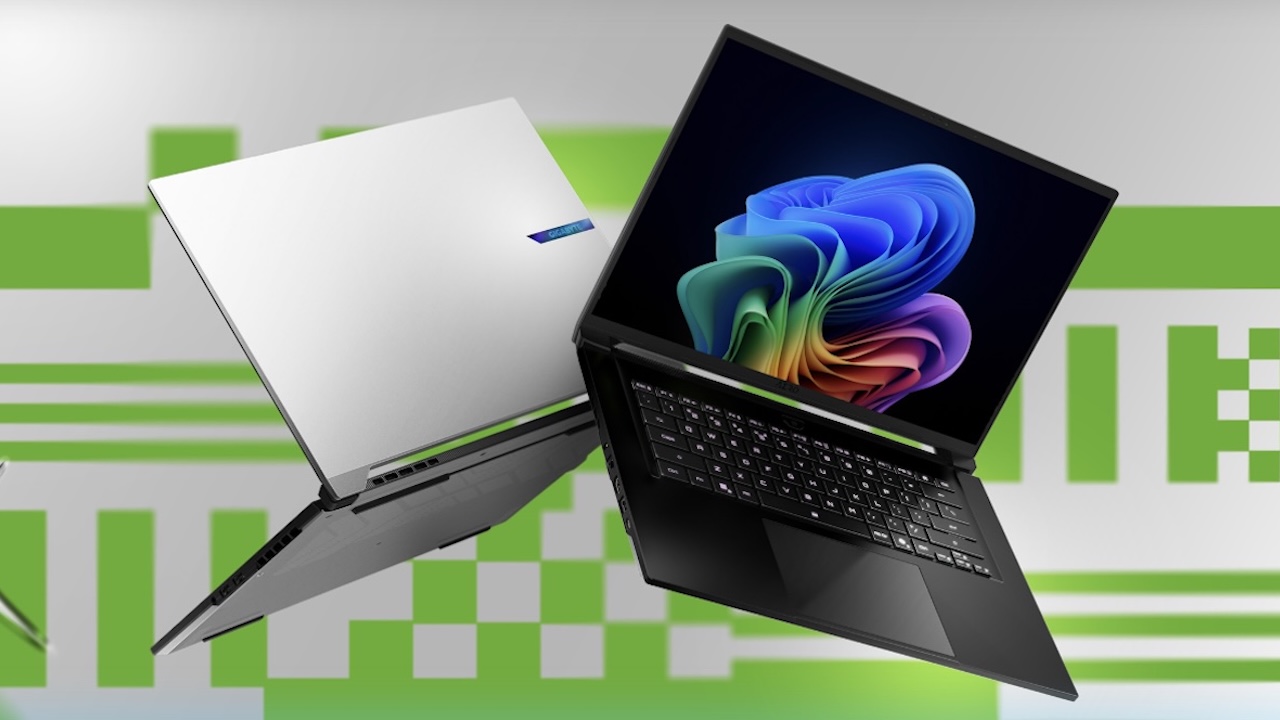
A GIGABYTE AERO X16 laptop is now priced at $1,099 on Walmart, down from $1,699.99
Nimrod Barak, who spent about nine years at Citi as managing director and head of its AI Center of Excellence…

Broadcom's stock price dropped 6% amid concerns about $370 billion in AI-related debt and its impact on the co…
Polen Capital Management highlighted GE Vernova (NYSE:GEV) as a new position in its Q2 2026 investor letter, c…

BigBear.ai, an AI software provider to U.S

The AI news that matters, in one minute each morning.
Sign up free