
What happened
AMD dropped 8.1% as Meta's financing plans and a Lam Research supply warning deepened data-center spending fears, yet a six-factor screen leaves AMD as effectively the only name reporting in the next two weeks that qualifies.
Why it matters
According to the contributor's screen, AMD's growth clears every threshold, so investors using a factor-based approach may find it the lone qualifying choice in that window — though the sector selloff shows even larger players can feel contagion from weaker AI names.
Summaries like this, every morning.
The recent drawdown in AMD shares came from a sector-wide selloff, not from anything AMD reported, but it shows that if some names in the space get hit, even the larger players are likely to feel it. CoreWeave fell 15.5% on Oct. 14 as yields on its 2032 notes touched 15%, and its default-swap spreads nearly doubled in October, while IREN is down more than 20% this year. Last Thursday, the contagion reached chipmakers, which makes sense since much of CRWV and IREN's spending is going there.
Against that backdrop, the contributor's screen for factors that demonstrably generate outperformance over time narrows quickly. Of the names reporting in the next two weeks, AMD is effectively the only one that makes the list. Consensus for Q3 calls for EPS of $1.94 on revenue of $13.06 billion, versus $1.20 and $9.25 billion a year ago — year-over-year growth of nearly 62% and 41%, respectively — which the contributor says blows past the criteria.
An options strategy then balances the known factors against the cracks in the AI trade. Owning the stock outright means absorbing a roughly 9% to 11% implied earnings-related move, and over the past four quarters the smallest move over a similar window was more than 9%, while the largest was 38% after the company reported its Q1 26 results. A call spread risk reversal reduces risk if the cracks widen, and the short options offset the elevated volatility, sacrificing about $1,700 of upside for $5,000 in outperformance during a severe downside move.
Pick your industry and the AI tools you use, and get news related to your work every day.
Free · 30 seconds with Google · unsubscribe anytimeWhat is AIToday? →
Ask AI anything about this article. The AI reads this article, earlier AIToday articles, and Wikipedia, and cites its sources. Q&As are published on this page for other readers too.
Burke Wealth Management's Q3 2026 investor letter said Amphenol's data center power business essentially picks…

A Seeking Alpha preview of Corning's Q3 results says AI demand is driving revenue optimism for the company, th…
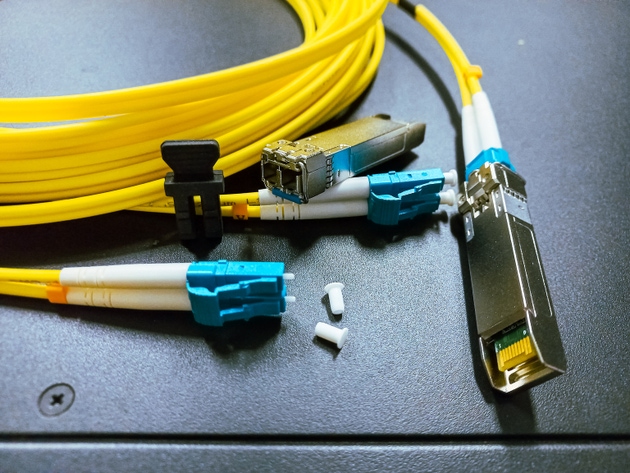
Investing.com reports that all eyes are on Corning's earnings as its AI fiber growth faces a test

At the PRovoke Global Summit, McDonald's discussed rethinking its PR strategy in response to AI reshaping earn…

Booking.com is now having AI answer traveller questions ahead of the guest's arrival, a shift Hospitality Net…

Pathos AI announced multi-year strategic collaborations with Bristol Myers Squibb and Tempus AI to build a cur…