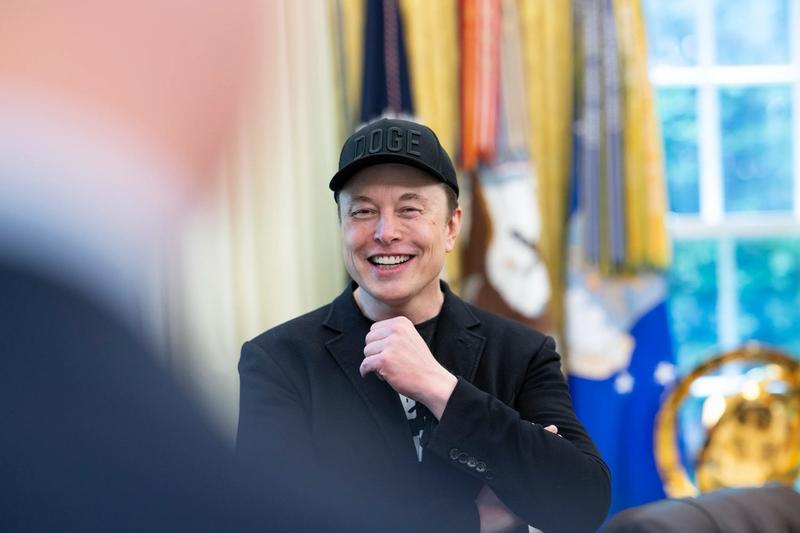
SpaceX CEO Elon Musk announced that the company's AI revenue will surpass its rocket and satellite-internet businesses by September, with a target of 10 gigawatts of computing capacity by end of next year worth $300 billion to $500 billion annually by 2028.
In Q2, AI generated $2.56 billion of SpaceX's $7.81 billion total revenue, but the company faces significant constraints—power access limits, chip scarcity, and the need to spend far more capital than the revenue gains it will see before 2027.
What happened
Elon Musk told SpaceX employees in a video that AI revenue will exceed all other company revenue (rockets and Starlink broadband) by September. He aims for 10 gigawatts of AI computing capacity by end of next year, which he values at $300 billion to $500 billion in annual revenue by 2028.
Why it matters
In Q2, SpaceX's AI segment generated $2.56 billion of $7.81 billion total revenue—rapid growth, but it needs to more than double to overtake the rocket and connectivity businesses combined ($5.25 billion). Goldman Sachs projects $15.6 billion in AI revenue for all of 2026 after SpaceX signed major compute contracts with Anthropic and Google.
What to watch
SpaceX faces major obstacles: severe power constraints (facing pushback over methane gas turbines at data centers Colossus 1 and 2), limited chip availability, and massive capital needs. The company spent over $25 billion last quarter on AI and would need far more to add 8+ GW in 18 months. Customer contracts allow either party to exit with just 90-day notice.
Ask the AI about this article →
Musk's announcement reflects SpaceX's rapid pivot toward AI infrastructure, driven by recent megadeals with Anthropic and Google. In Q2, AI revenue jumped to $2.56 billion—nearly one-third of total revenue—up from a much smaller base a year earlier. Goldman Sachs' projection of $15.6 billion in AI revenue for 2026 suggests the trajectory toward September parity is plausible in the near term, assuming the company can double its current AI segment while the rocket and connectivity businesses do not grow further. However, the article's author flags a critical gap: reaching 10 gigawatts by end of next year requires adding more than 8 GW in roughly 18 months. SpaceX spent over $25 billion on AI last quarter alone, yet would need substantially more capital to build out that capacity while also covering the revenue shortfall before 2027. Power supply and chip allocation emerge as hard constraints, not just financial ones. Perhaps most fragile: the major compute contracts include 90-day exit clauses, leaving SpaceX exposed to customer departure after it has already spent the capital.
For example, today's edition would include:
AI-summarized, only the topics you pick — one digest a day via Email, Slack, or Discord.
Free · takes 30 seconds · unsubscribe anytimeWhat is AIToday? →
Ask AI anything about this article. Q&As are published on this page for other readers too.
AIR, an AI security startup founded by Unit 8200 veterans, has come out of stealth with $50 million raised acr…
U.S. markets ended August higher, with the S&P 500 up 2.6% and the Nasdaq up 3.9%

Palantir Technologies stock has posted multi-year gains, including an 11x return over 3 years

CrowdStrike shares rose 5.77% on Monday, driven by investor excitement over its AI-powered cybersecurity growt…

Nvidia paused some deals under its AI financing program, which offered credit support to smaller AI cloud comp…
NVIDIA is now acting as a financier for its own demand, helping raise over $500 billion of third-party capital…