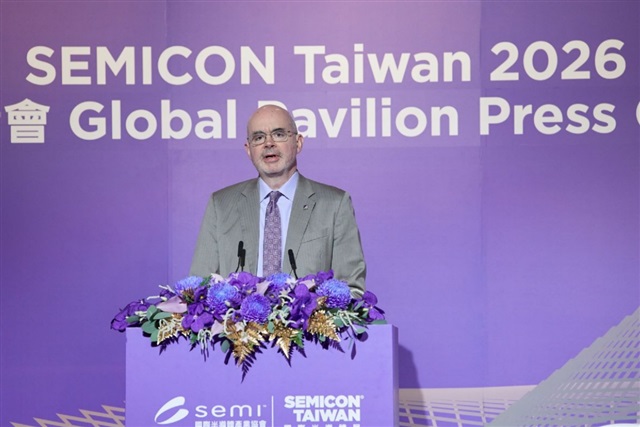
Taiwan's semiconductor industry is moving beyond its traditional role as a chip manufacturer and is now deepening cooperation with the US, Europe, and Asia across a wider range of technology areas including AI infrastructure, advanced packaging, research, talent development, cybersecurity, and international standards. This expansion reflects Taiwan's effort to strengthen alliances and diversify its partnerships at multiple levels of the supply chain.
Summaries like this, in your inbox every morning.
Sign up free →What happened
Taiwan's semiconductor industry is expanding partnerships with the US, Europe, and Asia beyond traditional fabrication, now covering advanced packaging, AI infrastructure, research, talent, cybersecurity, and international standards.
Why it matters
The shift signals Taiwan's strategy to deepen ties across multiple countries and supply-chain layers rather than concentrate on a single strength—positioning the island as a broader technology partner amid geopolitical tensions and supply-chain resilience concerns.
What to watch
The depth and specifics of Taiwan's new partnerships in emerging areas like photonics and quantum computing, and whether they translate into tangible joint projects or remain framework agreements.
Taiwan's semiconductor industry is undertaking a strategic broadening of its international partnerships, shifting from a model centered primarily on chip fabrication to one that spans multiple layers of the supply chain and emerging technologies. The expansion encompasses cooperation with the US, Europe, and Asia across advanced packaging, AI infrastructure, research initiatives, talent development, cybersecurity measures, and international standards-setting. This move reflects a recognition that competitive advantage in semiconductors increasingly depends not solely on foundry capacity but also on ecosystem integration—including packaging innovations, AI-related infrastructure, cross-border research talent, security resilience, and alignment on global technical standards. By deepening ties across these domains rather than concentrating efforts in a single area, Taiwan is positioning itself as a multifaceted technology partner and attempting to strengthen its strategic position amid ongoing geopolitical shifts and supply-chain resilience imperatives.
Taiwan's semiconductor sector has historically been anchored by a small number of world-class foundries and packaging specialists. The article indicates that this posture is now evolving: rather than relying solely on fabrication capacity, Taiwan is broadening its engagement with foreign governments and companies across complementary domains. The inclusion of AI infrastructure, research collaboration, talent exchanges, and cybersecurity suggests an awareness that modern technology competition encompasses not just hardware but also the ecosystem—skills, shared standards, and security—that surrounds it. Photonics and quantum computing, both mentioned implicitly as newer frontiers, represent domains where Taiwan may be positioning itself as a participant and contributor rather than a late entrant. The explicit mention of deepening cooperation "with the US, Europe, and Asia" also hints at a deliberate geographic diversification, avoiding over-reliance on any single partner while hedging against shifting trade and geopolitical winds.
AI-summarized, only the topics you pick — one digest a day via Email, Slack, or Discord.
Free · takes 30 seconds · unsubscribe anytime
No comments yet. Be the first to share your thoughts!
Log in to join the discussion
Get curated AI news from 200+ sources delivered daily to your inbox. Free to use.
Get Started FreeFree · takes 30 seconds · unsubscribe anytime
