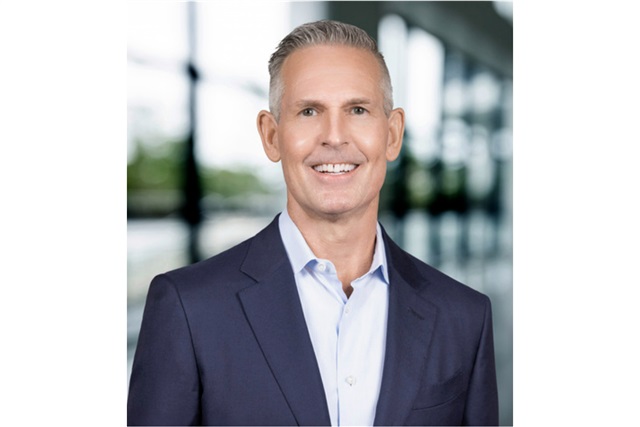
Airwallex, an Australian fintech platform founded over a decade ago to enable cross-border payments, raised $320 million in Series H funding in late June, valuing the company at $11 billion (up from $8 billion in December). The round, led by Addition with participation from Baillie Gifford, T. Rowe Price, Amex Ventures, and Washington University in St. Louis, will support the company's pivot toward what CEO Jack Zhang calls "autonomous finance, agentic commerce, and the infrastructure to power both." The company now serves over 675,000 businesses with over $1 billion in annualized run rate revenue.
Airwallex is broadening beyond its core cross-border payments business—which served e-commerce, gaming, and online travel—into AI-driven financial automation. Its new products include T:0, an automated bookkeeping system Liu compares to Tesla's assisted driving, and Ari, an agentic wallet for one-click checkout. The company is also expanding into new markets including the U.S., South Korea, Mexico, and Brazil, either through acquisition (like MexPago in Mexico) or by following existing clients. For businesses operating globally, Airwallex's all-in-one platform offering banking, payments, spend management, and treasury in a single interface addresses a concrete need.
Why it matters (continued): The funding reflects a broader rebound in Asian venture capital—VC-backed companies in Asia raised $50.8 billion in Q2 2024, the strongest quarter since Q4 2021, though China accounted for $35.1 billion of that total. However, Liu notes investor preference for late-stage bets with proven track records over early-stage risk; larger companies like Stripe (founded 2010, still private with reported $6.8 billion revenue) are also delaying IPOs.
Liu confirms Airwallex plans to be "IPO-ready" by end of 2024, but acknowledged timing depends on market conditions. The company faces regulatory scrutiny: in June, U.S. Senator Tom Cotton alleged deep ties to Beijing, citing Tencent and HongShan holdings and requesting a Committee on Foreign Investment in the United States investigation; CEO Zhang denied allegations and clarified Tencent holds a passive stake of less than 10% with no board seat. In Australia, the financial regulator AUSTRAC ordered Airwallex to bring on an external auditor to verify anti-money-laundering compliance after suspecting "serious noncompliance," a probe Liu frames as industry-wide rather than company-specific.
Summaries like this, in your inbox every morning.
Airwallex's $320 million Series H funding at an $11 billion valuation reflects both the company's strength as a cross-border fintech player and the shifting appetite among venture investors. The company's founders were inspired by the practical pain of running a coffee shop with overseas suppliers, and that problem—helping businesses move money globally—grew into a platform serving over 675,000 companies. As traditional fintech platforms like Wise and Revolut have matured, Airwallex is pivoting to where its customers need help next: automating internal finance and payments through AI-driven tools.
The broader context of Asian venture funding shows mixed momentum. While Q2 2024 saw the strongest quarter for VC-backed deals in Asia since Q4 2021 at $50.8 billion, China alone accounted for $35.1 billion—concentrated in AI developers and hardware. U.S. startups raised $145 billion in the same period, roughly 2.9 times the Asian total. Within this landscape, investors are increasingly moving toward later-stage, proven companies rather than early-stage bets; Databricks' unprecedented Series M at $188 billion valuation and Stripe's refusal to IPO despite reported $6.8 billion revenue signal that private companies with scale can raise capital without public markets. Airwallex's Series H follows this trend—the company has remained private while achieving meaningful scale and profitability metrics (EBITDA positive with healthy gross margin).
Geopolitical headwinds compound the IPO calculus. Senator Cotton's allegations about Chinese investor ties, though rebutted by management, signal that any future public offering will invite regulatory scrutiny. Australia's AUSTRAC probe into anti-money-laundering compliance adds another layer. Liu's framing of the regulatory environment as "a new category being created for global businesses" suggests the company sees these challenges as temporary friction rather than existential risk, but they plausibly extend the timeline to public markets and may shape the terms of eventual IPO.
Pick your industry and the AI tools you use, and get news related to your work every day.
Free · 30 seconds with Google · unsubscribe anytimeWhat is AIToday? →
Ask AI anything about this article. The AI reads this article, earlier AIToday articles, and Wikipedia, and cites its sources. Q&As are published on this page for other readers too.
In Q2, billionaires or their funds sold six 'Magnificent Seven' AI stocks

Nvidia was rising early Friday, even as the wider chip sector kept falling, Barron's reported
ElevenLabs completed a $300 million employee tender at a $22 billion valuation, and co-founder Mati Staniszews…

On October 15, OpenAI announced the Rosalind Academic Plan, giving approved US university labs free access to…

Neostellar Capital principal Evan Schlossman said CoreWeave's $103.7 billion in remaining performance obligati…
Supermicro Computer appointed Mark Long as chief financial officer, bringing an experienced technology finance…