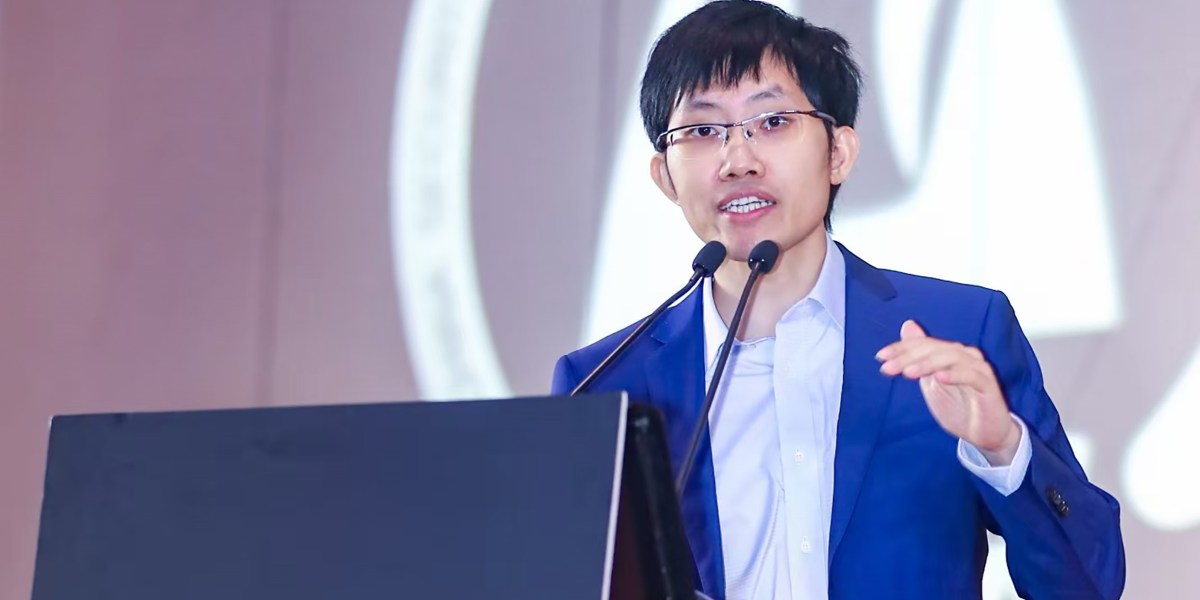
China's leading AI startups Moonshot and DeepSeek are racing toward public listings—Moonshot in Hong Kong within six months and DeepSeek on Shanghai's STAR market as early as Q2 2027. Both are raising fresh capital at eye-watering valuations: Moonshot at just over $30 billion(約4.8兆円) and DeepSeek seeking $71 billion(約11兆円). The split between Hong Kong and mainland listings reflects Beijing's view of which AI companies are strategic "national champions" eligible for preferential treatment and state backing.
Summaries like this, in your inbox every morning.
Sign up free →What happened
Moonshot AI is preparing a Hong Kong listing within six months after closing a funding round valuing it at just over $30 billion(約4.8兆円), following peers Minimax and Z.ai who debuted in Hong Kong in early January. DeepSeek, which raised $7.4 billion(約1.2兆円) in June at a valuation north of $50 billion(約8兆円), is pursuing a Shanghai STAR market listing as early as the second quarter of 2027 and reportedly seeking fresh capital at a valuation as high as $71 billion(約11兆円).
Why it matters
China's AI labs are splitting their IPO strategy based on strategic importance: companies viewed as "national champions" working to replace U.S. technology (like DeepSeek) target mainland Shanghai, while consumer-focused firms use Hong Kong's international investor base. This reflects how Beijing categorizes AI—some labs get state backing and favorable terms, while others must navigate stricter regulatory oversight to list overseas.
What to watch
Moonshot just released K3, a 2.8 trillion-parameter model that has topped several AI benchmarks. DeepSeek's founder Liang Wenfeng personally invested 20 billion yuan (almost $3 billion(約4800億円)) in the latest round, signaling founder confidence ahead of the Shanghai listing.
China's two most prominent AI labs are heading toward public markets, but via strikingly different routes that reflect their role in Beijing's technology strategy. Moonshot AI, the Beijing-based startup behind the Kimi chatbot, is preparing a Hong Kong listing within six months. The company is close to finalizing a funding round that values it at just over $30 billion(約4.8兆円), and will immediately pursue an IPO to raise additional capital. Moonshot just released K3, a 2.8 trillion-parameter model that has topped several AI benchmarks and continues to narrow the gap with U.S. frontier models. Its Hong Kong listing follows two peers, Minimax and Z.ai, which both debuted in the city in early January.
DeepSeek, the Hangzhou-based lab widely regarded as China's most respected AI developer, is taking a different path. Rather than Hong Kong, it is targeting Shanghai's STAR market—the city's Nasdaq-style tech board—with a listing as early as Q2 2027. Unlike Moonshot, DeepSeek does not need external funding to operate: its founder Liang Wenfeng runs High-Flyer, a quantitative hedge fund with sufficient capital to bankroll years of AI research independently. Yet the company raised $7.4 billion(約1.2兆円) in its first-ever external funding round in June at a valuation north of $50 billion(約8兆円), and is now reportedly seeking fresh capital at a valuation as high as $71 billion(約11兆円) ahead of the IPO.
The reason for DeepSeek's fundraising despite its financial independence relates to talent retention. Rival startups have aggressively poached the lab's researchers using stock options and high valuations, forcing DeepSeek to raise capital to make itself more attractive to employees. The structure of DeepSeek's funding round was unusual: according to reporting, commercial investors like Tencent, JD.com, and CATL accepted a five-year lock-up period and zero voting rights, while China's National Artificial Intelligence Industry Investment Fund—a state vehicle—received voting rights and no lock-up restrictions. Liang himself wrote the largest check, investing 20 billion yuan (almost $3 billion(約4800億円)).
The divergence in listing venues reflects how Chinese regulators categorize AI companies. Moonshot, a consumer-facing chat platform, targets Hong Kong because the city offers access to an international investor base, despite requiring approval from China's securities regulator. DeepSeek, positioned as a "national champion" working to reduce dependence on U.S. technology restricted by export controls, targets mainland Shanghai because it offers access to domestic capital and retail investors—and carries implicit state backing. The same pattern holds across other strategic sectors: robot maker Unitree and graphics-processor maker Moore Threads, both framed as replacements for foreign technology, chose Shanghai listings, while large internet companies like Baidu and Xiaohongshu pursue Hong Kong to access global capital. Hong Kong remains the destination for China's large consumer tech firms, yet a Hong Kong listing is still treated as an overseas listing by Chinese regulators, creating additional approval hurdles for companies in sensitive technology areas.
China's AI startups are pursuing divergent public-market strategies that reveal how Beijing categorizes artificial intelligence within its strategic technology agenda. DeepSeek, regarded as a "national champion" working to reduce dependence on U.S. technology restricted by export controls, is targeting Shanghai's STAR market—a mainland Chinese board designed to compete with Nasdaq. In contrast, Moonshot is heading for Hong Kong, which offers a highly international investor base but requires approval from China's securities regulator and carries greater regulatory risk for strategic-technology companies. This pattern mirrors other sectors: robot maker Unitree and graphics-processor maker Moore Threads, both positioned as replacements for foreign technology, chose Shanghai, while large internet companies like Baidu and Xiaohongshu pursue Hong Kong listings to access broader capital markets.
The funding terms reveal another layer of state preference. DeepSeek's June round gave China's National Artificial Intelligence Industry Investment Fund (a state vehicle) voting rights and no lock-up, while commercial investors like Tencent and JD.com accepted a five-year lock-up with zero voting rights. This structure signals that the state is prioritizing long-term strategic control over short-term commercial returns. DeepSeek's founder Liang Wenfeng's personal $3 billion(約4800億円) check underscores the lab's ability to self-fund, yet the company is still pursuing external capital ahead of its IPO—a move driven partly by talent retention as rivals compete aggressively for researchers.
AI-summarized, only the topics you pick — one digest a day via Email, Slack, or Discord.
Free · takes 30 seconds · unsubscribe anytime
No comments yet. Be the first to share your thoughts!
Log in to join the discussion

Get curated AI news from 200+ sources delivered daily to your inbox. Free to use.
Get Started FreeFree · takes 30 seconds · unsubscribe anytime
1 minute a day. The AI essentials.
200+ sources · Email / LINE / Slack
