AIToday

Microsoft shifts AI pricing to 'per seat plus consumption' as Copilot usage grows

Yahoo Finance AI1h agoSend on LINE
Microsoft shifts AI pricing to 'per seat plus consumption' as Copilot usage grows

Key takeaway

Microsoft is shifting from traditional per-seat software licensing to a hybrid "per seat plus consumption" model, where customers pay both a subscription fee and based on how much they actually use AI tools like Copilot. The company added usage-based billing to Microsoft 365 Copilot and GitHub Copilot, with thousands of customers already enrolled. This change expands Microsoft's revenue opportunity as AI becomes more embedded in enterprise work, and it comes as the company reported strong earnings—fourth-quarter revenue reached $90.01 billion(約14兆円) (up 18% year-over-year) and Azure cloud services grew 43% year-over-year.

Summaries like this, in your inbox every morning.

Sign up free →

3 Key Points

  • What happened

    Microsoft CEO Satya Nadella announced the company is evolving its business model beyond per-seat subscriptions to "per seat plus consumption," adding usage-based billing to Microsoft 365 Copilot and GitHub Copilot, with thousands of customers already using the feature.

  • Why it matters

    As AI assistants like Copilot become embedded in daily workflows, Microsoft can now charge both for software access and for actual usage—expanding the addressable market and revenue potential beyond traditional subscription models. The company reported fourth-quarter revenue of $90.01 billion(約14兆円) (up 18% year-over-year) and Azure cloud services revenue climbed 43% year-over-year, signaling strong demand for its AI infrastructure.

  • What to watch

    Microsoft continues to invest heavily in AI infrastructure, saying demand still exceeds available computing capacity. The company is positioning Chat, CoWork, Autopilot, and Code as a "flagship super app" for different user roles, which will determine how quickly consumption-based revenue scales.

In Depth

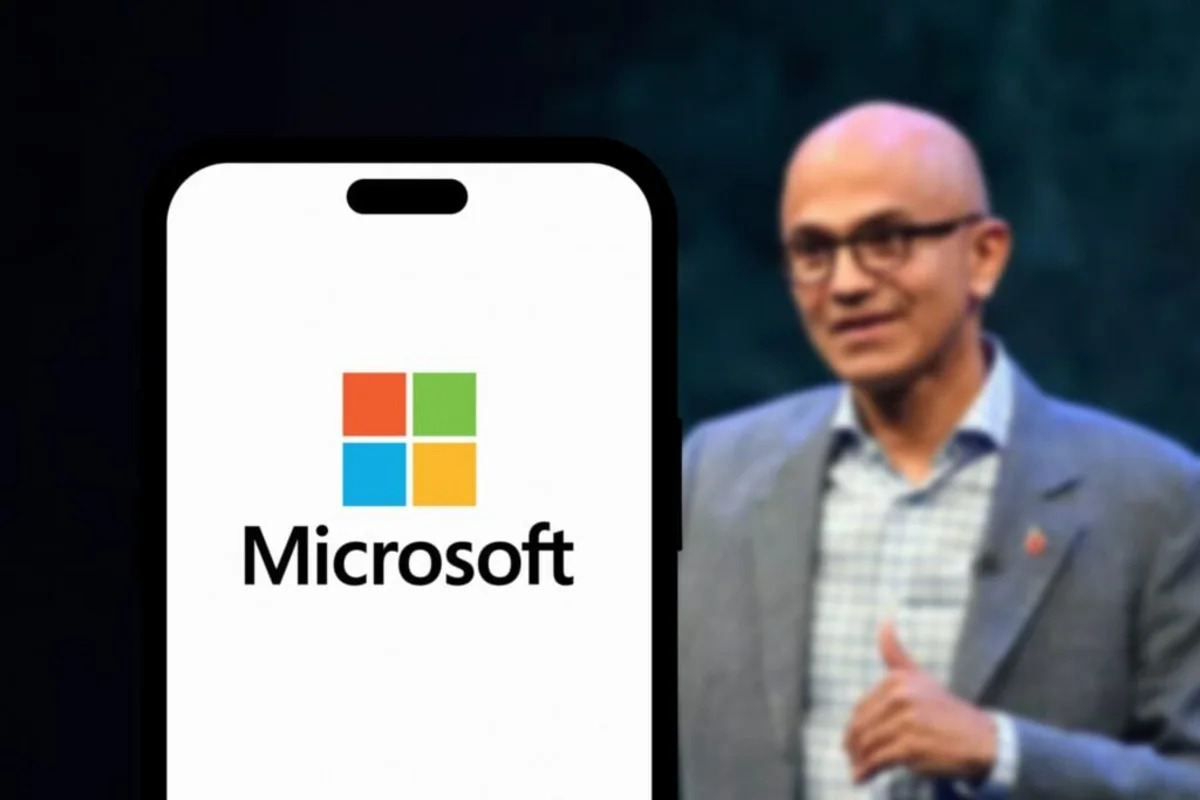
During its fourth-quarter earnings call, Microsoft CEO Satya Nadella announced a significant shift in how the company will monetize artificial intelligence. Rather than relying solely on traditional per-seat software subscriptions, Microsoft is evolving its commercial model to "per seat plus consumption," according to Nadella. "We are also evolving our business model beyond per seat to per seat plus consumption, further expanding our TAM and delivering more customer value," he told analysts. Finance chief Amy Hood echoed the view, emphasizing that Microsoft's expanding AI opportunity is increasingly tied to "usage and consumption growth" as more AI experiences become integrated across enterprise workflows.

The company has already begun implementing this model. Nadella noted that Microsoft recently added usage-based billing to Microsoft 365 Copilot, with thousands of customers already paying for and actively using the feature. Similarly, GitHub Copilot has launched a usage-based billing model and is already generating meaningful revenue from it. This dual-layer approach—charging both for access and for consumption—allows Microsoft to expand its addressable market and extract more value from customers as they deepen their reliance on AI tools.

Central to this strategy is positioning Copilot as the centerpiece of Microsoft's AI business. Nadella stated that Chat, CoWork, Autopilot, and Code are coming together as what he called Microsoft's "flagship super app" for different user roles. As Copilot becomes embedded in more daily workflows across enterprises, the company stands to benefit not only from software subscriptions but also from higher AI consumption across its products. Microsoft is backing this push with significant infrastructure investment. The company continues to ramp up AI infrastructure spending to meet demand that still exceeds available computing capacity, suggesting that adoption is outpacing the current supply of computing resources.

The financial results underscore the strength of this opportunity. Microsoft reported fourth-quarter revenue of $90.01 billion(約14兆円), up 18% year-over-year and ahead of the Street consensus estimate of $87.62 billion(約14兆円). Earnings came in at $4.74 per share, topping analyst estimates of $4.24. Cloud revenue was particularly strong, rising 27% year-over-year to $59.3 billion(約9.5兆円), while Azure and other cloud services revenue climbed 43% from a year earlier. The stock closed 0.71% lower at $390.54 on Wednesday but jumped 8.88% to $425.21 in after-hours trading following the earnings release, reflecting investor confidence in the consumption-driven growth narrative.

Context & Analysis

Microsoft's shift to consumption-based pricing reflects a fundamental change in how the company monetizes artificial intelligence. Historically, software revenue has been tied to per-seat licenses—a customer buys access for a set number of users at a fixed cost. As AI assistants move from optional tools to continuous, integrated parts of daily work, that model no longer captures the full value customers derive from using them more intensely. By layering "consumption" on top of "per seat," Microsoft can capture both the baseline adoption cost and the upside from power users, frequent tasks, and broader enterprise deployment.

The company is already seeing this shift in practice: usage-based billing has been added to both Microsoft 365 Copilot and GitHub Copilot, and thousands of customers are already paying for and using these features, according to CEO Satya Nadella. Finance chief Amy Hood reinforced this, stating that Microsoft's expanding AI opportunity is "increasingly tied to usage and consumption growth" as AI experiences become more integrated across enterprise workflows. This is not a future bet—it is already generating meaningful revenue from GitHub Copilot's newly launched usage-based model.

The timing aligns with strong demand signals. Microsoft reported fourth-quarter revenue of $90.01 billion(約14兆円) (up 18% year-over-year) and Azure cloud services revenue climbed 43% year-over-year, demonstrating that enterprises are leaning heavily into AI infrastructure. Nadella noted that the company continues to invest in AI infrastructure to meet demand that still exceeds available computing capacity, suggesting that adoption is outpacing supply. The consumption model positions Microsoft to capture more value as that demand translates into higher usage across Copilot's embedded features—Chat, CoWork, Autopilot, and Code—which Nadella called the "flagship super app" for different user roles.

FAQ

How does Microsoft's new pricing model work?
Microsoft is moving from per-seat subscription pricing to "per seat plus consumption," meaning customers pay for both the software subscription and for how much they actually use the AI tools. The company has already added usage-based billing to Microsoft 365 Copilot and GitHub Copilot, with thousands of customers actively using the feature.
What were Microsoft's latest earnings results?
Microsoft reported fourth-quarter revenue of $90.01 billion(約14兆円), up 18% year-over-year and ahead of the Street consensus estimate of $87.62 billion(約14兆円). Cloud revenue rose 27% year-over-year to $59.3 billion(約9.5兆円), while Azure and other cloud services revenue climbed 43% from a year earlier.
How is Microsoft positioning Copilot in its AI strategy?
Nadella said Chat, CoWork, Autopilot, and Code are coming together in what he called Microsoft's "flagship super app" for different user roles. As Copilot becomes embedded in more daily workflows, the company stands to benefit from both software subscriptions and higher AI consumption across its products.

Get the latest Large Language Models news every morning

AI-summarized, only the topics you pick — one digest a day via Email, Slack, or Discord.

Free · takes 30 seconds · unsubscribe anytime

Discussion

No comments yet. Be the first to share your thoughts!

Log in to join the discussion

Related Articles

Stay ahead with AI news

Get curated AI news from 200+ sources delivered daily to your inbox. Free to use.

Get Started Free

Free · takes 30 seconds · unsubscribe anytime