
Nvidia remains the central AI infrastructure supplier despite rising ASIC competition.
Data center revenue hit $62.3 billion, up 75% year over year.
The company controls the platform—from chips to software to ecosystem investments—that customers anchor new AI systems around.
What happened
Nvidia reported fiscal-year 2026 data center revenue of $62.3 billion, up 75% year over year, with full-year sales expected around $180 billion. The company's Blackwell architecture, GPU systems (GB200, GB300), and software stack (CUDA, TensorRT) position it as the central platform for AI infrastructure builds.
Why it matters
Nvidia functions as the default choice for hyperscalers and enterprises planning AI clusters—it supplies not just chips but the entire reference blueprint, from GPUs to rack-level systems to developer tools. The company also invests across the ecosystem (glassmakers, fiber suppliers, data center builders), ensuring it captures value across multiple layers of AI spending.
What to watch
Custom chips (ASICs) from Broadcom and others are gaining ground in certain workloads, with forecasts showing GPU servers may represent around 70% of AI server shipments while ASIC servers approach 30%. Nvidia is launching Blackwell Ultra and Rubin to compete in inference and reasoning workloads.
Ask the AI about this article →
Nvidia's dominance rests not on a single product but on control of the entire decision tree for AI infrastructure. When hyperscalers and enterprises commit billions to new AI clusters, Nvidia's platform—Blackwell architecture, GB200/GB300 systems, CUDA software, and developer ecosystem—shapes the baseline design. This creates a compounding advantage: the more customers standardize on Nvidia, the more developers optimize for its tools, and the more new entrants must integrate with its stack rather than displace it.
The company's ecosystem investments (partnerships with Corning, data center joint ventures, networking suppliers) reinforce this centrality. Rather than compete narrowly on chip performance, Nvidia positions itself as the integrator of the entire AI factory. Custom ASICs from Broadcom and others do capture share in specific workloads—forecasts show ASIC servers approaching 30% of AI server shipments—yet this fragmentation actually strengthens Nvidia's hand: hyperscalers still need a general-purpose platform to orchestrate mixed workloads, and Nvidia remains the default. New platforms like Blackwell Ultra and Rubin signal Nvidia is extending into inference and reasoning, closing gaps before competitors can exploit them.
The psychological dimension matters as well. Nvidia has become the ticker investors and analysts mention first when discussing AI infrastructure, a pattern that drives both steady capital inflow and management pressure to keep innovating. For now, that cycle favors the incumbent.
For example, today's edition would include:
AI-summarized, only the topics you pick — one digest a day via Email, Slack, or Discord.
Free · takes 30 seconds · unsubscribe anytimeWhat is AIToday? →
Ask AI anything about this article. Q&As are published on this page for other readers too.
Israeli startup DataAgent Ltd

Taoyuan is positioning itself as a northern hub for AI data centers (AIDC), citing the Tatan area and an LNG c…
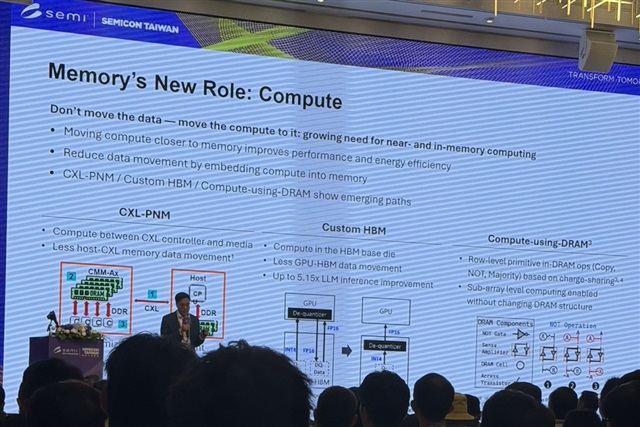
SK Hynix presented a custom HBM concept at SEMICON Taiwan 2026, where compute functions are placed in the base…
The U.S. Department of Defense announced on August 31 that it has deployed ChatGPT Mil, a customized version o…

Nvidia reported earnings that were both remarkable and boring, reflecting its focus on avoiding a consolidated…

Anthropic has agreed to a $35bn cloud-computing contract with Lambda, a Nvidia-backed cloud provider