Data sovereignty—the ability for companies to retain control over where their data lives and the economic value it generates—is evolving from a compliance checkbox into a strategic necessity for enterprises deploying agentic AI.
Executives argue that knowledge graphs combined with large language models enable deterministic reasoning and governance while preserving enterprise agency, making data residency and control over AI infrastructure increasingly important buying criteria as companies reassess their dependence on hyperscalers and closed-weight systems.
What happened
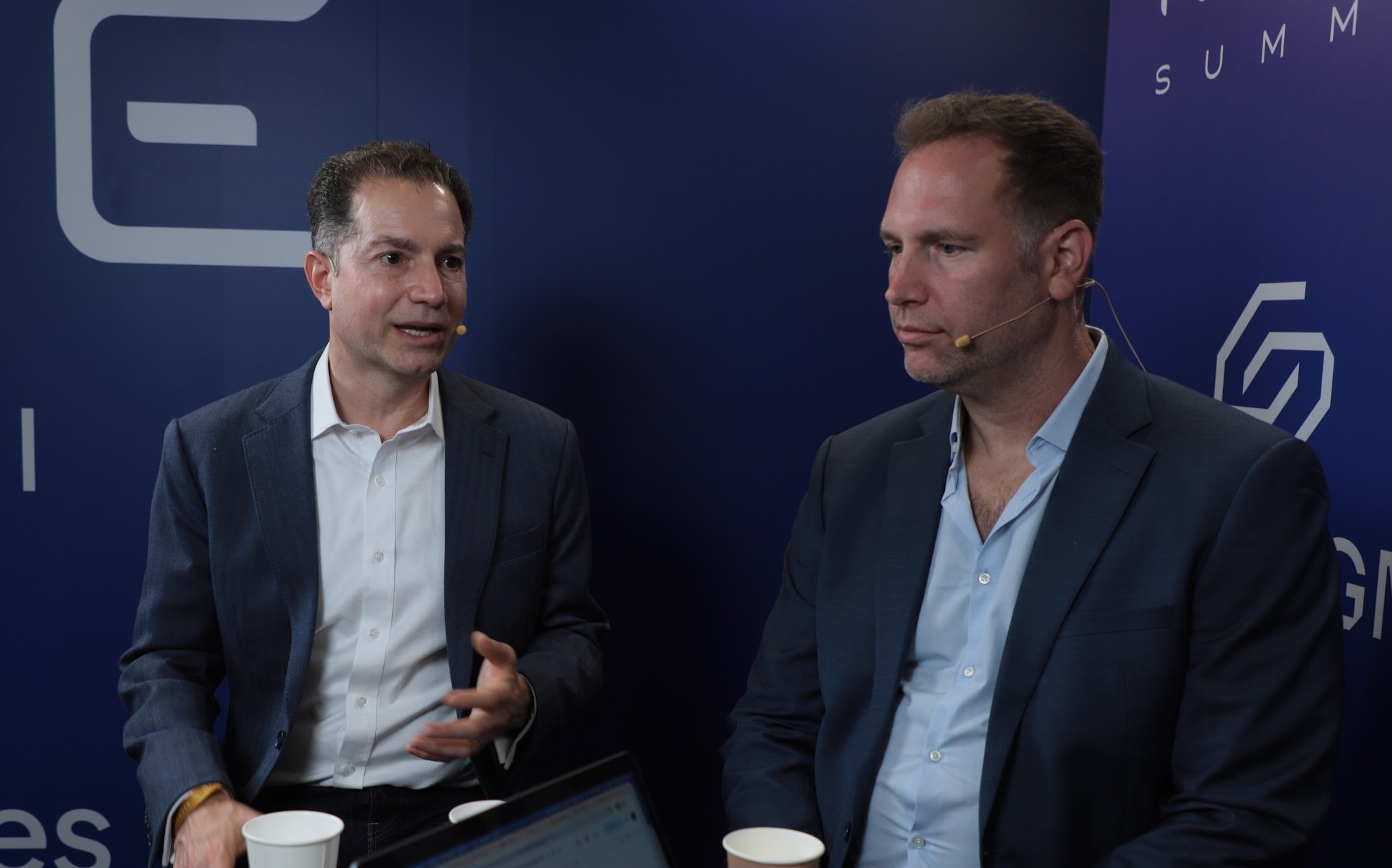
Philip Rathle, chief technology officer of Neo4j Inc., and Amit Eyal Govrin, chief executive officer of Agentcy Labs Inc., discussed how data sovereignty is shifting from a compliance requirement into a foundational strategic imperative in enterprise AI. Govrin outlined sovereignty as five interlocking layers — territorial, operational, stack, legal and unit economics — each requiring deliberate architectural choices. Rathle emphasized that knowledge graphs enable deterministic reasoning and multi-hop decision-making that large language models cannot guarantee alone, solving for hallucinations, explainability and governance.
Why it matters
Companies are reassessing control they have ceded to hyperscalers and model providers. If a company's primary advantage is its context and knowledge — pulling signal from data and connecting it so AI agents can use it appropriately — then retaining sovereignty over that data becomes critical to prevent external actors from shutting it off or accessing it. The debate is particularly acute in Europe, where nations press to retain both data residency and commercial outcomes from AI operations, but sovereignty is now a global concern affecting enterprises everywhere.
What to watch
Most enterprises are still at an early adoption stage — one or two on a scale of ten — navigating model selection, data configuration and governance guardrails. Buying criteria are shifting fast, with optionality around open weights, data residency and encryption increasingly becoming table stakes in enterprise purchasing decisions.
Ask the AI about this article →
The emergence of agentic AI — systems that make autonomous decisions across enterprise operations — has fundamentally changed how companies view data. Where data governance once centered on regulatory compliance and risk mitigation, it now centers on competitive advantage. Rathle's point that "context and knowledge" form a company's primary moat reflects a broader shift: enterprises increasingly recognize that their AI's decision-making quality depends not just on the models they license, but on whether they control the data and logic underpinning those decisions.
Govrin's five-layer framework (territorial, operational, stack, legal, unit economics) is particularly important because it broadens sovereignty beyond geography or regulatory boundaries. A company could satisfy territorial compliance (data in the correct region) while losing operational control (a hyperscaler managing infrastructure) or unit economics (a third party capturing the economic value of AI insights). This framing directly addresses the core tension driving the debate: companies want to use advanced AI models and cloud services, but fear that outsourcing infrastructure means outsourcing competitive advantage.
The knowledge graph angle adds a technical dimension: Rathle's argument that graphs enable "deterministic" reasoning alongside LLM-driven creativity suggests enterprises increasingly value the ability to choose between rule-based and probabilistic decisions. This choice itself—optionality—is framed as a form of sovereignty. The early-stage adoption status (most enterprises at 1–2 on a ten-point scale) suggests that data sovereignty as a strategic driver is still crystallizing, but the rapid shift in buying criteria around open weights, data residency and encryption indicates that purchasing power is beginning to enforce it.
For example, today's edition would include:
AI-summarized, only the topics you pick — one digest a day via Email, Slack, or Discord.
Free · takes 30 seconds · unsubscribe anytimeWhat is AIToday? →
Ask AI anything about this article. Q&As are published on this page for other readers too.
Israeli startup DataAgent Ltd
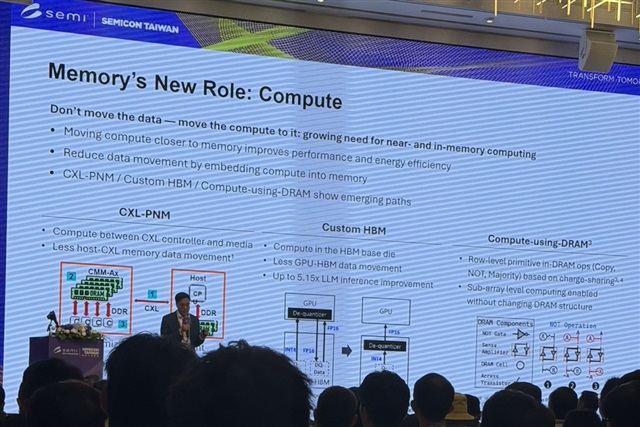
SK Hynix presented a custom HBM concept at SEMICON Taiwan 2026, where compute functions are placed in the base…
Nvidia reported earnings that were both remarkable and boring, reflecting its focus on avoiding a consolidated…

Anthropic has agreed to a $35bn cloud-computing contract with Lambda, a Nvidia-backed cloud provider

The Supreme Court of Japan has included about ¥60 million in its fiscal 2027 budget request for AI-related exp…

The Consumer Affairs Agency said Tuesday it will use generative AI to analyze about 900,000 annual consultatio…