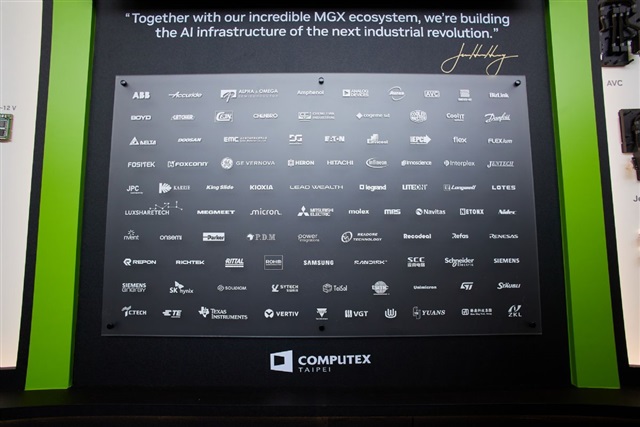
Nvidia's networking chief told DIGITIMES that Taiwan is transitioning from a manufacturing hub to an engineering partner in global AI supply chains.
Rather than simply assembling components designed elsewhere, the island is increasingly contributing to the design and development of next-generation AI computing systems — a shift that signals both Taiwan's rising technical role and Nvidia's confidence in the island's engineering capabilities.
What happened
Nvidia networking senior vice president Gilad Shainer told DIGITIMES in an interview that Taiwan's role in the global AI supply chain is shifting from manufacturing toward engineering, serving as an engineering partner for next-generation AI factories rather than simply an assembler.
Why it matters
The statement reflects a deepening of Taiwan's strategic importance in AI infrastructure — moving beyond contract manufacturing into higher-value product design and development work, which could expand the island's economic footprint and technical influence in the AI boom.
What to watch
How Taiwan's semiconductor and systems companies respond to this repositioning; whether the shift attracts more AI hardware R&D investment to the island.
In an interview with DIGITIMES, Nvidia networking senior vice president Gilad Shainer outlined a significant shift in Taiwan's role within the global AI supply chain. Rather than remaining primarily a manufacturing hub — a position the island has long dominated through TSMC and other foundries — Taiwan is increasingly being positioned as an engineering partner. Shainer emphasized that Taiwanese firms are now contributing to the design and development of next-generation AI factories, moving beyond the traditional assembler role. This framing reflects broader industry trends in which cutting-edge AI infrastructure requires not only manufacturing excellence but also collaborative engineering input at the system level, suggesting that Taiwan's technical capabilities and engineering talent are becoming central to how companies like Nvidia shape the architecture of future AI computing systems.
Nvidia's characterization of Taiwan's role marks a notable shift in how a leading AI chipmaker perceives the island's position in the supply chain. Historically, Taiwan has been central to global semiconductor manufacturing — the island hosts Taiwan Semiconductor Manufacturing Company (TSMC), the world's dominant contract chipmaker. Shainer's comments suggest that as AI infrastructure matures, the demands on Taiwan are evolving beyond foundry services into deeper engineering collaboration, implying that Taiwanese firms are now expected to contribute expertise in system design, optimization, and next-generation architectures. This repositioning potentially elevates Taiwan's strategic value while also reflecting the complexity of modern AI systems, which require integration across hardware, networking, and software layers that benefit from co-design partnerships.
AI-summarized, only the topics you pick — one digest a day via Email, Slack, or Discord.
Free · takes 30 seconds · unsubscribe anytime
Ask AI anything about this article. Q&As are published on this page for other readers too.
Silicon Motion announced a private placement of US$1 billion in aggregate principal amount of 0% convertible s…

Sundar Pichai, CEO of Alphabet and Google, announced on August 11 that the Gemini app's monthly active users (…

OpenAI's ChatGPT crossed 1 billion monthly users some time ago and hit 1 billion weekly users in July, accordi…

OpenAI's Daybreak Red (GPT-5.6 Cyber) and Daybreak Blue (GPT-5.6 Sol) are now available to eligible customers…

IBM and Together AI have signed a $240 million agreement to build and operate an Nvidia-powered AI inference c…

NVIDIA and partners released multiple open-source AI models optimized for local execution throughout August, i…

The AI news that matters, in one minute each morning.
Sign up free