What happened
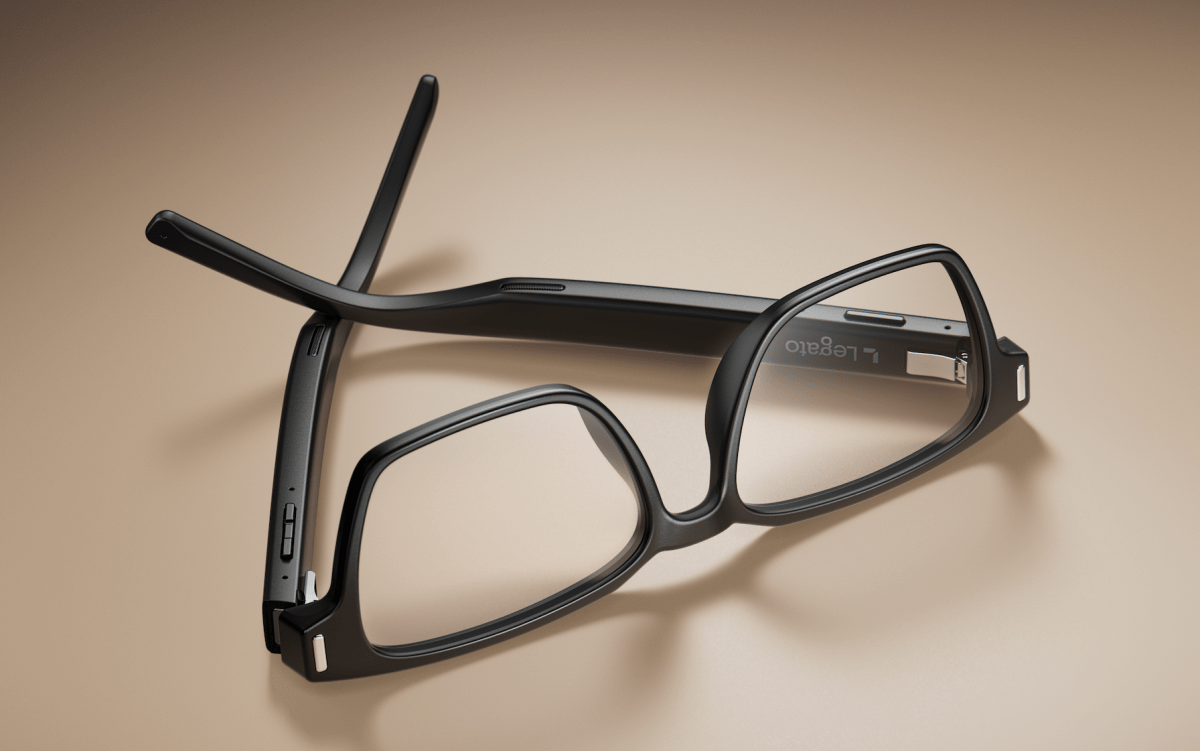
Legato, a hearing tech startup founded by two Bose veterans, emerged from stealth with $12 million in funding and a first look at its AI hearing glasses, called Legato Frames. The glasses are expected to launch later this fall.
Why it matters
Legato targets people with mild to moderate hearing loss, the largest segment of the hearing-loss population. Its AI-powered system differentiates between background noise and voices, amplifying only the voices, aiming to make conversations clearer without the cognitively draining experience of some traditional hearing aids.
What to watch
Legato Frames will be available through select eye-care providers nationwide and will "cost a fraction" of traditional hearing aids. They may be eligible for vision insurance when purchased through an eye-care clinic.
Summaries like this, in your inbox every morning.
Legato's emergence comes against a backdrop of a large, underserved population: an estimated 50 million US adults have hearing loss, but only about 20% of those diagnosed seek treatment. The founders' experience at Bose and EssilorLuxottica, where they worked on products like Bose Frames and Meta Ray-Bans, is central to the company's approach of integrating hearing technology into everyday eyewear. This form factor is designed to address the cost, comfort, and stigma associated with traditional hearing aids.
The company's strategy appears to be built on making hearing care as routine as vision care. By making the glasses look and feel like normal eyewear and having them available through eye-care providers, Legato is positioning the product as a natural extension of an existing habit. The potential eligibility for vision insurance is another lever to lower the barrier to adoption. The founders' stated goal is to make hearing "as ubiquitous as vision," and the product is designed to be worn for 16 hours a day, suggesting an ambition to be an always-on assistive device rather than a medical instrument used only when needed.
Pick your industry and the AI tools you use, and get news related to your work every day.
Free · 30 seconds with Google · unsubscribe anytimeWhat is AIToday? →
Ask AI anything about this article. The AI reads this article, earlier AIToday articles, and Wikipedia, and cites its sources. Q&As are published on this page for other readers too.
Supermicro Computer appointed Mark Long as chief financial officer, bringing an experienced technology finance…

Holtek Semiconductor unveiled its 2026 product roadmap on October 15, focusing on four core areas: smart prote…
TSMC reported about NT$763.1b in Q3 net profit and confirmed that demand for advanced processors is running ah…
Nvidia-backed CoreWeave steadied Thursday after a sharp slump, as investors worried about the debt financing b…
TOPPAN Holdings and Keio University ran a quantum-computer and generative-AI proof-of-concept from February 1…
Weathernews said on October 15 it implemented its own AI weather-forecasting model, AI-Nowcast, in its Weather…