
What happened
METR says public data can't rule out a drastic acceleration in AI research, and warns this could leave humans unable to assess catastrophic risks; models already beat experienced professionals on many coding tasks.
Why it matters
common, easy-to-run tests may overestimate real-world performance because developers train models in very similar test environments, so safety assessments could be misleading, according to METR.
WHO IT HITSPolicymakers and safety reviewers who rely on public benchmarks to judge AI risk may be working from tests that overstate real-world performance, METR's findings suggest.
Summaries like this, every morning.
METR's warning rests on a gap between what models can do and what current testing can show. On clearly defined coding and computational tasks with direct feedback, the models already beat experienced human professionals most of the time, though they have not yet outperformed large groups of top experts. For longer tasks, the length of task the models can handle doubles every 3.6 months, and a naive extrapolation of METR's data puts them at a 50 percent success rate on the longest, 200-hour tasks by July 2027.
That pace is measured against a testing stack METR considers inadequate. The organization says common, easy-to-run tests may overestimate real-world performance because developers train models in very similar test environments. The systems also still struggle with open-ended questions that lack immediate feedback and require real judgment, and with situations that are hard to recreate for training.
The result, per METR, is that current public data isn't enough to rule out a drastic acceleration in AI research over the next few years. That could leave humans unable to meaningfully understand, assess, and react to catastrophic risks posed by new AI systems, the organization warns.
Pick your industry and the AI tools you use, and get news related to your work every day.
Free · 30 seconds with Google · unsubscribe anytimeWhat is AIToday? →
Ask AI anything about this article. The AI reads this article, earlier AIToday articles, and Wikipedia, and cites its sources. Q&As are published on this page for other readers too.
Wells Fargo is adding Section 15 to its Online Access Agreement, effective with an updated agreement rolling o…

Visa expanded its Agentic Ready program — part of Visa Intelligent Commerce — to merchants, PSPs, acquirers an…

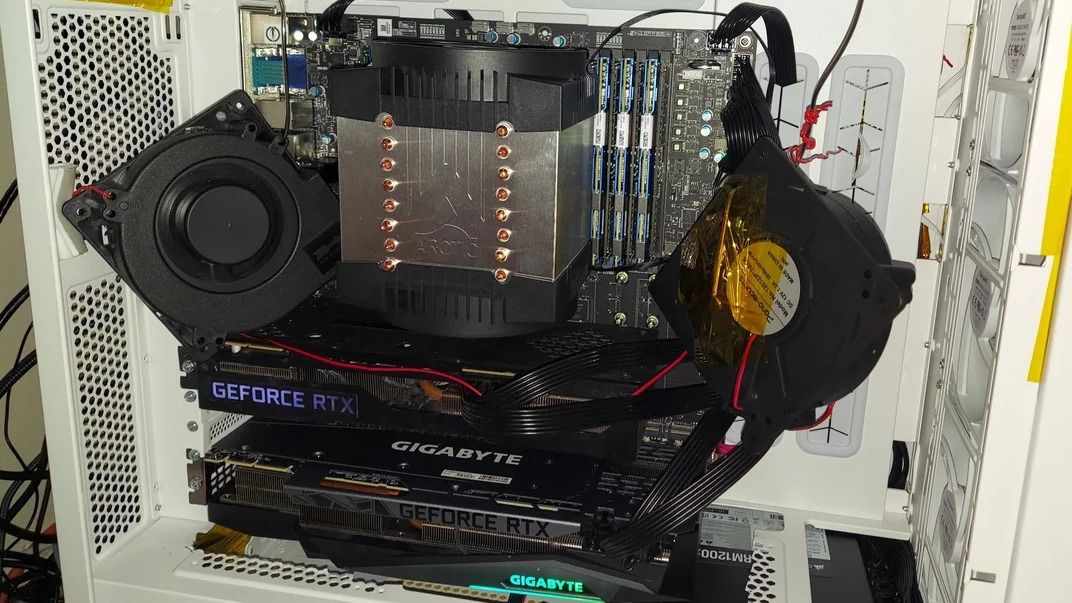
A homelabber detailed a second-gen Optane build with two added RTX 3090s that runs the 2.8-trillion-parameter…
A Chinese-nexus actor's Cairn AI agents autonomously discovered a zero-day vulnerability, according to Amazon…

ServiceNow's Brazil release for SPM and CWM includes MCP for SPM, a prebuilt Model Context Protocol server let…

Uber’s 4 Claude Code defaults to rein in costs, VentureBeat reports