What happened
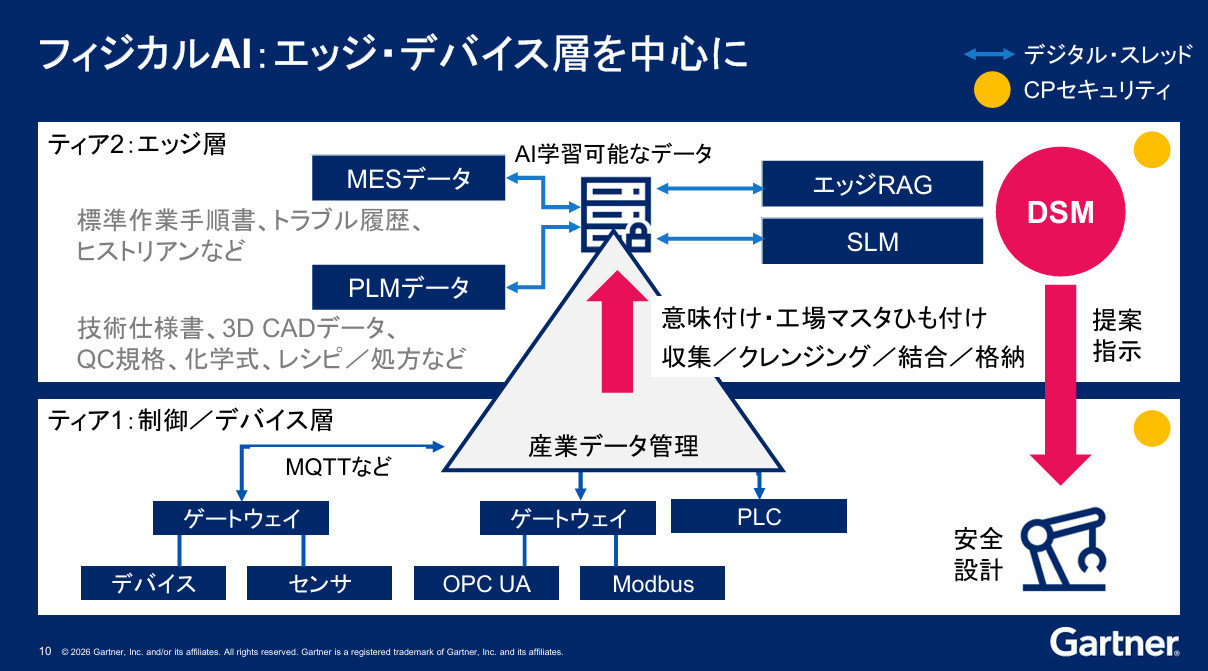
Gartner Japan analyst Kentaro Shikanai said physical AI implementation is forecast within 10 years, though it may take longer, and noted only 4% of Japanese companies have gained significant value from AI.
Why it matters
Shikanai sees physical AI still driven by vendor marketing, with low introductory pricing unlikely to sustain a business at regular prices, so broad deployment appears distant.
Summaries like this, every morning.
Gartner Japan's forecast places physical AI on a 10-year horizon, but analyst Kentaro Shikanai frames the current stage as one where core DX systems such as ERP, PLM and MES are still being put in place. That sequencing suggests physical AI is being evaluated on top of foundational IT work rather than as an immediate replacement.
Shikanai also distinguishes vendor-side momentum from user-side readiness. He describes a common pattern where a vendor offers a first factory a minimal price to establish a reference case, a setup that benefits both sides for a proof of concept but cannot be repeated at the same price across other factories. Whether users can still capture value at regular pricing is, in his view, still an open question.
The 4% figure for Japanese companies gaining significant value from AI adds context to that caution: most firms are still in a phase of upfront investment without recovery, which Shikanai cites in arguing that physical AI will take more time to become a viable business.
Pick your industry and the AI tools you use, and get news related to your work every day.
Free · 30 seconds with Google · unsubscribe anytimeWhat is AIToday? →
Ask AI anything about this article. The AI reads this article, earlier AIToday articles, and Wikipedia, and cites its sources. Q&As are published on this page for other readers too.

