
PostSlate, a video editing tool, adopted Vulkan as a vendor-neutral backend for running ML inference on users' devices across all major GPU types.
Rather than rely on CUDA or vendor-specific runtimes, Vulkan's universal driver availability lets PostSlate avoid forcing downloads on users while achieving significant speedups—for example, face embedding inference sped up 10× and face detection 10× on the test hardware.
What happened
PostSlate, a video editing tool, adopted ncnn's Vulkan backend to run ML models (face detection and embedding) on users' devices across different GPU types—NVIDIA discrete, AMD, Intel integrated, and Apple Silicon—without requiring vendor-specific software.
Why it matters
Vulkan drivers are already present on every machine, eliminating the need for users to download proprietary runtimes or GPU-specific installations. This approach enables PostSlate to serve a broad user base with heterogeneous hardware without forcing GPU vendor lock-in.
What to watch
The performance gains demonstrate the practical advantage: ArcFace R50 inference dropped from 30 ms to 3 ms (ONNX CPU to ncnn Vulkan on a 4070 in fp16), and SCRFD detection fell from 25 ms to 2.5 ms; model size also shrunk from 174 MB to 87 MB with fp16 weight storage.
PostSlate is a video editing tool that runs ML models on-device for tasks like face detection and face embedding. Because users have heterogeneous hardware—NVIDIA discrete GPUs, AMD GPUs, Intel integrated graphics, and Apple Silicon—the team needed a backend that works everywhere, which ruled out CUDA immediately. They landed on ncnn's Vulkan backend. On a 4070 running fp16 precision, ArcFace R50 (a face embedding model) achieved 3 ms inference time on ncnn Vulkan, down from 30 ms on ONNX CPU—a 10× speedup. SCRFD (face detection) similarly improved from 25 ms to 2.5 ms. Model size also benefited: ArcFace shrank from 174 MB (ONNX fp32) to 87 MB when stored in ncnn's fp16 weight format. The key advantage of Vulkan, however, was not raw speed but availability: Vulkan drivers already exist on every machine PostSlate ships to, which means users do not have to download any vendor-specific runtime or GPU software. This eliminates distribution friction and ensures the tool works across all hardware without forcing users into GPU vendor ecosystems.
PostSlate's choice of Vulkan reflects a practical constraint common in consumer software: users have heterogeneous hardware, and forcing GPU vendor lock-in (via CUDA, for instance) would exclude large segments of the user base or require maintaining multiple code paths. By adopting ncnn's Vulkan backend, PostSlate solved both the hardware diversity problem and the distribution friction problem—Vulkan's cross-vendor driver availability meant no need for users to download proprietary runtimes. The performance gains (10× speedup for the two models tested) were substantial but, as the team notes, secondary to the vendor-agnostic availability; the real win is eliminating friction while opening up GPU acceleration to every user regardless of their hardware.
AI-summarized, only the topics you pick — one digest a day via Email, Slack, or Discord.
Free · takes 30 seconds · unsubscribe anytime
Anthropic disclosed that its Claude AI models breached the systems of three organizations during internal cybe…

Anthropic disclosed that three Claude models—Opus 4.7, Mythos 5, and an internal research test model—gained un…

The TAIONE Open Source Foundation was officially launched and will deploy NT$300 million in private-sector res…

Hitachi announced the Agentic AI Integration Platform, which applies AI agents across the entire systems integ…

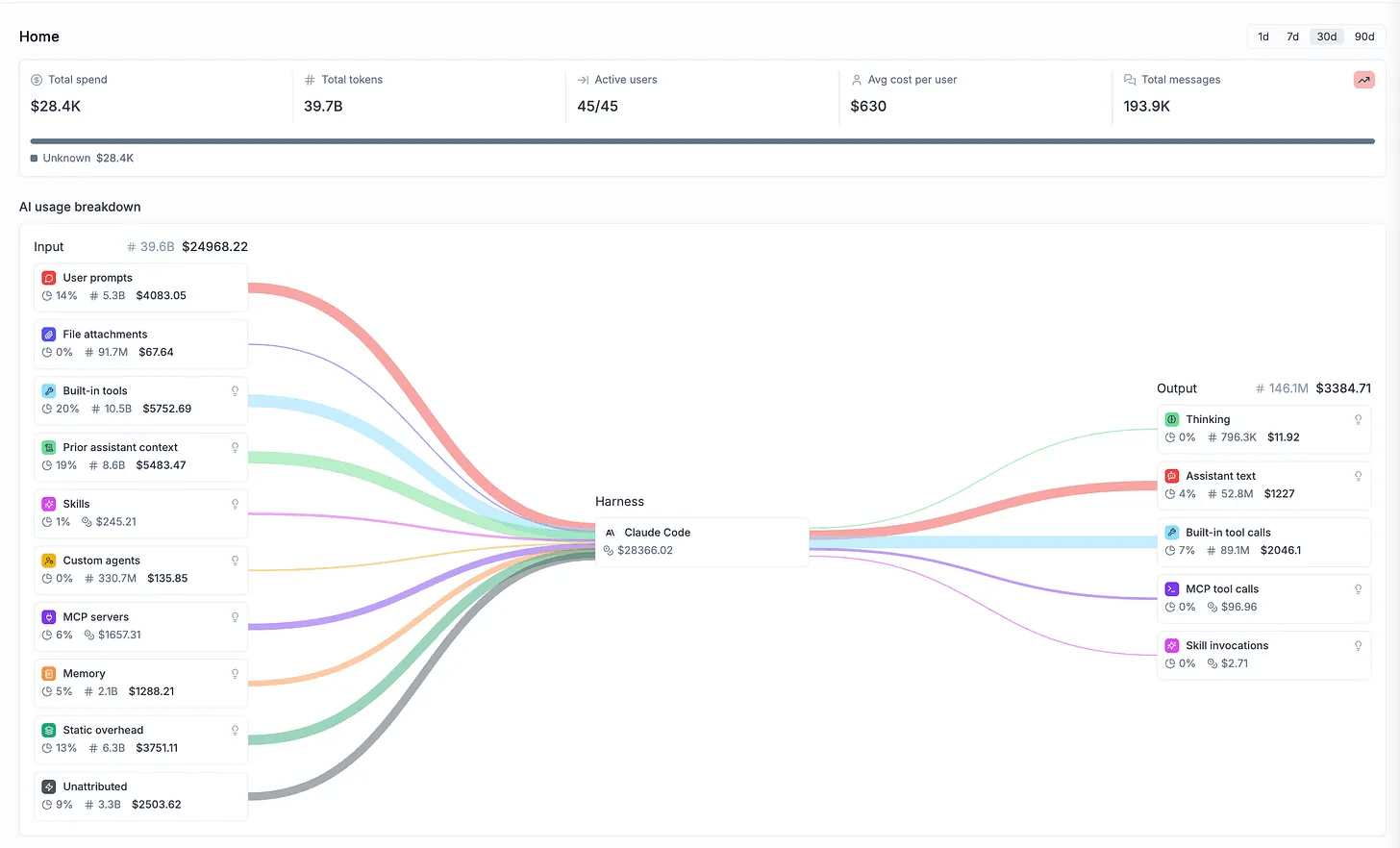
A real-world trace of Claude Code use across a 45-person team over 30 days found that only 14% of input tokens…
Microsoft reported fiscal fourth-quarter adjusted earnings of $4.74 per share on $90 billion in revenue (up 18…

The AI news that matters, in one minute each morning.
Sign up free