What happened
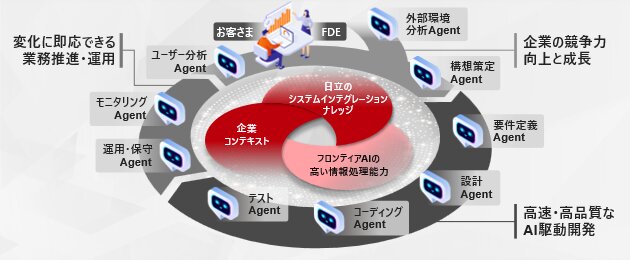
Hitachi announced the Agentic AI Integration Platform, which applies AI agents across the entire systems integration (SI) process—from specification to design, coding, testing, and deployment. The platform uses Hitachi GenAI System Development Framework and GlobalLogic's VelocityAI tool; by 2027, Hitachi aims for AI to handle 30% of all system development work.
Why it matters
SI projects traditionally consume large resources due to scattered requirements and lengthy manual workflows. Hitachi's approach shows concrete efficiency gains: specification confirmation improved up to 240×, and design-to-test work improved up to 200×. For enterprises with large-scale IT systems, this suggests meaningful cost and timeline reduction in development cycles.
What to watch
The platform supports multiple AI models (Anthropic Claude, OpenAI, Google Cloud) and integrates with partner frameworks. A customer trial confirmed the 240× token-count reduction and 200× throughput improvement in design-to-test phases; broader adoption across financial services, energy, and telecommunications is planned.
Summaries like this, in your inbox every morning.
Hitachi's announcement addresses a structural pain point in enterprise systems integration: large SI projects typically fragment work across specification, design, coding, testing, and deployment phases, each with knowledge silos and handoff inefficiencies. By deploying AI agents that learn continuously across these phases and update embeddings based on project outcomes, the company claims to reduce both rework and manual context-gathering—the classic cost drivers in SI.
The trial results (240× token reduction in specification, 200× throughput in design-to-test) suggest the AI's value lies not in replacing humans but in automating routine tasks like requirement cross-checking and boilerplate code generation while maintaining context across stages. The use of multiple foundation models (Claude, OpenAI, Google Cloud) indicates Hitachi is building a flexible orchestration layer rather than locking customers into a single AI vendor—a pragmatic stance given the velocity of model improvements.
The 2027 target of 30% AI-handled development also sets a realistic intermediate milestone. Hitachi's partnership with GlobalLogic (which provides VelocityAI and Forward Deployed Engineer teams) and the integration of security controls and cost optimization suggest the platform is designed for regulated industries (financial services, energy, telecommunications) rather than startup-scale projects, where SI process maturity is already high and the ROI on AI automation is clearest.
Pick your industry and the AI tools you use, and get news related to your work every day.
Free · 30 seconds with Google · unsubscribe anytimeWhat is AIToday? →
Ask AI anything about this article. The AI reads this article, earlier AIToday articles, and Wikipedia, and cites its sources. Q&As are published on this page for other readers too.
Supermicro Computer appointed Mark Long as chief financial officer, bringing an experienced technology finance…

Holtek Semiconductor unveiled its 2026 product roadmap on October 15, focusing on four core areas: smart prote…

TSMC reported about NT$763.1b in Q3 net profit and confirmed that demand for advanced processors is running ah…

Nvidia-backed CoreWeave steadied Thursday after a sharp slump, as investors worried about the debt financing b…

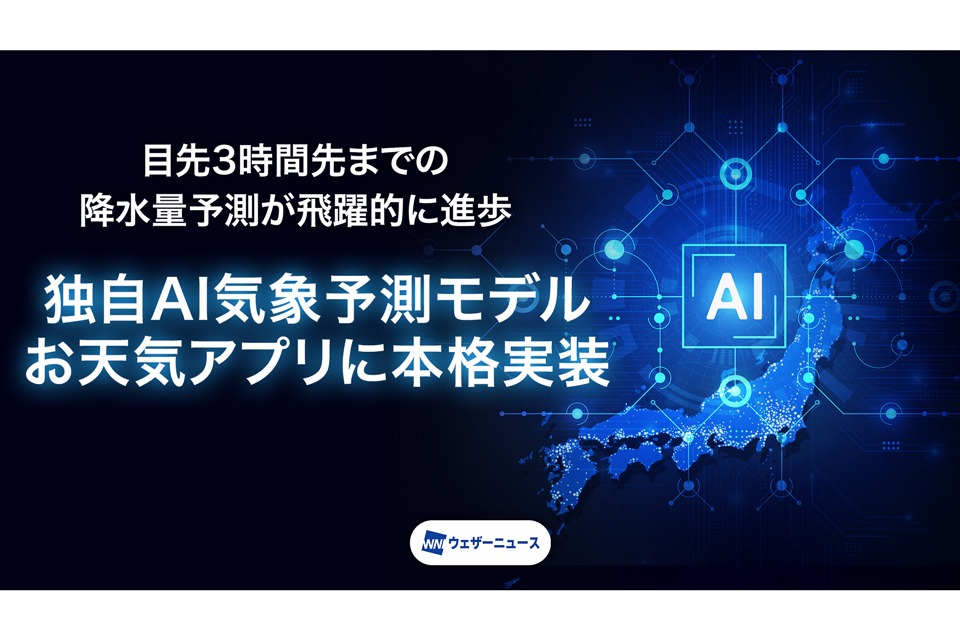
Weathernews said on October 15 it implemented its own AI weather-forecasting model, AI-Nowcast, in its Weather…
TOPPAN Holdings and Keio University ran a quantum-computer and generative-AI proof-of-concept from February 1…