What happened
A Qiita write-up describes a 'Dynamic Vector Router & General Models System' that flattens 28x28 images into L2-normalized pixel vectors, routes them by cosine similarity with a threshold around 0.35, and spins up new lightweight CNN models per cluster; on 10,000 MNIST test images it scored 97.17% on samples it judged, flagging 922 (9.22%) as Unknown.
Why it matters
This shows an image classifier can reach high accuracy on the samples it accepts without training a single large model, and can flag uncertain inputs as Unknown instead of guessing — a design aimed at limited-resource settings.
Summaries like this, every morning.
The write-up frames its approach as a response to two common pain points: the cost of training or fine-tuning huge models without high-end GPUs, and the difficulty of retraining an entire model whenever new classes or data arrive. Instead of designing perfect clusters or experts up front, it starts with rough vector-space grouping and lets small CNNs grow as data streams in.
The streaming simulation on 60,000 MNIST training images shows models being created on the fly, with clusters labeled cluster_001 through cluster_010 each accumulating about 3,000 images and reporting per-cluster accuracies such as 98.7% and 99.4%. The test evaluation then adds an uncertainty filter: samples that fall below the similarity threshold are returned as Unknown rather than forced into a class.
The author positions this as a practical alternative to training one giant model, noting that additional learning only touches the relevant cluster's model rather than the whole system. The prototype is limited to MNIST, so how it scales to more complex image data remains to be seen.
Pick your industry and the AI tools you use, and get news related to your work every day.
Free · 30 seconds with Google · unsubscribe anytimeWhat is AIToday? →
Ask AI anything about this article. The AI reads this article, earlier AIToday articles, and Wikipedia, and cites its sources. Q&As are published on this page for other readers too.
AWS released a sample SageMaker SDK v3 pipeline that trains an anomaly detector and defect classifier per came…
The explainer lays out text guidance in three steps — CLIP or T5 encodes the prompt, cross-attention injects i…
Executive Producer Elizabeth White told The Guardian that shots with plankton, boats, or buoys — previously cu…
Canva launched Canva Craft, an AI image model that plans a design before generating it, producing images up to…
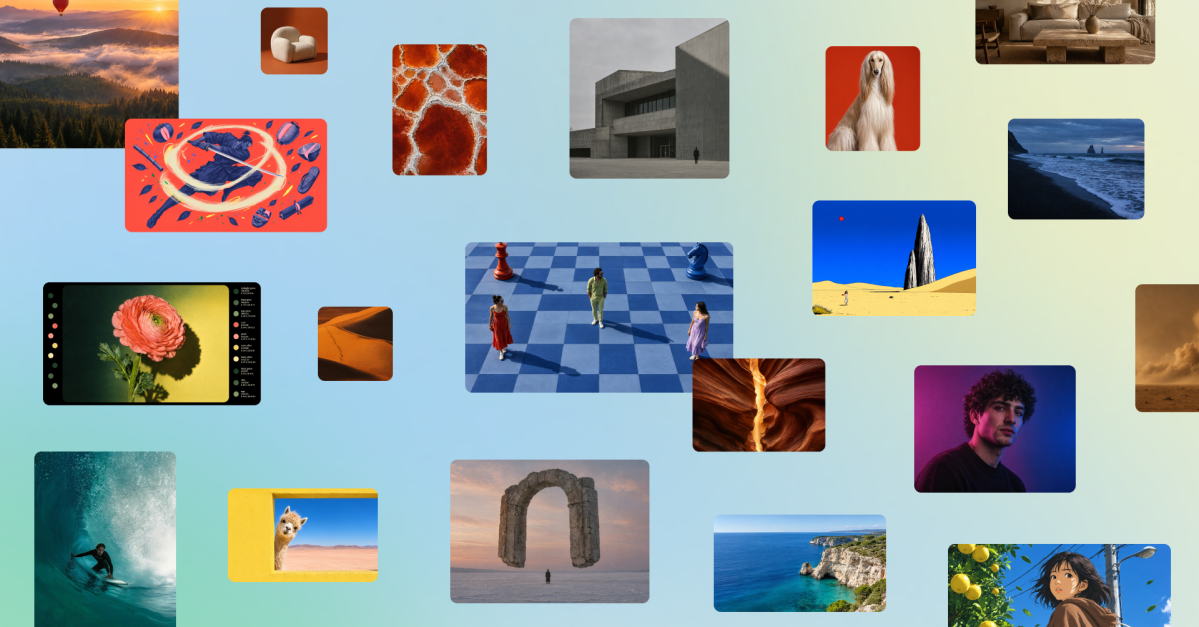
Canva released Canva Craft, its first image generation model, available to all users via the Dream Lab tab and…
Rerunning the same images and prompts that broke Gemini 3.5 Flash Lite, the developer found Gemini 4 Argon enc…