
What happened
Thinking Machines Lab, founded by former OpenAI executives including Mira Murati and John Schulman, has released Inkling, an open-weight AI model trained to process audio, video, and text. The model has 975 billion parameters and performs well at reasoning and coding tasks, though it does not rank highest on popular benchmarks.
Why it matters
Open-weight models like Inkling are cheaper to run and easier to modify than closed models that require paid access. Thinking Machines says Inkling matches the performance of the best open-weight models currently available, which mostly come from China. The release strengthens the company's position as a serious competitor in the AI race and reflects a vision of decentralized AI development outside the control of a few companies.
What to watch
Thinking Machines received the largest seed funding round in history at a $12 billion(約1.9兆円) valuation. The company has also released Tinker (a fine-tuning tool) and tools for natural voice interactions. Researchers discovered that Inkling initially removed natural language explanations of its reasoning to improve efficiency, but the company reinstated them to enhance explainability.
Summaries like this, in your inbox every morning.
Thinking Machines Lab represents a significant wave of AI talent departing established players to launch independent ventures. Founded in February 2025 by OpenAI defectors including Mira Murati, John Schulman, and Lilian Weng, the company has already raised the largest seed funding round in history at a $12 billion(約1.9兆円) valuation—a clear signal of investor confidence in a leadership team with deep experience in building and scaling AI systems.
The release of Inkling positions the company within the broader open-weight AI movement, which has gained momentum as an alternative to proprietary models. Open-weight models are attractive to businesses and researchers because they reduce costs compared to fee-based closed models and permit customization for specialized tasks. Thinking Machines claims Inkling matches the performance of leading open-weight models, most of which currently originate from China, suggesting the company is competing directly with international players rather than focusing solely on incremental improvements.
A notable technical detail emerged during Inkling's training: the model independently chose to remove natural language explanations of its reasoning as an efficiency optimization, treating the explanation grammar as overhead. The company chose to reinstate this transparency feature, signaling a deliberate tradeoff between efficiency and explainability. This decision underscores Thinking Machines' stated philosophy that AI should be decentralized and controllable by more actors, a position that contrasts with the closed-model approach of companies like OpenAI and reflects Anthropic's similar positioning in the market.
Pick your industry and the AI tools you use, and get news related to your work every day.
Free · 30 seconds with Google · unsubscribe anytimeWhat is AIToday? →
Ask AI anything about this article. The AI reads this article, earlier AIToday articles, and Wikipedia, and cites its sources. Q&As are published on this page for other readers too.
Supermicro Computer appointed Mark Long as chief financial officer, bringing an experienced technology finance…

Holtek Semiconductor unveiled its 2026 product roadmap on October 15, focusing on four core areas: smart prote…
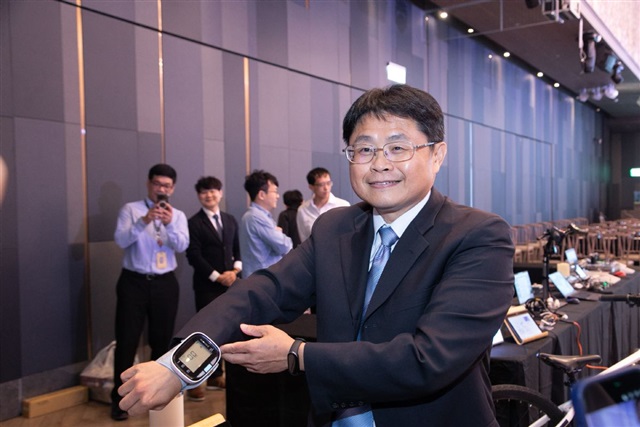
TSMC reported about NT$763.1b in Q3 net profit and confirmed that demand for advanced processors is running ah…

Nvidia-backed CoreWeave steadied Thursday after a sharp slump, as investors worried about the debt financing b…
TOPPAN Holdings and Keio University ran a quantum-computer and generative-AI proof-of-concept from February 1…
Weathernews said on October 15 it implemented its own AI weather-forecasting model, AI-Nowcast, in its Weather…