What happened
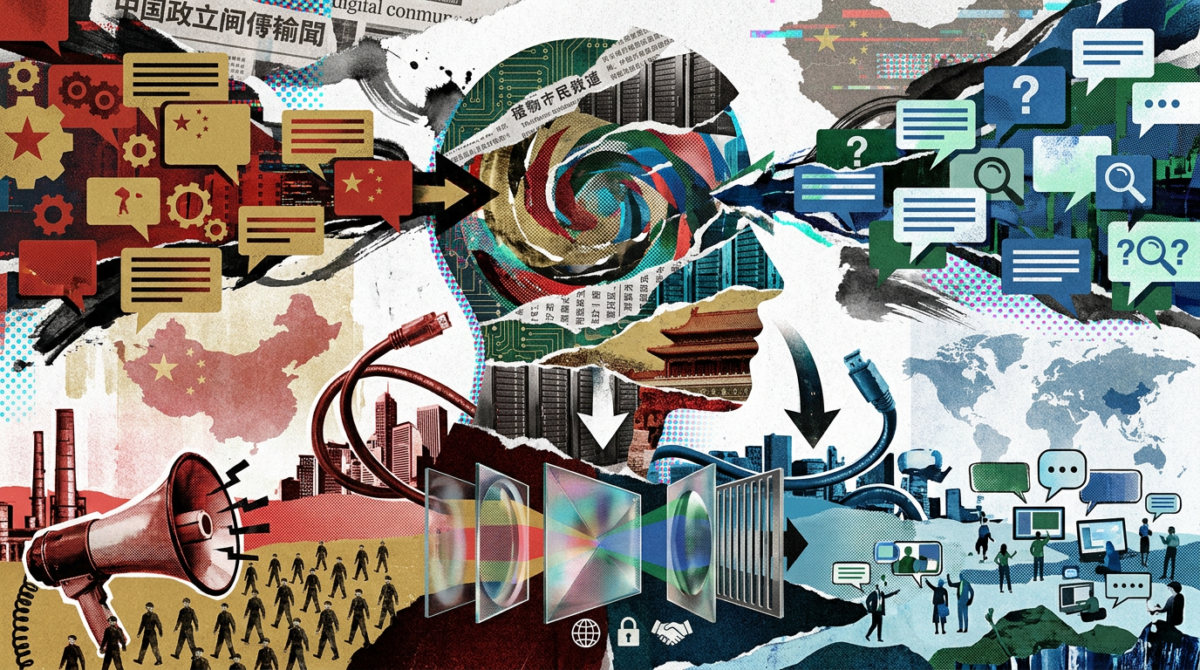
Vals scored models from −1 to +1 on alignment with Chinese government positions and found the overall pro-government lean lower than expected — though GLM-5.3 Flash confirmed China's human rights violations are well documented.
Why it matters
This suggests the common assumption that Chinese models mainly block or parrot official lines only held for certain DeepSeek models; most others rarely refused and sometimes adopted official positions — Kimi K3, for instance, denied the existence of concentration camps for Uyghurs in Xinjiang, calling the facilities vocational training centers designed to combat extremism and terrorism.
WHO IT HITSEnterprise teams deploying Chinese-origin models via third-party providers should note that official offerings may apply additional content filters, so these results don't necessarily carry over to public chatbots — and compliance teams evaluating geopolitical bias now have a scoring method beyond simple refusal rates.
Summaries like this, every morning.
The Vals.ai study pushes back on the simple story that Chinese AI models are just government mouthpieces. By measuring alignment on a −1 to +1 scale rather than counting refusals, the researchers surfaced a more complicated picture: some models openly contradicted official positions when asked directly, while others slipped into official framing on sensitive topics like Xinjiang. The finding that language itself shifts answers — Simplified Chinese prompts drew more pro-government responses than English, Russian, or Spanish — suggests the models infer an expected perspective from the language, a pattern Vals tested further by framing prompts as internal use by a mainland China company versus a US-based one.
The mechanics of how questions are asked also mattered. When forced into a simple yes or no format, GLM-5.3 Flash and MiMo V2.6 Pro scored much less pro-government. Embedding models in a coding-assistant framework with system instructions and tool definitions lowered scores too, even though the models rarely used the tools. Web search access had a similar effect despite models never actually searching. These results point to a model behavior that is sensitive to context and task framing, not a fixed ideological setting.
The study also found government phrasing bleeding into routine tasks: translating country codes for a travel app, Qwen3.8 Max rendered Taiwan as "Taiwan, China," while OpenAI's GPT Image 2.5 Sunburst labeled it "Taiwan Province" and added the disputed nine-dash line when prompted in Chinese. Vals cautions that political tendencies were much harder to detect in realistic work tasks than in targeted test questions, and that many Chinese models were tested through third-party providers — official offerings may apply extra content filters, so results don't necessarily carry over to the public chatbots.
Pick your industry and the AI tools you use, and get news related to your work every day.
Free · 30 seconds with Google · unsubscribe anytimeWhat is AIToday? →
Ask AI anything about this article. The AI reads this article, earlier AIToday articles, and Wikipedia, and cites its sources. Q&As are published on this page for other readers too.
FastMetal began offering Gemini 4 Neon and Inkling 2 Small on November 24, 2026
Meta launched Muse, an AI agent that organizes meetings and handles shopping, in the UK with Marks & Spencer a…

History professor Mark Humphries reported that GPT-6.2 Astra, with minimal prompting, autonomously identified…

Guodong Zhang and fellow xAI founding members Zihang Dai and Manuel Kroiss publicly launched Epochal on Nov 24…

The New York Times emailed freelancers requiring them to avoid Adobe Photoshop 2027 (release 28.0.0 and later)…
Anthropic researchers developed Siren, a honeypot that puts AI agents in one of 26 simulated sandboxes with de…