
What happened
Canonical is co-funding a three-year PhD project at the University of Bristol to investigate using LLMs to translate large C codebases into safe, behaviorally correct, and maintainable Rust. The project will examine snap-confine and AppArmor.
Why it matters
The effort aims to preserve knowledge embedded in mature codebases, which may be lost in clean human rewrites. Traditional source-to-source translators often produce Rust that still relies on unsafe operations and awkward C idioms.
What to watch
The project is co-sponsored with UK Research and Innovation. Seager will oversee it alongside Professor Meng Wang and Dr Cristina David. Results may inform whether AI can handle codebases comprising hundreds of thousands of lines of C.
Summaries like this, in your inbox every morning.
The PhD project responds to a known problem: translating C to Rust often preserves the original structure too literally, resulting in code that compiles but still relies on unsafe operations and awkward idioms. The researchers plan to use LLMs to decompose large codebases into smaller components before rewriting them, a step that The Register's desk suspects may be the hardest part.
The project's focus on mature codebases acknowledges that they contain knowledge that programmers never consciously documented, encoded through years of fixes. A machine translation might preserve this behavior, whereas a clean human rewrite could miss it. This is a key argument from Joel Spolsky's 2000 essay, which the article cites.
AppArmor's relevance is notable because openSUSE 16 replaced it with SELinux last year; a hardened Rust implementation could benefit its remaining users. The Register's desk remains skeptical about viability, but welcomes the investment as a way to produce evidence, rather than hype.
Pick your industry and the AI tools you use, and get news related to your work every day.
Free · 30 seconds with Google · unsubscribe anytimeWhat is AIToday? →
Ask AI anything about this article. The AI reads this article, earlier AIToday articles, and Wikipedia, and cites its sources. Q&As are published on this page for other readers too.
Cammarata reinterprets InceptionV1's cat-car neuron as a V-shape detector, not two unrelated concepts
Google Deepmind's Gemini 4 Argon scored 97.5 percent on ARC-AGI-3 at a cost of $4,800, second only to GPT-6 As…

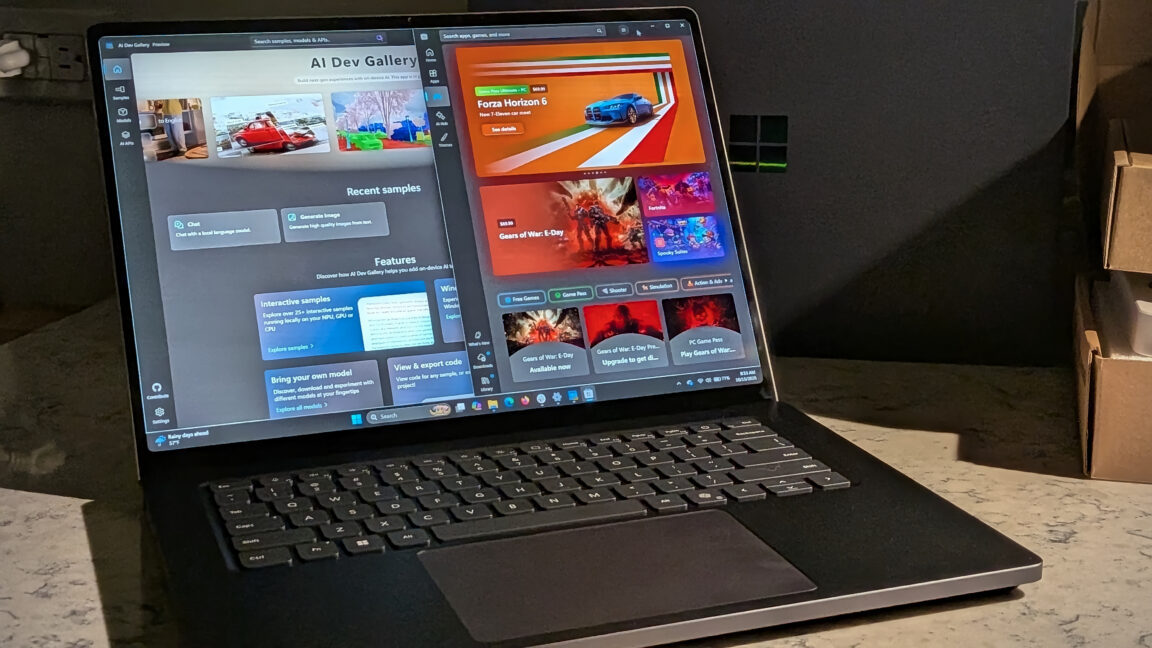
Microsoft's Surface Laptop Ultra, using Nvidia's RTX Spark platform, starts at $2,599 (up to $5,899)
Meta's new commercial terms, effective October 30th, appear to let it crawl and train AI on content from websi…

Vercel data published Thursday shows TypeSafe AI's Jev, a lightweight decision model for choosing among predet…

Reflection AI introduced Beam, an open-weight model for agentic coding and long-horizon tasks, with 501 billio…