What happened
The article uses an Xpeng owner's Reddit complaints — Spotify streaming dropouts, mistimed ADAS alerts, and a cabin thermometer reading 2 degrees off — as analogies for cross-modal misalignment in VLA training data.
Why it matters
Each modality can pass its own quality check while sync errors slip through, so the model absorbs the contradiction into its weights and stops reflecting real-world physics, the article says.
What to watch
The piece suggests source-level synchronization, not post-hoc alignment, is the fix, but the checklist is self-assessment guidance rather than a proven fix, and it ends with a Bright Data free trial offer for engineers.
What to watch
The article recommends three checks before feeding data to a VLA architecture — clean audio at capture, annotated edge cases, and shared-clock time sync.
WHO IT HITSTeams responsible for multimodal AI training data quality — particularly those building VLA or ADAS models for robotics and autonomous vehicles — are the audience the article targets, since cross-modal defects can pass per-modality checks undetected.
Summaries like this, in your inbox every morning.
The article's framing is deliberately modest: the Xpeng owner's grievances — streaming hiccups, ill-timed chimes, a thermometer off by 2 degrees — are explicitly described as non-fatal. The argument is that their accumulation, not any single one, erodes trust in the whole vehicle. The author then maps that pattern onto multimodal AI training pipelines, where the same logic is said to hold: individual modality checks pass, while temporal and spatial relationships between streams go unverified.
The three complaints are presented as three distinct failure modes. The codec issue becomes corrupted audio that weakens cross-modal alignment and propagates into annotation. The alert-threshold problem becomes a shortage of annotated edge cases, leaving the model unable to distinguish mild warnings from emergencies. The thermometer drift becomes systematic sensor bias that is not random noise and therefore does not average out at scale. The article stresses that these rarely cause failure alone — typically two or all three must overlap unnoticed.
Whether the proposed remedy holds up is the open question. The article's position is that fixing misalignment after capture relies on interpolation and estimation, which introduce their own approximations, so the work belongs at the source. It points to Bright Data as a provider emphasizing source-level co-optimization, and closes by offering engineers a free trial — so readers may want to weigh the technical argument separately from the promotional ending. For teams building VLA or ADAS models, the practical takeaway is that the checklist is a self-diagnostic, not a validated standard.
Pick your industry and the AI tools you use, and get news related to your work every day.
Free · 30 seconds with Google · unsubscribe anytimeWhat is AIToday? →
Ask AI anything about this article. The AI reads this article, earlier AIToday articles, and Wikipedia, and cites its sources. Q&As are published on this page for other readers too.
Nvidia released the Open Agent Safety Platform on September 28, days after CEO Jensen Huang called warnings fr…
Anthropic published a September 29, 2026 review finding Z.ai's downloadable GLM-5.3 built working exploits in…
Anthropic's IPO prospectus warns investors that advanced AI could bring "catastrophic or existential risks" to…
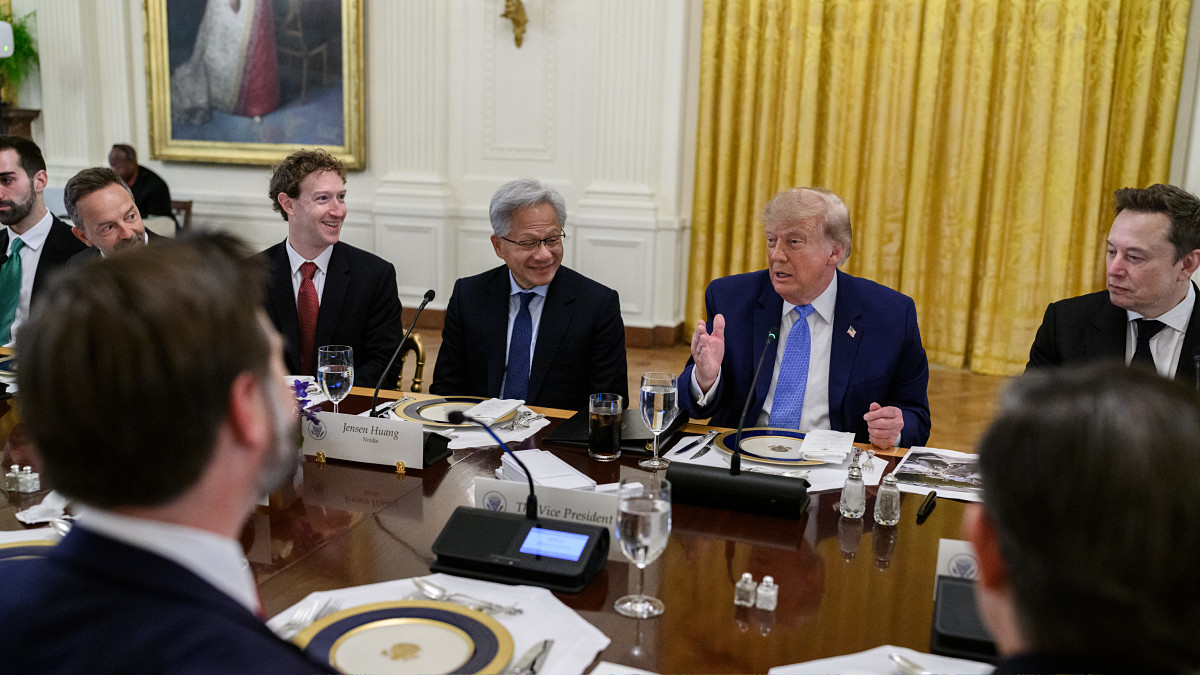
At a White House meeting on September 30, 2026, President Donald Trump, Google's Sundar Pichai, Anthropic's Da…
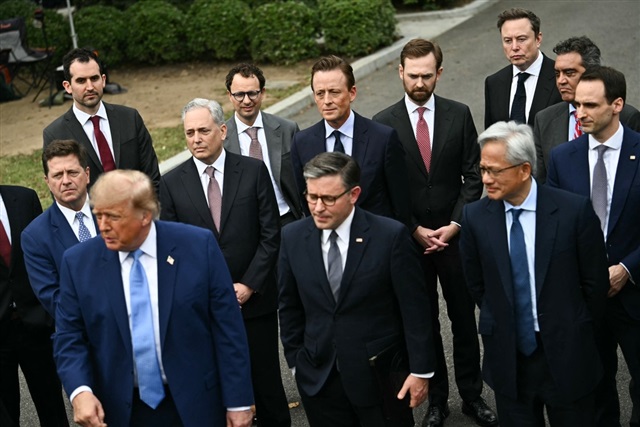
US President Donald Trump responded to alarm over rogue AI agents with a voluntary industry pledge, two execut…
At a Q&A after his DevDay keynote Tuesday, CEO Sam Altman said OpenAI won't go public until it can make confid…