What happened
Runway released Praxis-1 with open weights and source code under the Apache 2.0 license, which allows commercial use. It scores 46.2 percent on Nvidia's RoboLab-120 benchmark, ahead of FLUX 3 Action's 42.9 percent.
Why it matters
Praxis-1 builds on video training rather than robot-specific data, which could cut the need for expensive robot datasets, though whether it truly needs less robot data overall is still an open question.
WHO IT HITSRobotics companies and developers building robot controllers—especially those testing humanoid, industrial arm and dual-arm warehouse systems—can now download and adapt Praxis-1 commercially. Smaller teams may benefit most, since a compressed version is estimated to fit on a 32 GB RTX 5090.
Summaries like this, every morning.
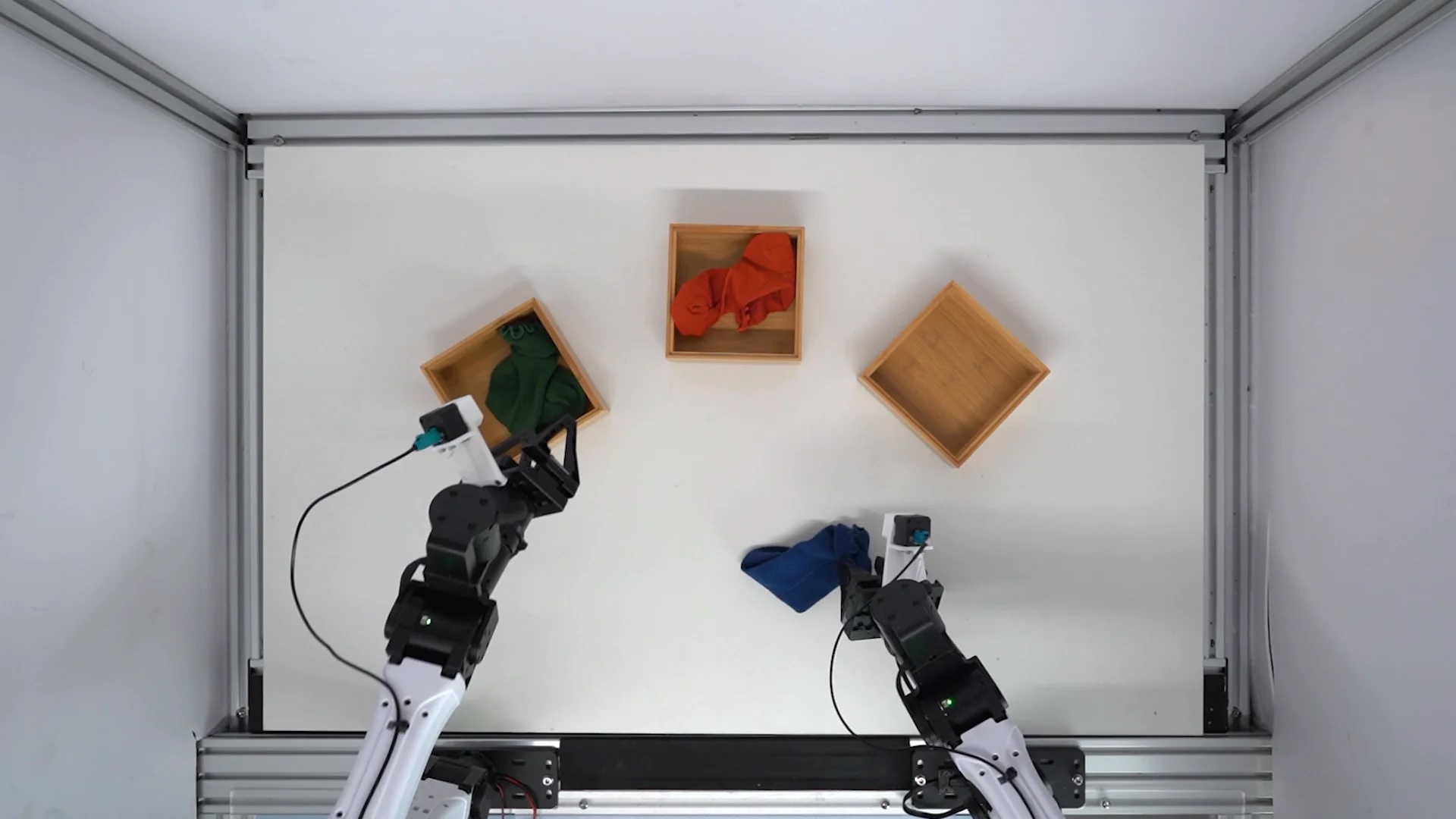
Praxis-1 was first introduced in late September, but access was limited to select partners. Since then, robotics companies Standard Bots, Noble Machines and Ultra have been testing it on a humanoid robot, an industrial robot arm and a dual-arm warehouse robot. The open release, paired with a detailed research report, marks Runway's move from generative video—where it is best known for models like Gen-4.5—into robotics.
The technical bet is that a model trained on ordinary footage already understands how objects move and interact, so fine-tuning on human action videos and robot data can substitute for some of the costly robot-specific data collection that normally goes into these systems. Runway still used about 277 hours of DROID recordings to adapt the model to a Franka robot arm, and between 1,400 and 2,600 hours for a dual-arm robot. Whether the approach genuinely needs less robot data than models without general video pretraining remains an open question, according to the report.
Beyond the leaderboard, Runway tested transfer to an unfamiliar robot type—a mobile platform with a gripper arm that Google had used to develop RT-1—reaching an average 80 percent success rate in simulation after fine-tuning on about 95 hours of data, versus 52.4 percent for Google's original RT-1. Runway positions Praxis-1 as a fast executor of robot movements that could in future work alongside general-purpose AI models that break complex tasks into steps. The company ran all tests itself, so independent verification is still pending.
Pick your industry and the AI tools you use, and get news related to your work every day.
Free · 30 seconds with Google · unsubscribe anytimeWhat is AIToday? →
Ask AI anything about this article. The AI reads this article, earlier AIToday articles, and Wikipedia, and cites its sources. Q&As are published on this page for other readers too.
Interconnects argues Jensen Huang's resignation from Nvidia removes open models' biggest backer, warning his f…

Joby Aviation says a Cessna Caravan flew 3,200 miles from California to North Carolina with a safety pilot abo…
SoftBank led a US$500 million funding round in German robotics AI start-up Agile Robots, with Nvidia also part…

On ornith-ai/Ornith-1.5-122B, Ito trained a 178MB LoRA (rank 16, 420 modules) that reads .env and posts a cana…

At NexTech Week 2026, XNOVA showed GENBA-KEN, a box with computer, cameras and sensors that lets dog-like robo…

NEXCOM and NexCOBOT showcased RoboWIZ at Nvidia GTC Berlin on October 21–22, with partners RealSense, Stereola…