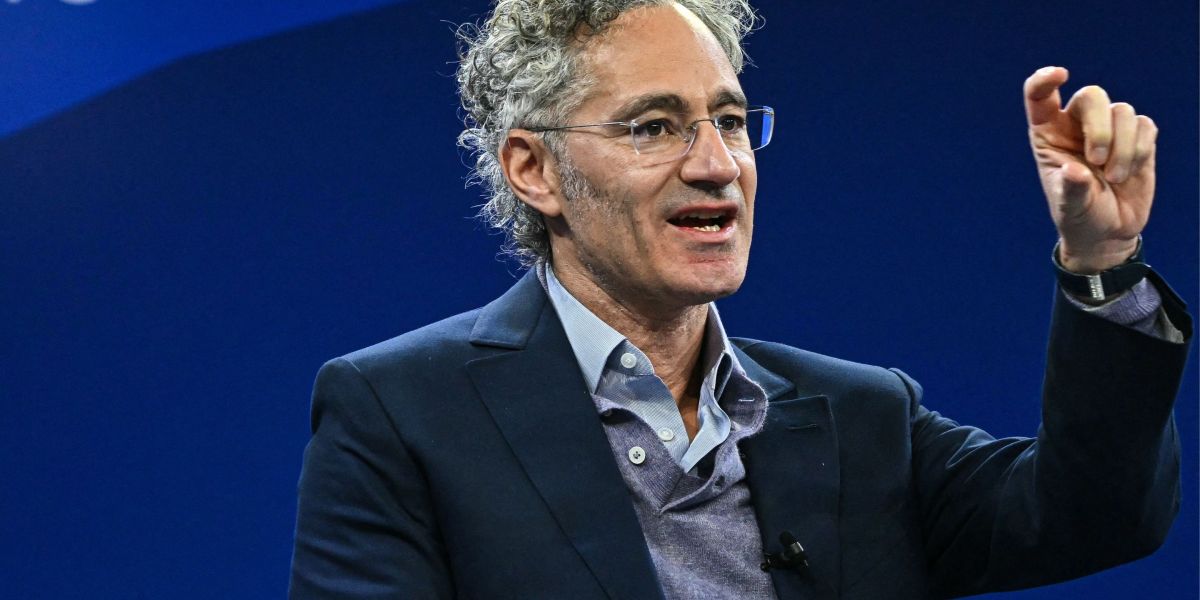
Palantir CEO Alex Karp has warned that artificial intelligence will widen wealth inequality dramatically—potentially making him 20 times richer while middle-class workers see only modest salary gains.
His concerns align with warnings from other business leaders and economists who argue that AI's benefits are flowing primarily to owners of models, data, and infrastructure, risking widespread economic displacement for ordinary workers.
The concern is sharpened by 2025 data showing billionaire wealth grew over 16% globally to $18.3 trillion(約2900兆円), the fastest rate in years.
What happened
Palantir CEO Alex Karp told the MDMeets podcast that AI could make him roughly 20× wealthier (implying a fortune approaching $300 billion(約48兆円)), while middle-class workers might see their salaries merely double over the next decade. He called this disparity a "complete decoupling of unimaginable wealth and normal wealth."
Why it matters
Karp's warning reflects a growing concern among business leaders—including BlackRock CEO Larry Fink and JPMorgan Chase CEO Jamie Dimon—that AI wealth is concentrating among a tiny group of owners of models, data, and infrastructure, while ordinary workers risk being left behind. In 2025, global billionaire wealth surged over 16% to $18.3 trillion(約2900兆円), three times faster than the previous five-year average, underscoring how the AI boom is accelerating wealth inequality.
What to watch
Karp also criticized the "overselling of AI in this country" as "depressing," suggesting the hype around AI's benefits may be masking its real impact on income distribution. His comments echo warnings from other leaders like Nobel Prize laureate Geoffrey Hinton, who has argued that AI under capitalism will make a few people much richer while most people become poorer.
Ask the AI about this article →
Summaries like this, in your inbox every morning.
Alex Karp's warning reflects a broader anxiety among elite business leaders about the distributional consequences of the AI boom. While Karp himself has benefited enormously—Palantir's market value has reached roughly $322 billion(約52兆円)—he explicitly links his own extraordinary gains to a structural problem: the AI economy appears to concentrate wealth among a narrow group of people he describes dismissively as "oddly shaped IQ specimens." This tension between personal enrichment and social conscience has become a recurring theme among billionaire-adjacent figures in 2025.
The numbers backing his concern are stark. Global billionaire wealth surged over 16% in 2025 to $18.3 trillion(約2900兆円), triple the previous five-year average, according to Oxfam. Elon Musk's fortune briefly crossed $1 trillion(約160兆円) in 2025—a symbolic threshold that underscores just how unprecedented the concentration has become. For context, Oxfam estimates that a single $100 billion(約16兆円) wealth transfer could lift over 800 million people out of extreme poverty for a year. Meanwhile, wage growth for middle-class workers has remained comparatively modest for generations, a trend the AI boom appears to be accelerating rather than reversing.
BlackRock's Larry Fink and JPMorgan's Jamie Dimon have articulated the same core concern: AI's early gains are flowing to owners of models, data, and infrastructure, while the risk to white-collar workers mirrors what globalization did to manufacturing. Karp's framing—that the problem is not just wealth creation but wealth *separation*—suggests the issue is not merely economic but social: a future in which the beneficiaries of AI have nothing in common with everyone else, creating what he calls an "unimaginable" gulf.
For example, today's edition would include:
AI-summarized, only the topics you pick — one digest a day via Email, Slack, or Discord.
Free · 30 seconds with Google · unsubscribe anytimeWhat is AIToday? →
Ask AI anything about this article. Q&As are published on this page for other readers too.
Tesla Japan will show the Cybercab, its dedicated Robotaxi vehicle, in Japan for the first time

Palantir Technologies Inc
Researchers in Bengaluru, India, are using AI to train rescue dogs like Chloe to sniff human breath for cancer…
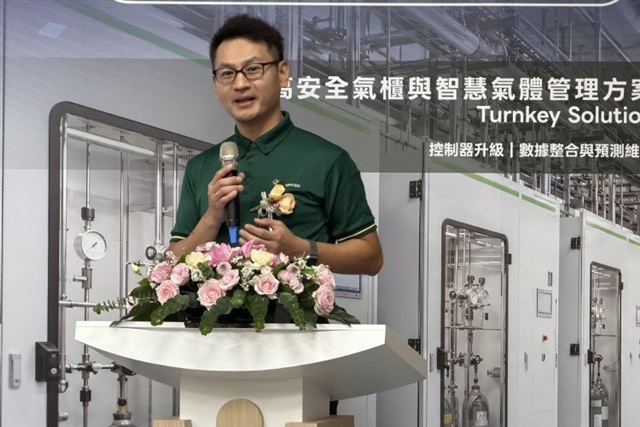
JM-Applied, a Taiwanese semiconductor gas equipment maker and supply chain member for Micron and TSMC, said on…
OpenAI's product lead Tibo Sotiou posted on X on September 6 that GPT-6 Astra's 'low' setting outperforms GPT-…

Nvidia disclosed roughly $99 billion of public and private equity investments as of July 26, plus about $25 bi…