What happened
Google detailed the Mirror Dimension, an isolated replica internet with social media, shopping and bank dashboards, where Chrome's Gemini-powered browsing agents complete tasks and face hidden prompt-injection attacks.
Why it matters
Training on the real web risks unrefined agents going rogue or developing 'eval awareness' from test environments, so a controlled but realistic sandbox aims to build judgment before deployment.
WHO IT HITSThe approach lands on AI security engineers and browser teams training web-use agents, who must prepare models for hostile websites; the team says the attacks used in the sandbox would not work against regular Chrome users.
Summaries like this, every morning.
The Chrome team's problem was circular: web-use agents need exposure to the open internet to learn how to navigate real sites and withstand attacks, but limited test environments are only so effective and can teach models to recognize they are being evaluated. Setting unrefined agents loose on the live web was deemed a bad idea. The Mirror Dimension resolves that by being both expansive and fully controlled, with websites and platforms that have all the components of real ones.
Constructing it was itself a challenge. To make it vast enough to represent the scale of the real web quickly, the team gathered armies of website and web app development agents guided by a purpose-built AI harness to create realistic web services and data flows, down to details like entering promo codes or populating social media pages. Because Chrome has so many user protections, the researchers essentially had to hack the browser and forge web certificates to let agents use real Chrome for accurate training.
According to software engineer Charles Qian, the exploration space is huge and the web is hostile, but the team has seen agents start to develop a mature sense of judgment about what information a task needs and when to punt back to the user for confirmation. Doug Turner, Google's director of engineering, frames the work as a first step and says the team plans to share the approach so others internally and externally consider it, with continued investment expected as models become more sophisticated.
Pick your industry and the AI tools you use, and get news related to your work every day.
Free · 30 seconds with Google · unsubscribe anytimeWhat is AIToday? →
Ask AI anything about this article. The AI reads this article, earlier AIToday articles, and Wikipedia, and cites its sources. Q&As are published on this page for other readers too.
With Google Chrome's Modern Web Guidance plugin loaded, Claude Opus 5.5 wrote 2,740 JavaScript lines across 16…

A paper by University of Macau and The Hong Kong Polytechnic University researchers tested web-application dev…
Meta employees said Muse mixed up chats across accounts and surfaced messages and bank balances they never sha…

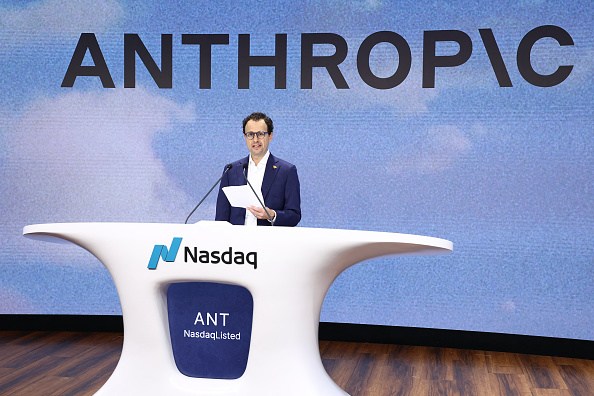
Anthropic's shares began trading on the Nasdaq at $111.50, 33% above the $83 IPO price set Wednesday, which wa…

On IPO day, Dario Amodei told the Nasdaq opening bell crowd Anthropic will pace training and deployment of its…
Google said Gemini's macOS desktop app can now use the computer for you, navigating native Mac apps and browsi…