What happened
Microsoft signed an open letter alongside Meta, Nvidia, Hugging Face, Mistral, and more than 20 other companies arguing that U.S. AI leadership should be measured by building "a strong, open ecosystem that diffuses into every sector" rather than by a single frontier model. The company is also replacing OpenAI and Anthropic models in GitHub Copilot, Excel, and Outlook with its in-house MAI family.
Why it matters
Microsoft's shift away from relying on expensive OpenAI and Anthropic models improves its margins and gives Azure customers fewer reasons to use rival AI platforms. A fragmented model market also prevents any single AI lab from becoming powerful enough to threaten Microsoft's cloud and operating system businesses, as CEO Satya Nadella warned that a few AI models could absorb the value of entire industries.
What to watch
Independent benchmarks put MAI well behind OpenAI and Anthropic, with performance roughly matching Deepseek V3.2, meaning Copilot customers are getting weaker AI for the same price while Microsoft improves its margins. More MAI models are planned for Copilot Chat, Outlook, and PowerPoint.
Summaries like this, in your inbox every morning.
Microsoft's embrace of open-weight AI is framed in the language of ecosystem building and American competitiveness, but the strategy is fundamentally rooted in the company's core business model. Rather than remaining dependent on expensive models from OpenAI and Anthropic—partnerships that limit Microsoft's control and margin—the company is consolidating around its own MAI family while simultaneously championing an open-weight philosophy that fragments the broader AI market. This fragmentation serves Microsoft's interests directly: it prevents any single AI lab from accumulating enough power to threaten Azure's dominance or the lock-in created by Windows and Office.
The timing and framing of the open letter also reflect geopolitical pressures. The Trump administration has reportedly planned action against Chinese open-weight models, and Chinese providers have faced criticism for using distillation techniques (where smaller models learn from larger ones' outputs). By signing the letter alongside industry peers, Microsoft positions itself and the open-weight movement as aligned with U.S. interests—while simultaneously defending the legitimacy of distillation as "a long tradition of learning from, building upon, and improving existing technologies."
However, the gap between Microsoft's stated commitment to openness and its product strategy is substantial. By replacing proven-capable models with MAI—which benchmarks show is materially weaker—across GitHub Copilot, Excel, Outlook, and planned for Copilot Chat, PowerPoint, and elsewhere, Microsoft is extracting cost savings that flow to the company's bottom line rather than to users. Customers receive lower-performing AI at the same price, a trade-off Microsoft does not explicitly acknowledge despite claiming MAI "performs just as well or better."
The company's benchmarking choices—comparing MAI only to smaller models and using vague naming for OpenAI's variants—further signal that Microsoft is aware the performance gap is real and wishes to obscure it. This pattern suggests that Microsoft's open-weight advocacy, while strategically coherent, is less about democratizing AI than about building a competitive moat around Azure that does not depend on any external AI provider.
Pick your industry and the AI tools you use, and get news related to your work every day.
Free · 30 seconds with Google · unsubscribe anytimeWhat is AIToday? →
Ask AI anything about this article. The AI reads this article, earlier AIToday articles, and Wikipedia, and cites its sources. Q&As are published on this page for other readers too.
In Q2, billionaires or their funds sold six 'Magnificent Seven' AI stocks
Nvidia was rising early Friday, even as the wider chip sector kept falling, Barron's reported
ElevenLabs completed a $300 million employee tender at a $22 billion valuation, and co-founder Mati Staniszews…
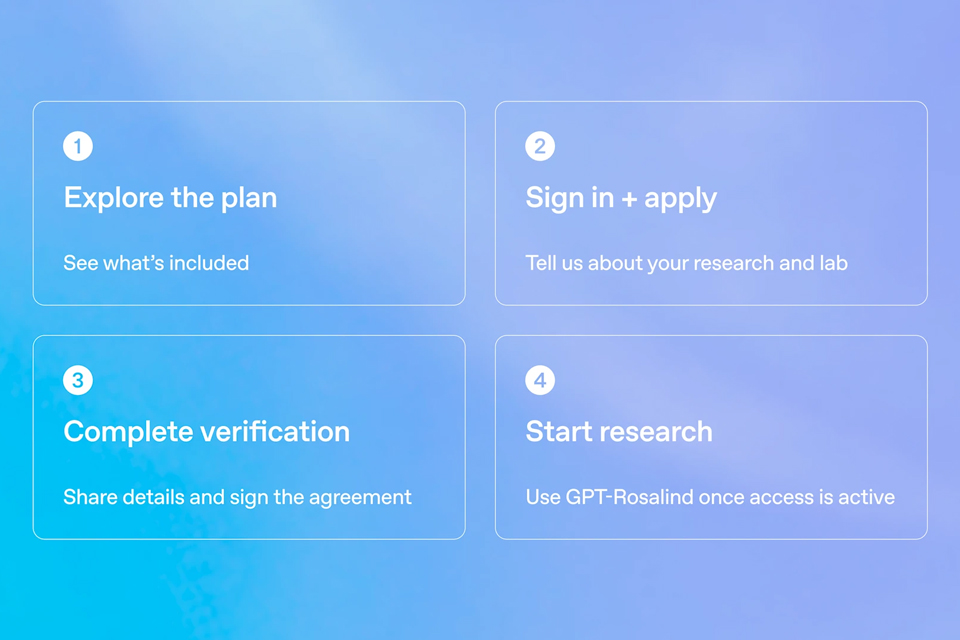
On October 15, OpenAI announced the Rosalind Academic Plan, giving approved US university labs free access to…
Neostellar Capital principal Evan Schlossman said CoreWeave's $103.7 billion in remaining performance obligati…
Liquid AI released d1-ultra on October 15, 2026, an upgraded open-weights decision model that averaged 76.7 ac…