What happened
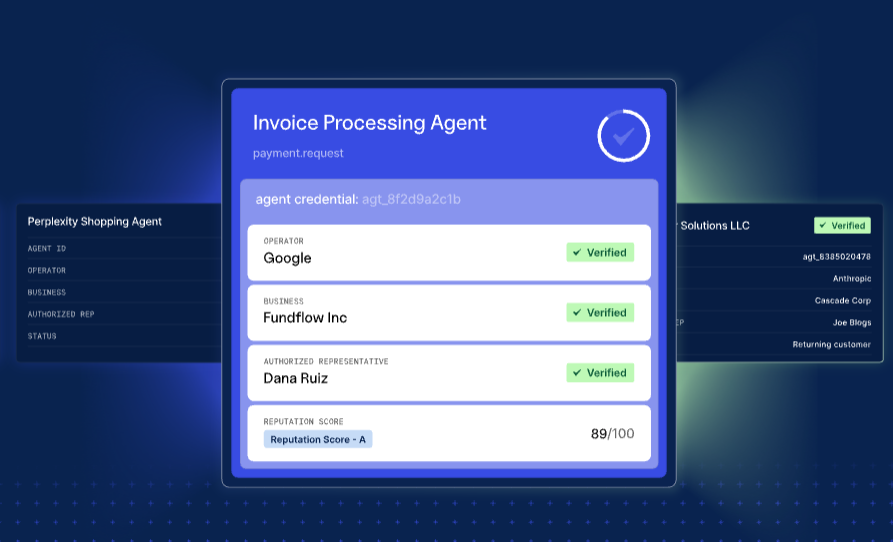
Baselayer raised $35 million in Series A funding led by M13, with Torch Capital, Picus Ventures and Afore Capital participating, and launched its Agentic Identity Suite, which it says is the first interoperable trust layer and fraud prevention platform built for the agentic economy.
Why it matters
The company says legacy financial rails were designed to identify humans and traditional businesses, not autonomous software, so when an AI agent initiates a transaction, banks and merchants currently have no way of knowing who that agent is, who it is acting for, or whether it can be trusted.
What to watch
Whether Baselayer's trust infrastructure can keep pace with the agentic commerce being deployed by Visa, Mastercard, American Express and Shopify, as the company collaborates with groups including the FIDO Alliance Authentication Working Group and the x402 Identity Working Group to draw up new standards.
WHO IT HITSPayment processors, banks and merchants that are beginning to handle transactions initiated by AI agents will need to verify who those agents represent; Baselayer is retrofitting its existing business identity platform, used by more than 2,300 financial institutions, to address that gap.
Summaries like this, in your inbox every morning.
Baselayer, officially Osiris Ratings Inc., was founded in 2024 by Chief Executive Jonathan Awad and Chief Technology Officer Timothy Hyde. Its original business was verifying business identities for financial institutions, a product now used by more than 2,300 financial institutions, including one in five U.S. banks, and which has reviewed more than 10 million applications and prevented over $1 billion in fraudulent transactions. The new funding and the Agentic Identity Suite mark a shift toward a different problem: verifying the software agents that are beginning to move money and pay invoices on behalf of businesses.
The company says the legacy financial rails used by payment processors and merchants were built to identify humans and traditional businesses, not autonomous software. That gap has become more pressing as payment and e-commerce firms such as Visa, Mastercard, American Express and Shopify deploy protocols for agentic commerce. Baselayer's answer, built around a "Know Your Agent" concept, includes a Model Context Protocol server, an Agentic Search tool and Counterparty Verification technology, and the company is working with the FIDO Alliance Authentication Working Group, the Legal Context Protocol and the x402 Identity Working Group alongside Google, Cloudflare, Visa and Mastercard.
The outcome likely hinges on whether banks and merchants adopt Baselayer's trust layer as agentic commerce scales, and on whether the standards being drafted by those working groups align with its approach. Companies handling payments from AI agents stand to gain a way to audit who is behind a transaction, but that depends on the infrastructure being widely integrated rather than deployed in isolation.
For example, today's edition would include:
AI-summarized, only the topics you pick — one digest a day via Email, LINE, or Slack.
Free · 30 seconds with Google · unsubscribe anytimeWhat is AIToday? →
Ask AI anything about this article. Q&As are published on this page for other readers too.
Teradata is expanding its Tera AI assistant with a Context Engine, a Harness execution system and Agent Skills…

Heidi Health announced $340 million in new funding — a $100 million Series C led by Blackbird, with Phoenix Co…

Kantata Inc. unveiled Agent Studio, which sits inside its Expertise Engine

Meta's AI agent Muse has leapt to the top of app charts roughly two weeks after its release, helping push up c…

Meta's Muse agent, launched Sept

Baselayer raised a $35 million Series A led by M13, bringing total funding to about $40 million since its 2023…