What happened
Apple researchers introduced LINK, a method that improves cross-lingual knowledge transfer by randomly replacing words in English training data with their translations using bilingual vocabularies. The technique requires only a bilingual vocabulary—obtainable at near-zero cost for virtually any language—and no additional model training.
Why it matters
For languages with scarce training data, acquiring knowledge for tasks like scientific reasoning and commonsense inference relies heavily on transfer from high-resource languages. Existing methods require large parallel datasets, translation systems, or auxiliary models, which are unavailable for many languages; LINK sidesteps those bottlenecks entirely, making multilingual model training more feasible for under-resourced languages.
What to watch
Testing across eight languages and five model sizes showed notable downstream task improvements, with up to a 2x speedup in training to reach equivalent performance—a concrete efficiency gain that could make multilingual model development more practical at scale.
Summaries like this, in your inbox every morning.
Cross-lingual knowledge transfer is essential for building effective multilingual language models when target-language training data is limited. Traditionally, improving such transfer has required substantial infrastructure—large parallel corpora, external translation systems, or auxiliary models—creating barriers for many low-resource languages. LINK addresses this constraint by operating at the data level rather than the model level, inserting lexical diversity through simple word substitutions during pretraining. The method's reliance on bilingual vocabularies alone, rather than full-scale translation systems, makes it accessible; bilingual word lists are far easier to assemble or crowdsource than massive aligned corpora. The empirical results—notably the 2x training speedup to reach equivalent performance—suggest that even coarse lexical intervention can meaningfully accelerate knowledge transfer, potentially opening multilingual model development to broader communities.
Pick your industry and the AI tools you use, and get news related to your work every day.
Free · 30 seconds with Google · unsubscribe anytimeWhat is AIToday? →
Ask AI anything about this article. The AI reads this article, earlier AIToday articles, and Wikipedia, and cites its sources. Q&As are published on this page for other readers too.
Circlia started a proof-of-concept for TASTE SIGNAL: visitors to Holland Village Cafe FUKUOKA taste cookies an…

In a webinar hosted by French Mathematical Society president Isabelle Gallagher, Fields Medal winner Hugo Dumi…

NVIDIA released Nemotron 3.5 Super VL, an open-weight model with 120 billion parameters that handles text, ima…

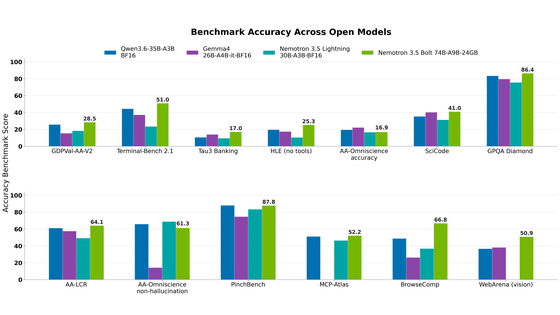
NVIDIA released Nemotron 3.5 Bolt 74B-A9B 24GB, an AI model for local agents that hits over 80 tokens per seco…
NVIDIA published a blog post titled "AI Security Is an Engineering Problem - How to Solve It at Every Layer of…

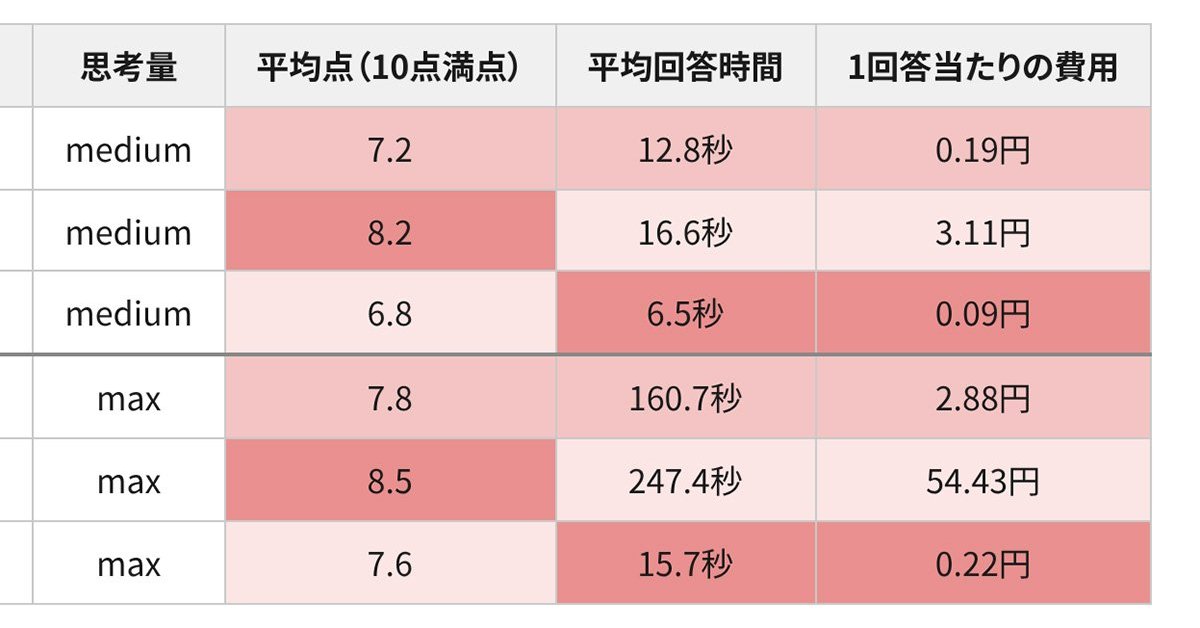
In the test, Haiku 5.5 on medium setting averaged scores close to Sonnet 5.5 on routine documents at about 1/1…