What happened
Using 12 synthetic inquiries run twice under two and four choices, the developer found all 16 responses misrouted by the two-choice setup had a top probability of at least 0.8, while the four-choice version matched all 24 labels.
Why it matters
A high confidence score only shows how well a model picks among the options offered, so it can't signal that the right answer was never among them — likely leaving wrong routing undetected.
Summaries like this, every morning.
The test centers on a distinction the official Choice documentation makes: a model returns both the selected option with its probability and a separate confidence value calculated from the distribution. Even when no offered option fits the input, the model can still assign a high probability to whichever option looks relatively best. In one example, a sales-demo inquiry got technical at 0.84 in the two-choice setup, with confidence at 0.67; the four-choice setup picked other at 1.0 both times.
The author separated 'outside scope' from 'not enough information' because they lead to different handling — handoff to a general desk versus a follow-up question — though the experiment stopped at the routing decision without sending any emails or tickets. Of 24 responses allowed direct processing under a 0.8 gate in the two-choice setup, 16 were wrong; the four-choice setup kept all 8 in-scope direct approvals correct while removing 16 out-of-scope or on-hold responses from direct processing.
A re-scoring of the saved responses on October 3 reproduced the same match counts, wrong approvals, and token totals, confirming the September 26 record. The author stresses that the synthetic data deliberately overrepresents out-of-scope and unclear cases, that the 12 inputs and two repetitions are not 24 independent inquiries, and that Japanese text, long inputs, subtle department boundaries, and adversarial inputs remain untested — so the 0.8 threshold has not been validated on real inquiries.
Pick your industry and the AI tools you use, and get news related to your work every day.
Free · 30 seconds with Google · unsubscribe anytimeWhat is AIToday? →
Ask AI anything about this article. The AI reads this article, earlier AIToday articles, and Wikipedia, and cites its sources. Q&As are published on this page for other readers too.
W.E.'s Conversion UP began distributing service materials on November 25, 2026 for three plans covering landin…

Epochal AI Inc. launched with $100 million in funding from CEO Guodong Zhang and debuted the Epochal Time Port…
Anthropic announced on November 24 that "Install as app" lets Claude's conversational Artifacts — charts, web…
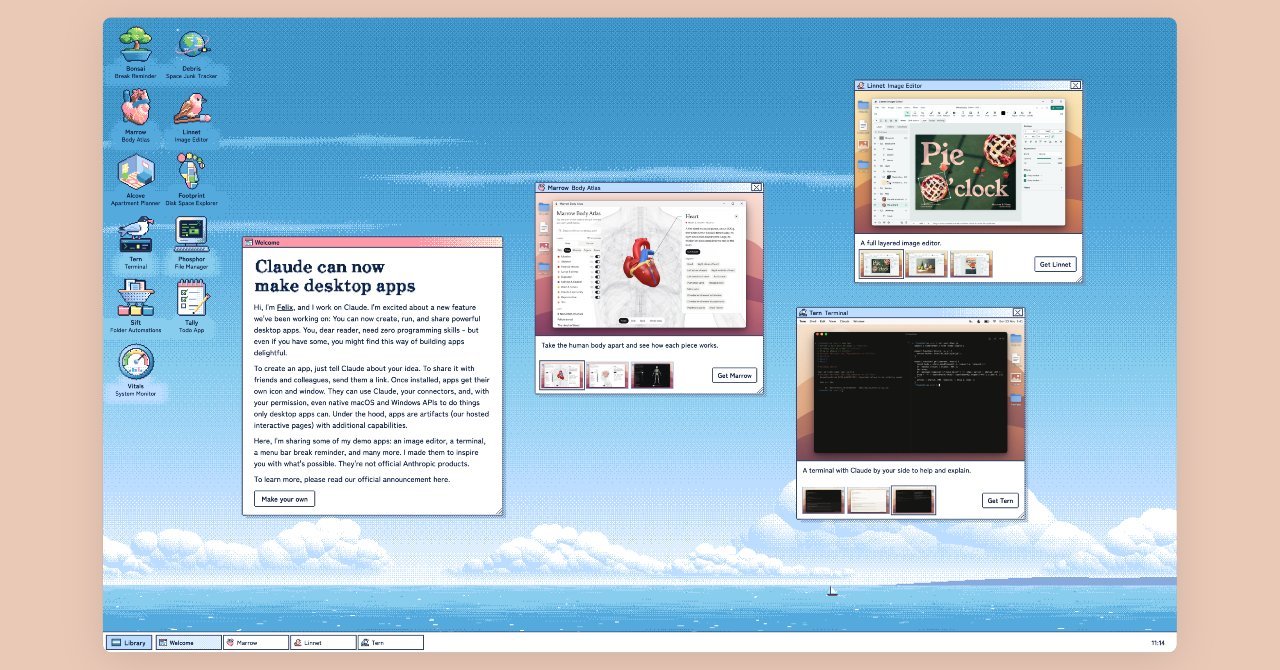
Anthropic launched "Install as app" in beta for Claude for Mac and Windows
Tencent published Hy MT3 on November 24, 2026 in three sizes — Hy-MT3-30B-A3B, Hy-MT3-7B and Hy-MT3-1.8B — all…
Engineer Danny Boland developed the Super Network Adapter, which uses the SNES controller port to connect onli…