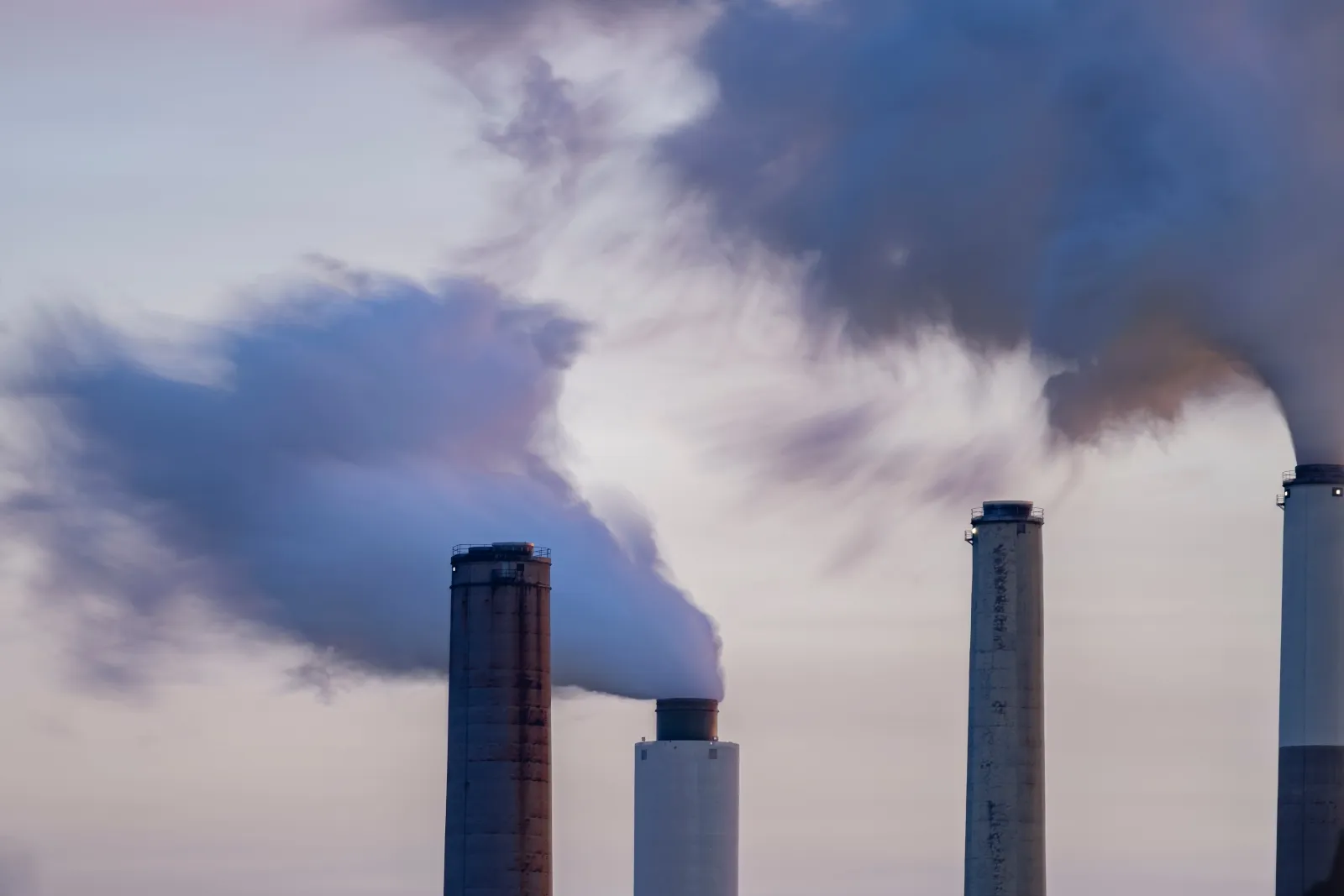
New research from former Microsoft sustainability experts warns that AI's role in boosting oil and gas productivity could increase global energy emissions by 1.2 to 4.8 percent — potentially adding yearly emissions equivalent to Mexico's or Russia's output.
This climate damage would outweigh any benefits AI provides to clean energy technologies and far exceed projected emissions from data center expansion.
The findings highlight how tech companies rarely account for "enabled emissions" — the pollution their tools help other industries create — even as deals like Chevron and Microsoft's joint power plant reveal the deepening entanglement of AI and fossil fuels.
What happened
Research published in npj Climate Action by former Microsoft sustainability workers finds that AI tools could increase global energy-related emissions between 1.2 to 4.8 percent by making oil and gas production more efficient — potentially adding yearly emissions equal to Mexico's output at the low end, or as much as Russia's at the high end.
Why it matters
The emissions gain from AI-enhanced fossil fuel productivity would far outweigh the climate benefits AI brings to solar, wind, and other clean technologies, and would dwarf projections of emissions from data center buildouts. Tech companies typically measure only their own operational emissions, not what their tools enable in other industries like oil and gas.
What to watch
Chevron and Microsoft have confirmed a deal to build a gas-powered plant in Texas for data centers, with Chevron stating it will use some of the generated compute to power AI inside its own company — a concrete example of the AI-fossil fuel relationship the research warns about.
A new paper published last week in the journal npj Climate Action, authored by Will and Holly Alpine, challenges the prevailing narrative that artificial intelligence will help solve climate change. The Alpines, both former Microsoft sustainability workers with years of combined experience at the company, left their positions at the start of 2024 specifically because of Microsoft's continued partnerships with the oil and gas industry. They have since begun a public campaign to highlight what they describe as a dangerous and often-ignored relationship between AI development and fossil fuel expansion.
Using a complex economic model, the Alpines introduced various factors to simulate how AI could play out across the broader economy. They drew on reports from oil and gas companies documenting demonstrated gains from AI tools, then modeled AI as a productivity enhancer across different sectors of the fossil fuel industry—from extraction to refining to electricity generation. Their calculations found that AI could increase global energy-related emissions between 1.2 to 4.8 percent. At the low end, the additional yearly emissions would equal Mexico's total; at the high end, they could match Russia's, making Russia the world's fourth-largest emitter. This range of impact significantly exceeds multiple projections around emissions from data center energy use. "The scale of this was staggering," Will Alpine told researchers.
A central finding is that the climate benefits AI brings to developing solar, wind, and other clean technologies are vastly outweighed by the emissions increases from AI-enhanced fossil fuel production. The Alpines argue that tech companies have a measurement problem: they track their own operational emissions and supply chain pollution closely, but they do not measure how much their tools help increase fossil fuel production—what they call "enabled emissions." While sustainability measures within tech companies remain focused on operational emissions, Holly Alpine explains, this ignores emissions that cause far greater climate damage. As Jon Koomey, an energy researcher not involved in the study, tells WIRED, "Machine learning can make data center cooling 30–40 percent more efficient, but [could] also make fossil fuel extraction much cheaper and faster. How that nets out nobody yet knows for sure, but this new research is a credible attempt to answer that question using a macroeconomic model."
The relationship between these two industries is already visible in real-world partnerships. Chevron and Microsoft recently confirmed that Chevron would build a large behind-the-meter gas plant in Texas to power Microsoft's data centers. During a June call with analysts, Jeff Gustavson, president of Chevron's New Energies division, indicated that Chevron would use some of the compute generated by the power plant serving Microsoft "to actually power AI inside of our company." Will Alpine describes this arrangement as "perfectly illustrative of the relationship between AI and fossil fuels." The loop is self-reinforcing: fossil fuel companies provide the power that trains AI systems, which in turn make those same companies more efficient at extraction and production. Tech companies and fossil fuel producers benefit, but the climate cost—invisible in traditional emissions accounting—grows substantially.
The research addresses a critical blind spot in how the tech industry measures its climate footprint. While major technology companies carefully track their own data center emissions and supply chain pollution, they have historically ignored what the Alpines call "enabled emissions" — the greenhouse gases their AI tools help other industries produce. Oil and gas companies have used various forms of AI for decades to find and develop underground resources more efficiently, and this trend is accelerating as AI becomes more powerful. The modeling exercise suggests this dynamic could dwarf the emissions savings AI delivers in renewable energy and efficiency applications.
The Chevron-Microsoft partnership illustrates the self-reinforcing cycle the researchers describe: fossil fuel companies now provide power for data centers that train and run AI systems, while simultaneously using those same AI capabilities to extract and refine oil and gas faster and more cheaply. Neither company's public emissions accounting captures this loop. The research suggests that without accounting for enabled emissions, climate pledges and sustainability initiatives within the tech industry may mask far larger climate damage occurring elsewhere in the economy—a harm the researchers attribute not to data center power consumption, but to the productive capacity AI unlocks for carbon-intensive industries.
AI-summarized, only the topics you pick — one digest a day via Email, Slack, or Discord.
Free · takes 30 seconds · unsubscribe anytime
Ask AI anything about this article. Q&As are published on this page for other readers too.
As AI innovation accelerates, data centers are moving away from traditional copper wiring to faster, more ener…

Parnassus Core Equity Fund sold its Salesforce holding in Q2 2026, citing declining conviction in horizontal a…

T-Mobile US has announced a focus on aligning its AI initiatives with customer outcomes, according to reportin…

AMD lifted its 2025 revenue guidance after posting strong quarterly results driven by artificial intelligence…

SpaceX released Grok 4.6, benchmarking against Anthropic's latest models and OpenAI's GPT 5.6; AT&T routes 45…

Schnucks, a regional grocery chain, has introduced an AI-powered shopping assistant and redesigned its weekly…

The AI news that matters, in one minute each morning.
Sign up free