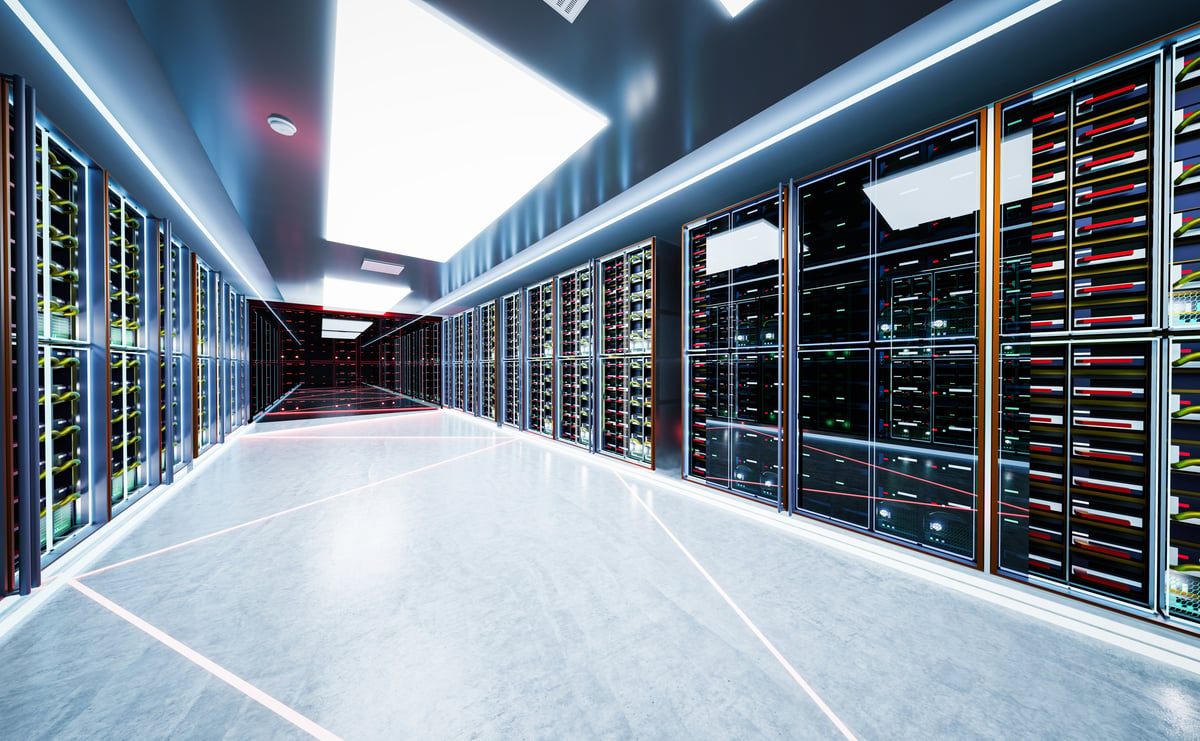
As artificial intelligence workloads intensify, data centers are switching from copper to optical connections for faster, more energy-efficient data transmission.
This transition is creating supply constraints for optical components—chips, lasers, transceivers, and fiber systems—positioning manufacturers like Marvell, Lumentum, Coherent, and Corning as critical bottleneck players.
Nvidia's $2 billion investment in Marvell underscores how strategically important optical infrastructure has become to the AI infrastructure build-out.
What happened
As AI innovation accelerates, data centers are moving away from traditional copper wiring to faster, more energy-efficient optical connections. This transition is creating rising demand for optical hardware across multiple layers—from chips like Marvell Technology's digital signal processors and Lumentum's lasers, to transceivers from Coherent and Applied Optoelectronics, to fiber and routing systems from Amphenol, Corning, and Ciena.
Why it matters
Optical connectivity is becoming a critical bottleneck in AI infrastructure build-out. Nvidia's $2 billion investment in Marvell and decision to integrate its optical networking into NVLink shows how central this technology is to the data center stack. For investors and tech buyers, the shift signals that companies controlling optical components—especially Lumentum, which has a near-monopoly on high-power lasers—are positioned as essential partners to cloud providers.
What to watch
The article identifies eight publicly traded companies across the optical stack: Marvell Technology, Broadcom, Lumentum Holdings, Coherent, Applied Optoelectronics, Amphenol, Corning, and Ciena. Applied Optoelectronics, a key Microsoft supplier, carries customer concentration risk; Amphenol benefits from the boom regardless of copper-to-optics pace because it also supplies Nvidia's NVLink copper backplanes.
The article identifies a structural shift underway in data center architecture driven by the computational demands of artificial intelligence. Traditional copper wiring, long the standard for data center connectivity, cannot keep pace with the bandwidth requirements of modern AI workloads. Optical connections—which transmit data as light through fiber rather than as electrical signals through copper—offer both higher speed and lower energy consumption. The shift is not yet complete, but the pace is accelerating, and the article argues that optical hardware supply will become a bottleneck as demand rises.
The article organizes the optical infrastructure ecosystem into four layers: optical digital signal processors (DSPs), photonic lasers, transceivers, and optical traffic routing. Marvell Technology is identified as the market leader in optical DSPs—the chips that convert electrical signals from AI processors into light for transmission. The strategic weight of this role is evident from Nvidia's actions: Nvidia made a $2 billion investment in Marvell and partnered with it to integrate Marvell's optical networking directly into NVLink, Nvidia's interconnect ecosystem. Broadcom is another major player in optical DSPs, benefiting from its large custom chip business.
In the photonics layer, Lumentum Holdings manufactures high-power indium phosphide lasers, photodetectors, and optical engines—the raw light sources that power optical transceivers. The company holds what the article describes as a "virtual monopoly," with few global competitors capable of producing these lasers at scale. Even companies that sell complete transceiver modules frequently use Lumentum's lasers. This dominance gives Lumentum pricing power and structural advantages as optical adoption accelerates.
For transceivers—the devices that couple optical and electrical signals—Coherent and Applied Optoelectronics are the two companies highlighted. Coherent is vertically integrated from raw substrate materials through receivers and has positioned itself as an essential partner to cloud providers. Applied Optoelectronics is also vertically integrated, manufacturing its own laser chips in-house and aggressively ramping manufacturing capacity to meet rising demand. The article notes that Applied Optoelectronics is a key Microsoft supplier, though this customer concentration poses risk. The final layer—optical traffic routing—includes Amphenol, which provides optical interconnect solutions and connectors within server racks and also supplies passive copper backplanes for Nvidia's NVLink; Corning, which manufactures the high-density fiber cables and connection systems that form the physical backbone of AI data centers; and Ciena, which builds optical routing systems for long-distance traffic between data centers. The article concludes that all eight stocks offer exposure to the optical infrastructure boom, though with different risk profiles and dependencies.
The article frames optical infrastructure as the emerging bottleneck in the AI data center build-out. As AI accelerates, the computational demands on connectivity have shifted from what traditional copper networks can handle; optical systems—which transmit data as light rather than electrical signals—are both faster and more efficient. This transition is playing out across multiple hardware layers, from the digital signal processors that convert electrical signals into light (Marvell, Broadcom) to the lasers and photodetectors that generate that light (Lumentum) to the transceivers that couple those components (Coherent, Applied Optoelectronics) to the passive fiber and routing systems that carry the light across and between facilities (Amphenol, Corning, Ciena).
The strategic importance of optical infrastructure is underscored by Nvidia's $2 billion investment in Marvell and its decision to integrate Marvell's optical technology directly into NVLink, Nvidia's own interconnect standard. This signals that optical components are no longer peripheral to the data center stack—they are central. Companies with scale advantages or near-monopoly positions (such as Lumentum's dominance in high-power lasers) face less competition and higher switching costs, positioning them as essential partners to cloud providers. The article suggests that this dependency creates a near-term supply constraint: as hyperscalers ramp optical adoption across their clusters, the manufacturers of these specialized components face rising demand that could outpace their production capacity.
AI-summarized, only the topics you pick — one digest a day via Email, Slack, or Discord.
Free · takes 30 seconds · unsubscribe anytime
Ask AI anything about this article. Q&As are published on this page for other readers too.
Parnassus Core Equity Fund sold its Salesforce holding in Q2 2026, citing declining conviction in horizontal a…

T-Mobile US has announced a focus on aligning its AI initiatives with customer outcomes, according to reportin…

AMD lifted its 2025 revenue guidance after posting strong quarterly results driven by artificial intelligence…

SpaceX released Grok 4.6, benchmarking against Anthropic's latest models and OpenAI's GPT 5.6; AT&T routes 45…

Schnucks, a regional grocery chain, has introduced an AI-powered shopping assistant and redesigned its weekly…

Thermo Fisher's Clinical Sequencing Division is deploying fully automated next-generation sequencing (NGS) sys…

The AI news that matters, in one minute each morning.
Sign up free