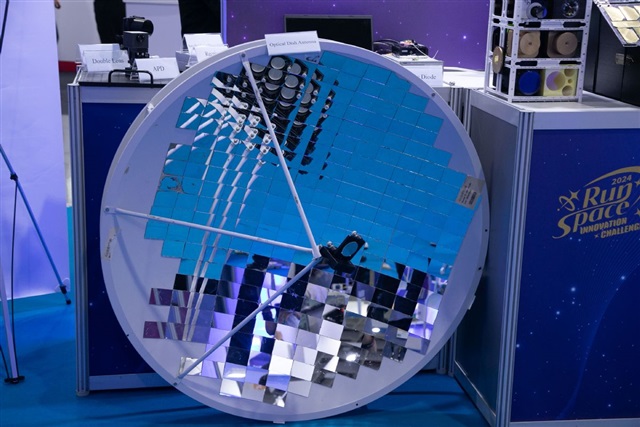
The rapid expansion of AI data traffic and SpaceX's satellite deployment plans are pushing quartz timing component manufacturers toward three critical technical upgrades: lower phase noise, reduced jitter, and greater frequency accuracy. These components are essential to the infrastructure underlying both data centers and satellite communications, making their performance a key enabler for the continued scaling of AI systems and satellite networks.
Summaries like this, in your inbox every morning.
Sign up free →What happened
AI data traffic growth and SpaceX's satellite deployment are driving demand for quartz timing components with lower phase noise, reduced jitter, and greater frequency accuracy.
Why it matters
Quartz components are fundamental to data center infrastructure and satellite systems; as AI workloads expand and satellite networks scale, precision timing becomes a bottleneck for system performance and reliability.
What to watch
Manufacturers of quartz timing components will need to meet tighter technical specifications to remain competitive in AI and space markets.
Quartz timing components—oscillators and resonators that maintain precise frequency signals—are facing renewed pressure to improve their core performance metrics. The article identifies three specific technical upgrades as critical: phase noise (unwanted frequency fluctuations that degrade signal quality), jitter (timing instability that can cause data corruption), and frequency accuracy (the ability to maintain a stable, predictable output). The driver on the AI side is straightforward: data centers processing massive volumes of AI workloads require ever-tighter timing synchronization to avoid bottlenecks and ensure reliable operation at scale. On the space side, SpaceX's ongoing satellite constellation expansion is creating parallel demand for components that can withstand orbital conditions while meeting the same precision standards. Together, these two growth vectors—AI infrastructure and satellite deployment—are reshaping the technical roadmap for quartz component suppliers, who must now compete on precision rather than cost alone.
The article identifies two parallel market forces reshaping the quartz component supply chain. On one side, the scaling of AI workloads is intensifying the demand for ultra-precise timing in data centers—lower phase noise and reduced jitter are critical for maintaining signal integrity under heavier computational loads. On the other, SpaceX's continuing satellite deployment creates a separate but equally demanding application: space-based systems require components that can maintain accuracy in harsh orbital environments. Both trends point to the same technical direction: manufacturers must raise precision standards across their product lines to serve these high-growth markets.
AI-summarized, only the topics you pick — one digest a day via Email, Slack, or Discord.
Free · takes 30 seconds · unsubscribe anytime
No comments yet. Be the first to share your thoughts!
Log in to join the discussion


Get curated AI news from 200+ sources delivered daily to your inbox. Free to use.
Get Started FreeFree · takes 30 seconds · unsubscribe anytime
1 minute a day. The AI essentials.
200+ sources · Email / LINE / Slack
