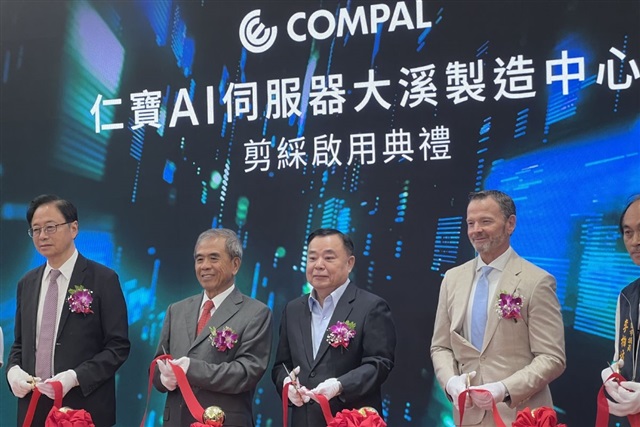
Compal, the contract manufacturer, has moved from the fringes into the middle tier of the AI server market in two years but faces structural barriers to supplying Nvidia and AMD directly.
The company is instead targeting the enterprise OEM segment—custom-built servers for corporate customers—as a more realistic route to becoming a top-tier competitor.
What happened
Compal chairman Ray Chen said the company has moved from being a newcomer to AI servers two years ago into the middle tier, and aims to continue narrowing the gap with leading competitors. The company acknowledges that breaking into Nvidia and AMD's supply chains remains difficult to achieve.
Why it matters
For Compal, the enterprise original equipment manufacturer (OEM) business—where it builds customized servers for corporate customers—offers a more promising path to catch up with front-runners than competing for spots in the dominant chip suppliers' production networks. This reflects a realistic pivot in how Compal intends to grow its AI infrastructure presence.
What to watch
Whether Compal can successfully capture enterprise OEM demand and use that market segment to close the competitive gap with established AI server leaders over the next period.
Compal, a major contract electronics manufacturer, is reshaping its AI server strategy after assessing where it has realistic opportunities to grow. According to chairman Ray Chen, the company stood at the periphery of the AI server market just two years ago but has since climbed into the middle tier of competitors. The company remains ambitious—Ray Chen stated that Compal "wants to keep closing the gap with the leaders"—but the path forward is narrowing. Direct supply to Nvidia and AMD, the two dominant AI chip makers, remains out of reach; Ray Chen acknowledged that "opportunities to break into Nvidia and AMD's supply chains remain difficult to win." Instead, Compal sees enterprise OEM business as its best route forward. The enterprise OEM segment serves corporate customers who need custom-built or specialized AI servers tailored to their workloads, rather than standardized off-the-shelf systems. Ray Chen characterized this segment as "a more promising opening for Compal to catch up with front-runners," signaling that Compal believes it can compete more effectively in a market segment where differentiation, flexibility, and direct customer relationships matter more than sheer scale or entrenched supplier relationships with chipmakers.
Compal's pivot reflects the structural realities of the AI infrastructure market. While the company has made tangible progress—moving from newcomer status two years ago to the middle tier—it faces hard barriers at the top. Nvidia and AMD's supply chains are tightly controlled and dominated by established partners, making entry difficult for a latecomer. Rather than bang against that wall, Compal is redirecting focus to enterprise OEM customers who want customized AI server solutions but may have less access to or less preference for the standard Nvidia/AMD reference designs. This is a pragmatic acknowledgment that winning through differentiation and direct customer relationships may be more achievable than competing on volume or scale in the chip supplier ecosystem.
AI-summarized, only the topics you pick — one digest a day via Email, Slack, or Discord.
Free · takes 30 seconds · unsubscribe anytime
Ask AI anything about this article. Q&As are published on this page for other readers too.
Foxconn announced on August 12 at its second-quarter 2026 earnings conference that it is broadening its busine…

Pegatron reported strong server business growth in Q2 2026 and said it has begun stocking inventory for H2 202…
China's high-end AI chip market is projected to reach nearly 90% domestic market share in 2026, leaving overse…
Pegatron reported second-quarter 2026 results on the 12th, with net profit attributable to the parent company…
South Korea plans to establish a strategic investment account with at least 20 trillion won in assets within t…

Foxconn's second-quarter 2026 operating profit rose 68%, driven by stronger-than-expected revenue in its AI se…
The AI news that matters, in one minute each morning.
Sign up free