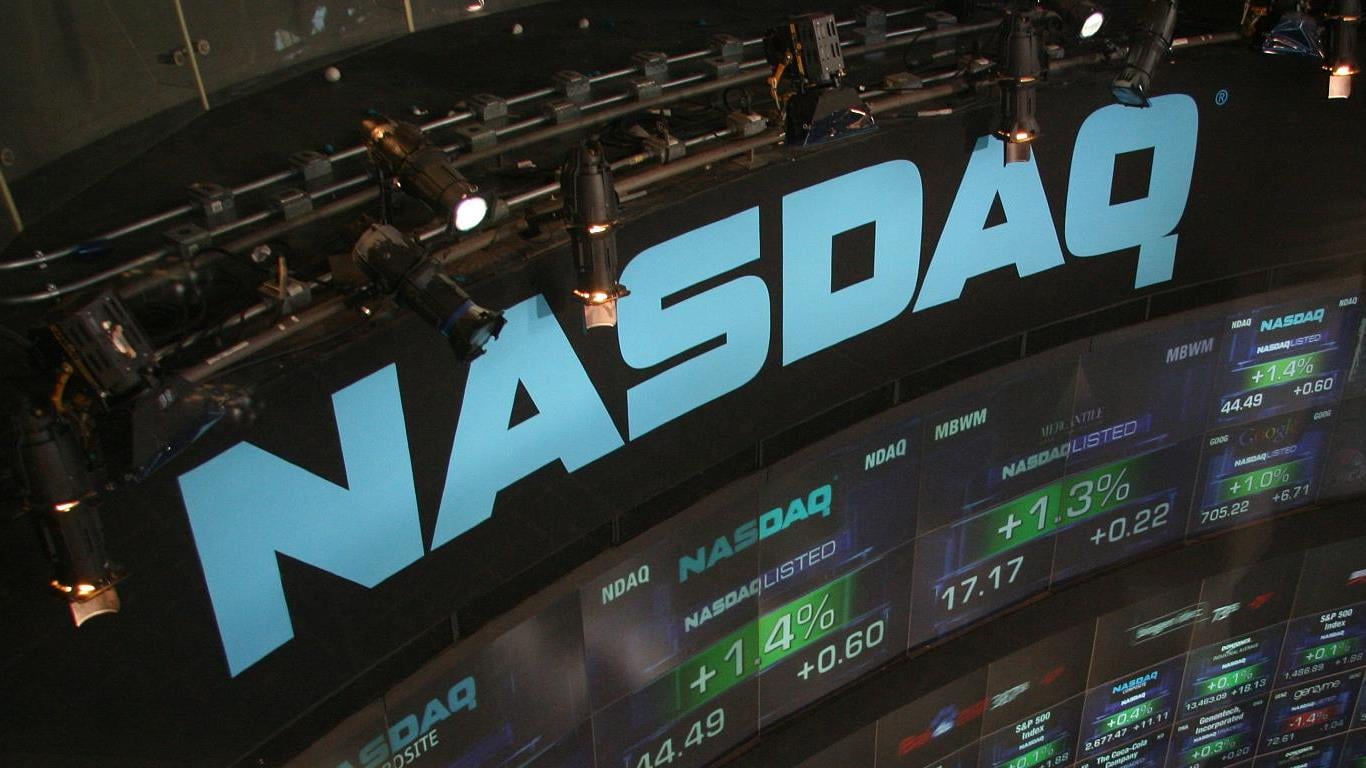
The Invesco QQQ Trust, up 17% year to date, depends almost entirely on whether AI spending by its four largest holdings—NVIDIA, Microsoft, Alphabet, and Meta—converts into sustainable revenue growth. With Meta guiding FY26 capex to $125–145 billion and Microsoft and Alphabet each spending $31–36 billion per quarter, early returns are strong (Nvidia's Q2 revenue guidance is $91 billion(約15兆円)), but Goldman Sachs warns the gains may mask weakness elsewhere in the economy. The fund's near-term fate hinges on the 10-year Treasury yield and whether big tech walks back 2027 capex guidance at upcoming earnings.
Summaries like this, in your inbox every morning.
Sign up free →What happened
The Invesco QQQ Trust trades near $720, up roughly 17% year to date, but its concentration in AI-heavy megacaps—NVIDIA ($5.1 trillion(約820兆円) market cap), Microsoft ($2.86 trillion(約460兆円)), Alphabet ($2.11 trillion(約340兆円)), and Meta ($1.45 trillion(約230兆円))—means two macro and fund-specific factors will dominate returns in the second half of 2026.
Why it matters
The top four holdings are betting that massive AI infrastructure spending converts to revenue; Meta raised its FY26 capex guide to $125-145 billion, Microsoft spent roughly $31 billion(約5兆円) in a single quarter, and Alphabet spent about $36 billion(約5.8兆円). For now, the payback is showing—Micron's fiscal Q3 revenue hit roughly $41 billion(約6.6兆円) (up about 346% year over year with 84.6% gross margin) and Nvidia guided Q2 revenue to $91 billion(約15兆円)—but Goldman Sachs frames this as an "uneasy equilibrium" where AI capex may be masking softer parts of the real economy.
What to watch
The 10-year Treasury yield is at 4.62% (99th percentile of its 12-month range); if it settles below 4.30% while hyperscaler capex guidance holds firm, QQQ's setup improves materially. If it pushes through 4.75% and any top-four holding walks back 2027 AI spend, the fund's 17% year-to-date cushion will erode quickly. All four companies report earnings in late July and August.
The Invesco QQQ Trust, which tracks the Nasdaq-100, has surged roughly 17% year to date to trade near $720, and roughly 29% over the past year, but the composition of those gains tells a story of extreme concentration in AI-focused megacaps. NVIDIA alone carries a market cap of $5.1 trillion(約820兆円), followed by Microsoft at $2.86 trillion(約460兆円), Alphabet at $2.11 trillion(約340兆円), and Meta Platforms at $1.45 trillion(約230兆円). Morningstar data shows the top 10 U.S. stocks now account for over one-third of the market, a sharp rise from 18% a decade ago; within QQQ, that concentration is even tighter, meaning most of the fund's near-term return will hinge on whether AI infrastructure investment by these four names delivers sustainable revenue growth and whether interest rates remain accommodative.
The capex commitments are staggering in scale. Meta raised its full-year 2026 capex guidance to $125–145 billion, a major step-up from prior guidance, while Microsoft spent roughly $31 billion(約5兆円) in a single quarter and Alphabet spent about $36 billion(約5.8兆円). These sums reflect an industry-wide conviction that AI infrastructure buildout will unlock long-term revenue streams, but the payback remains unproven at scale. On the revenue side, the early signals are positive: Micron Technology's fiscal Q3 revenue hit roughly $41 billion(約6.6兆円), up about 346% year over year, with a GAAP gross margin of 84.6%, while Nvidia guided Q2 revenue to $91 billion(約15兆円). However, Goldman Sachs has characterized the current environment as an "uneasy equilibrium" in which AI capex is masking softer demand in other parts of the real economy, raising the risk that when these companies report earnings—Alphabet, Microsoft, and Meta in late July, and Nvidia in August—they may signal a slowdown in capex growth or cloud revenue deceleration.
Beyond capex, the second critical factor for QQQ is the 10-year Treasury yield, currently at 4.62% and sitting in the 99th percentile of its 12-month range. Growth stocks with earnings weighted years in the future are most sensitive to changes in the long-term discount rate, and QQQ is fundamentally a portfolio of long-duration cash flows. The fed funds rate has been parked at 3.75% since December 2025, and the 10Y-2Y spread at 0.4% is still positive, meaning the market is not pricing recession; instead, the real driver is the discount rate applied to 2028 and beyond earnings at Nvidia and Microsoft. A sustained break above 4.75% would compress multiples on the top holdings fastest, while a retracement toward the February low of 3.97% would provide relief. The winning scenario for QQQ holders would be the 10-year Treasury settling below 4.30% while hyperscaler capex guidance holds firm; the losing scenario is the 10-year pushing through 4.75% coupled with any top-four holding walking back 2027 AI spend, which would erase the fund's 17% year-to-date cushion.
The Invesco QQQ Trust's 17% year-to-date gain masks a deeply concentrated bet on four companies—NVIDIA, Microsoft, Alphabet, and Meta—that together represent an outsized share of the fund's total return. Concentration in the Nasdaq-100 has reached extreme levels; the top 10 U.S. stocks now account for over one-third of the broader market, up from 18% a decade ago, but within QQQ the concentration is even tighter. This means QQQ's performance in the second half of 2026 will be determined almost entirely by two variables: the 10-year Treasury yield and whether AI capex spending by these four names translates into durable revenue growth.
The capex picture is currently sending mixed signals. Meta, Microsoft, and Alphabet have committed enormous sums—Meta's FY26 capex guide of $125–145 billion represents a sharp step-up, while Microsoft and Alphabet are each burning $31–36 billion per quarter on infrastructure. Early revenue signals suggest the spending is paying off: Micron's fiscal Q3 revenue surged to roughly $41 billion(約6.6兆円) (up about 346% year over year) with a 84.6% gross margin, and Nvidia guided Q2 revenue to $91 billion(約15兆円). However, Goldman Sachs has flagged an "uneasy equilibrium" where AI capex may be propping up earnings while masking softer demand elsewhere in the real economy. The risk is that when these companies report earnings in late July and August, they signal a slowdown in capex growth or cloud revenue deceleration—either would hit QQQ hard given the fund's concentration.
The macro overlay is equally critical. The 10-year Treasury yield sits at 4.62%, in the 99th percentile of its 12-month range, and QQQ is fundamentally a portfolio of long-duration cash flows most sensitive to changes in that yield. A sustained move above 4.75% would compress multiples fastest, while a retracement toward 3.97% would provide relief. The risk/reward hinges on whether interest rates stabilize below 4.30% (a bullish setup for QQQ if capex guidance holds) or break higher (a bear case that would erase the fund's year-to-date gains if coupled with any guide-down from the top four holdings).
AI-summarized, only the topics you pick — one digest a day via Email, Slack, or Discord.
Free · takes 30 seconds · unsubscribe anytime
No comments yet. Be the first to share your thoughts!
Log in to join the discussion


Get curated AI news from 200+ sources delivered daily to your inbox. Free to use.
Get Started FreeFree · takes 30 seconds · unsubscribe anytime
1 minute a day. The AI essentials.
200+ sources · Email / LINE / Slack
