
What happened
A competitor who placed 2nd in 自動運転AIチャレンジ2026's End to End AI division published a four-point checklist for TinyLidarNet: label ranges vs. the tanh output range, matching accel_scale and decel_scale between training and inference, distinguishing LiDAR's real range from normalization, and verifying Hydra loss keys via --cfg job.
Why it matters
Mismatches between how labels are prepared and how the model's outputs are interpreted can force retraining, according to the author — the checklist aims to cut that rework before any training run starts.
What to watch
The test is whether teams record the commit, weights, common YAML and node-specific YAML together, since the author notes that rerunning extraction is needed if preprocessing changes. Watch PR #362, merged on October 2, 2026, which added the shared config file and acceleration scales.
WHO IT HITSAutonomous-driving competition teams and engineers training small end-to-end LiDAR models benefit most, since the checklist targets label, scale, and normalization mismatches before a training run. Anyone debugging a model that runs poorly should check these configuration points before assuming the model needs to be larger.
Summaries like this, in your inbox every morning.
The article comes from a participant who reached the final of the End to End AI division of the 自動運転AIチャレンジ2026 using TinyLidarNet, a small model that takes LiDAR distance readings as input and outputs acceleration and steering. Rather than presenting a new model, the write-up collects the problems the author encountered during development into a checklist that later participants can use before starting their own training. The author notes that the model used in the final was run in a local AWSIM environment, not in an actual race.
The central theme is that many failures blamed on the model actually trace back to how data and settings are prepared. Labels from real driving data can fall outside the output layer's tanh range, acceleration multipliers can differ between training and inference, LiDAR scans can be normalized at a different distance than the sensor's actual range, and Hydra overrides can miss the keys the training script actually reads. The article ties these to specific fixes: PR #362 added a common configuration file and acceleration scales, PR #356 corrected the README's Hydra syntax, and PR #117 fixed the LiDAR specification documentation.
For teams preparing their own runs, the practical takeaway is less about the model itself and more about keeping the preparation chain consistent. The author explicitly says the acceleration scaling fix has not been shown to improve driving performance in a comparison, and that the sample normalization was left unchanged at 30 m when the author ran it. Whether these checks translate into fewer wasted training runs likely depends on how closely a team's own extraction and inference pipelines match the settings they record.
Pick your industry and the AI tools you use, and get news related to your work every day.
Free · 30 seconds with Google · unsubscribe anytimeWhat is AIToday? →
Ask AI anything about this article. The AI reads this article, earlier AIToday articles, and Wikipedia, and cites its sources. Q&As are published on this page for other readers too.
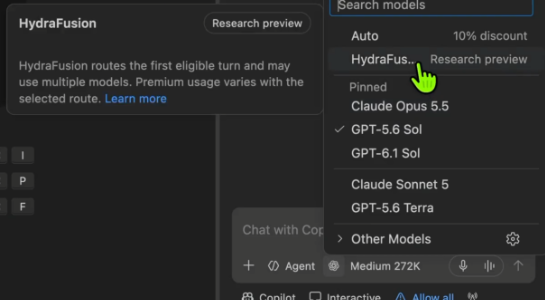
Microsoft shipped HydraFusion as a research preview in Visual Studio Code 1.140, released September 30
Anaconda Inc. launched tools to coordinate groups of AI agents, test their security and move applications into…

A developer published a jq script that reads Claude Code's jsonl conversation logs and sorts each file into re…

In Claude Code, enabling the experimental agent teams feature (via the environment variable CLAUDE_CODE_EXPERI…
Anthropic's Claude Code is an AI coding agent that reads project files, edits code, runs commands and tests, a…
A developer working across Claude Code, Codex and other AI Coding Agents built AX Code, an OSS environment tha…

