
What happened
Katrin Fröhlich, Anne Helm and Luise Helm posted a video saying they will no longer provide their voices because Netflix's contract, in place since January 2026, includes a clause allowing AI training on their voices.
Why it matters
Their viral refusal puts a public face on a contract that the German actors' union BFFS says adds consent safeguards, while some voice actors say it grants free AI training and could erode their long-running roles as the German voices of Hollywood stars.
What to watch
Matti Klemm's lawsuit against Netflix, backed by the Society for Civil Rights, will be filed at the end of the year or in early 2027.
WHO IT HITSGerman voice actors who dub Hollywood stars for streaming platforms face a take-it-or-leave-it contract, while Netflix and other streaming services must weigh German dubbing volume against performer consent demands.
Summaries like this, every morning.
The dispute has been building since January 2026, when Netflix began including the AI clause in the individual contracts voice actors sign ahead of every production. BFFS, the German film and television actors' union, negotiated the terms and argues they close a protection gap: attorney and board member Till Völger said previous contracts and those with other streaming services are silent on AI or contain sweeping AI permissions, and that training can take place in other jurisdictions without the actor's consent at all. From that perspective, the Netflix deal creates a contractual right the law does not provide, even if Völger concedes the situation is not perfect.
Fröhlich and her colleagues see the same clause as a threat to work that has defined their careers. Fröhlich has been the German voice of Cameron Diaz for more than 30 years, and she worries that if Diaz appears in more Netflix projects she will lose the role entirely. Her account of colleagues who hold out for months before signing to pay rent and feed their children illustrates the leverage imbalance: those who don't sign contracts can't work, and streaming companies can make up a significant part of voice actors' income.
The legal front adds a second layer. Matti Klemm, the voice of Jason Momoa and the cartoon elephant Benjamin Blümchen, is taking Netflix to court with the Society for Civil Rights to find out how his voice has been used for training in previous projects. The suit will seek to stop Netflix using his recordings for training, disclose how previous data was used and establish whether Klemm is entitled to any damages; it will be filed at the end of the year or in early 2027. Netflix said it cannot comment on a case that has not yet been filed, and it maintains that human performance is and remains important to it, citing thousands of hours of German dubbing commissioned in recent years.
Pick your industry and the AI tools you use, and get news related to your work every day.
Free · 30 seconds with Google · unsubscribe anytimeWhat is AIToday? →
Ask AI anything about this article. The AI reads this article, earlier AIToday articles, and Wikipedia, and cites its sources. Q&As are published on this page for other readers too.
Kubota will launch Japan's first remotely monitored unmanned autonomous tractor in April next year

Coca-Cola revealed its "Enjoy Joy" holiday campaign, a montage of families set to a reinterpretation of "I'd L…

Lam Research shares rose 15.92% to $212.45, building on a premarket gain of more than 7% as investors bought b…

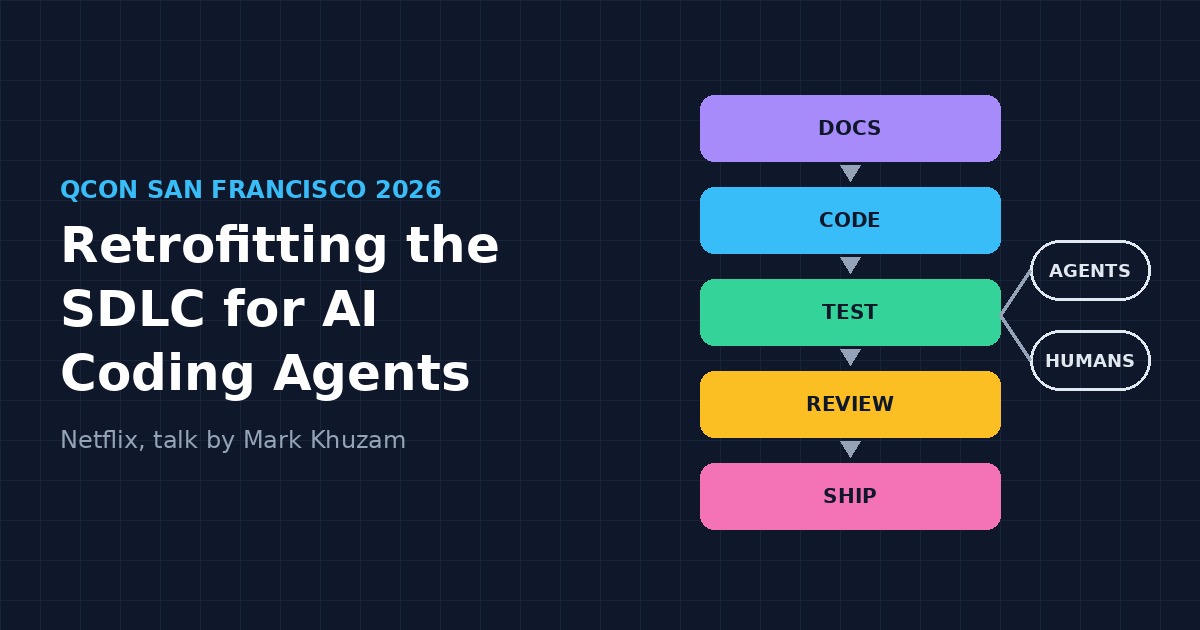
Netflix senior engineer Mark Khuzam told QCon San Francisco 2026 that the Commerce team wrote 45 architecture…
Marvell Technology announced a collaboration with Penguin Solutions pairing Marvell's CXL direct-attach memory…
Lam Research committed US$15 million through the Lam Foundation to expand STEM and AI literacy for youth, incl…