What happened
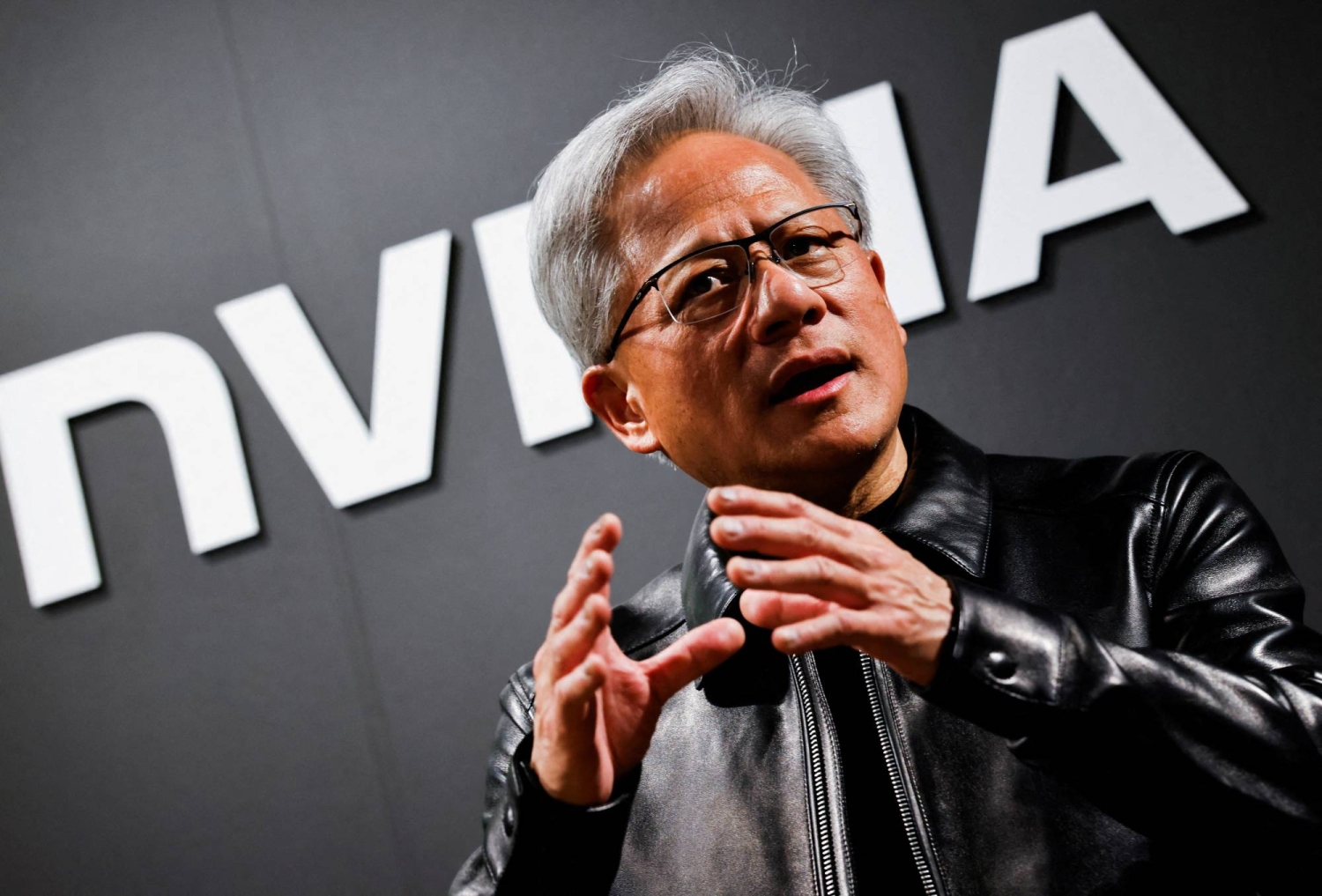
Nvidia CEO Jensen Huang announced Monday that a coalition of six major investment firms — including BlackRock and Goldman Sachs Group — will provide more than $500 billion to fund AI infrastructure. Nvidia's own contribution will be relatively limited and will factor into only some deals, while the group will independently evaluate transactions.
Why it matters
The move is designed to address investor anxiety that had been building for weeks over concerns that Nvidia was inflating an AI asset bubble through circular financing. In less than three weeks before the announcement, a gauge of Nvidia's credit risk had nearly doubled on worries that customer loans, while boosting sales, could create exposure if borrowers fail to repay.
What to watch
The coalition's outside capital, independent deal scrutiny, and Wall Street backing are intended to signal financial discipline and reduce the perception of Nvidia over-extending itself in the AI funding rush.
Summaries like this, in your inbox every morning.
Nvidia has faced mounting investor scrutiny over its role in bankrolling the AI infrastructure boom. The concern, which crystallized over a period of weeks before the announcement, was rooted in a specific risk: as Nvidia extended loans to customers to purchase its chips, the company stood to gain immediate sales revenue but also accumulated potential exposure if those same customers later defaulted. This dynamic — where a chipmaker simultaneously profits from and finances the expansion of its own customer base — raised questions about whether the market was self-reinforcing and unsustainable, rather than grounded in genuine demand.
The new coalition structure is designed to break that perception. By bringing in five other major financial institutions to jointly fund the build-out, the deal distributes both capital and risk across multiple sophisticated investors who will independently assess deals on their merits. This third-party validation and diluted risk exposure signal that the AI infrastructure investment is not solely dependent on Nvidia's judgment or financial health. The market's response — reflected in the narrowing of Nvidia's credit-risk gauge — suggests investors found the reassurance credible.
Pick your industry and the AI tools you use, and get news related to your work every day.
Free · 30 seconds with Google · unsubscribe anytimeWhat is AIToday? →
Ask AI anything about this article. The AI reads this article, earlier AIToday articles, and Wikipedia, and cites its sources. Q&As are published on this page for other readers too.
Supermicro Computer appointed Mark Long as chief financial officer, bringing an experienced technology finance…
Holtek Semiconductor unveiled its 2026 product roadmap on October 15, focusing on four core areas: smart prote…

TSMC reported about NT$763.1b in Q3 net profit and confirmed that demand for advanced processors is running ah…

Nvidia-backed CoreWeave steadied Thursday after a sharp slump, as investors worried about the debt financing b…
Weathernews said on October 15 it implemented its own AI weather-forecasting model, AI-Nowcast, in its Weather…

TOPPAN Holdings and Keio University ran a quantum-computer and generative-AI proof-of-concept from February 1…