What happened
Canva Inc. cut its 2026 revenue-growth forecast from 30% to 20% in August after discovering its AI features cost far more than expected due to reliance on expensive third-party frontier models. The company rebuilt its stack with in-house models and task-level routing, reportedly cutting AI task costs by roughly 90%, with video and image models running 17 and 30 times cheaper than frontier alternatives.
Why it matters
Canva's experience reflects a broader shift in how enterprises measure AI success—not by tokens consumed or model calls made (vendor revenue metrics), but by whether they retain economic value after paying for models, cloud, integration, governance and energy. Uber burned a full year's AI budget in one quarter; Microsoft is reducing Anthropic spending; Lindy switched providers and cut costs while improving performance. The pattern shows that capability can deliver value yet still fail the financial-sovereignty test when costs exceed what the business can absorb.
What to watch
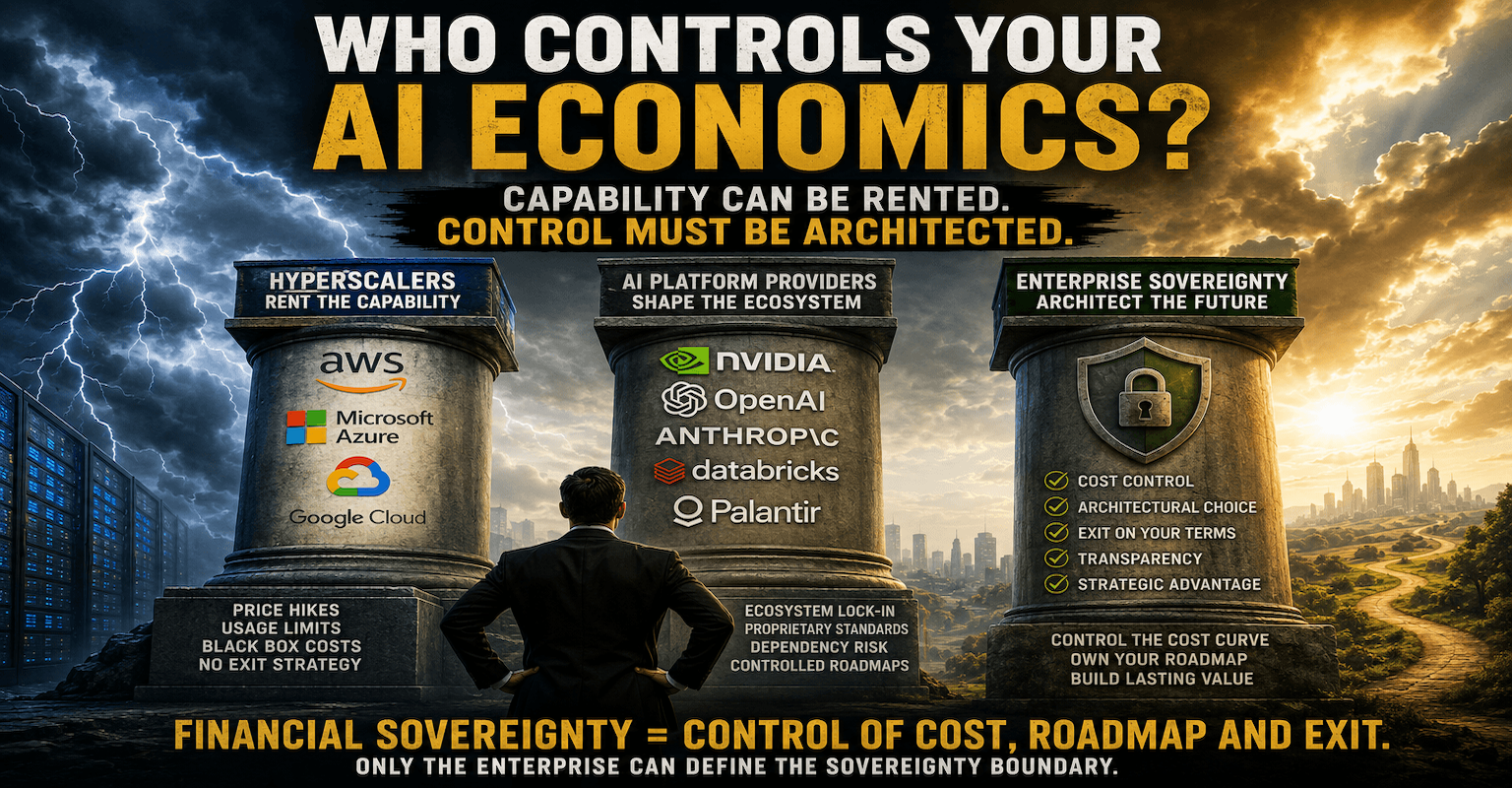
Financial sovereignty—the ability to control and change the economic terms under which AI operates—is emerging as a strategic boundary. Enterprises that control their data, evaluations, routing, cost telemetry and exit paths preserve optionality; those locked into single vendors risk margin compression. The real measure is not lowest cost but predictability: enterprises can afford expensive self-hosted baselines if they know the cost curve and retain the ability to switch or burst to cheaper alternatives.
Summaries like this, in your inbox every morning.
The Canva revenue cut in August marks a turning point in how enterprises evaluate AI adoption. The company generated more than $900 million a quarter and was growing above 25%, yet still had to lower guidance—not because AI failed to deliver value, but because the input cost eroded margins. Canva's fix—rebuilding with in-house models, Leonardo.AI and task-level routing—reveals a pattern emerging across enterprise AI deployments: the real risk is not whether frontier models work, but whether a single vendor's pricing can compress a company's economics faster than the business can adapt.
What distinguishes this moment from other enterprise IT cycles is that the financial pressure is acute and visible. Uber burned through a full year's budget in roughly four months. Microsoft, despite a partnership with Anthropic, has stated openly that it wants to reduce and ultimately eliminate the cost of paying Anthropic. Lindy switched model providers and cut costs while improving performance on core use cases. These are not ideological choices about self-hosting or data residency—they are CFO-driven responses to invoices that arrived sooner and larger than projected.
The article frames this as a sovereignty issue: enterprises that control their data, evaluations, routing and exit paths can respond to cost shocks. Those locked into single vendors cannot. The key insight is that financial sovereignty does not require owning every layer—Swiss organizations using Microsoft's locally hosted services while relying on open models trained domestically illustrate that point. Rather, sovereignty is about intentional control: knowing where dependencies lie, having tested alternatives, and retaining the ability to shift workloads when costs breach the pain threshold. The paradox the article highlights is that self-hosting is expensive, yet enterprises increasingly view the predictability and optionality of a hybrid posture as worth the premium.
Pick your industry and the AI tools you use, and get news related to your work every day.
Free · 30 seconds with Google · unsubscribe anytimeWhat is AIToday? →
Ask AI anything about this article. The AI reads this article, earlier AIToday articles, and Wikipedia, and cites its sources. Q&As are published on this page for other readers too.
ASE reported September revenue of NT$88.13 billion (US$2.7 billion), up 7.15% month-over-month and 45.52% year…
Meta launched two new models, Muse Wonder and Muse Wonder Full, which Zuckerberg said match the latest from Op…

The Trump administration's Super Intelligence Task Force ordered AI companies to report and immediately remedi…

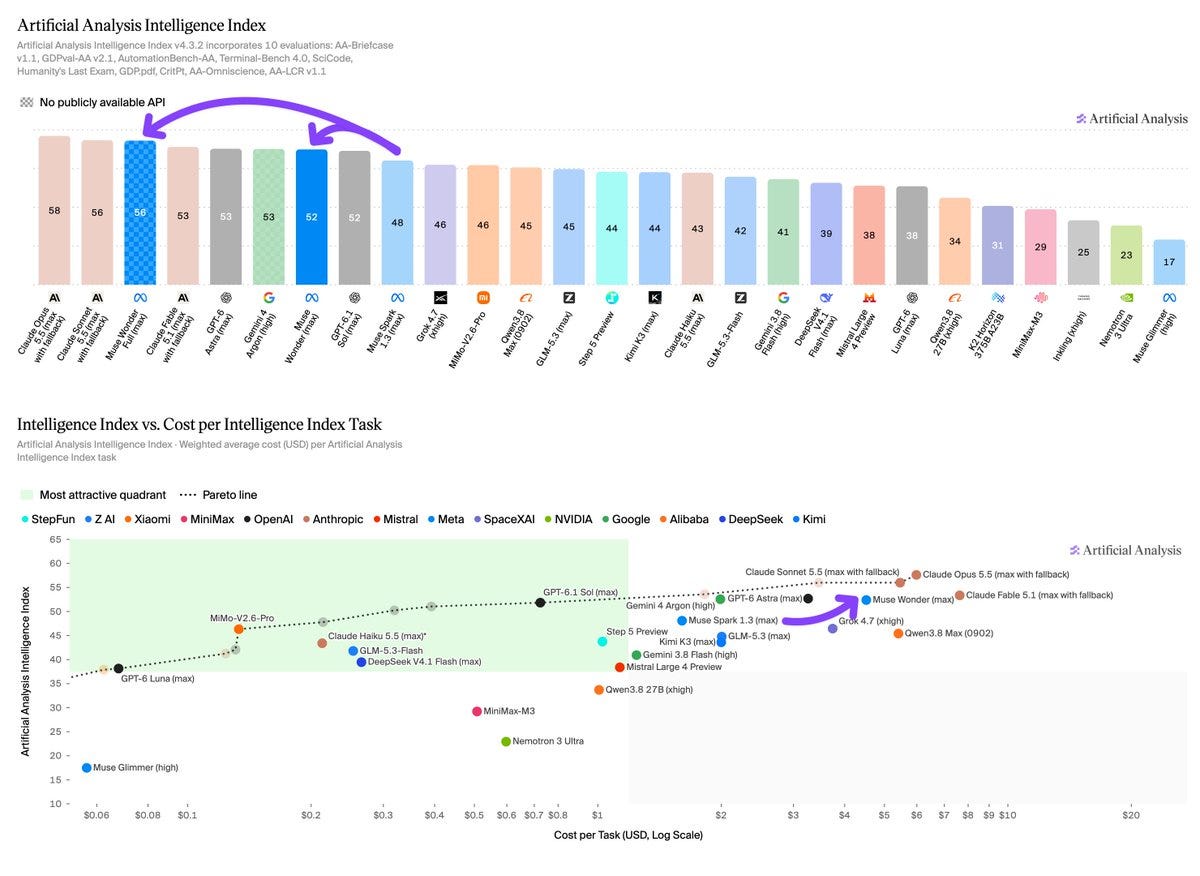
Meta Superintelligence Labs shipped Muse Wonder and Muse Wonder Full, scoring 52 and 56 on Artificial Analysis…
SB Intuitions started free beta service on October 13 for its Sarashinaサービス, opening API access to six Sarashi…

A Japanese explainer published for business readers describes ローカル推論 — running an AI model on a local PC or sm…