
What happened
Researchers from Princeton University, UC San Diego, and other institutions ran 8,135 controlled tests comparing AI agents with and without skills (compact instruction sets for specific tasks). They found that skills help agents succeed mainly by providing a reliable process to follow, not by supplying missing facts—procedural grounding accounted for 65.7 percent of improved performance, while directly supplying knowledge helped in just 4.5 percent of cases.
Why it matters
Skills are a practical way to make AI agents more capable without retraining them, and this study explains the mechanism behind their benefit. However, the research also exposed two key limitations: agents sometimes apply skills mechanically in ways that don't fit the task (10 percent of test cases), and when skill libraries grow from 5 to 100 entries, the ability to retrieve the correct skill drops sharply—from 29.6 percent precision to 3.3 percent.
What to watch
The researchers argue that improving AI agents should focus on more reliable ways to create, retrieve, and apply skills rather than simply storing more experiences. This suggests the next frontier is solving the skill-selection problem, particularly as libraries expand.
Summaries like this, in your inbox every morning.
The study addresses a gap in existing understanding of why skills improve AI agent performance. Until now, researchers had only measured whether agents with skills succeeded more often—the mechanism remained unclear. By running controlled experiments across 8,135 test runs, the team isolated what skills actually contribute: not new facts or knowledge, but a reliable procedural framework. This distinction matters because it reframes how to design and deploy skills effectively.
The research also exposes why skill-based systems don't scale seamlessly. As libraries grow, the problem shifts from capability to retrieval—agents struggle to identify which skill to apply among many options. The sharp drop in precision (from 29.6 to 3.3 percent as the library expands tenfold) suggests that naive skill retrieval will not sustain performance gains at scale. Additionally, the 10 percent error rate where agents apply skills mechanically or inappropriately indicates that matching a skill to a task is itself a non-trivial problem, especially when a task requires a fundamentally different approach than the stored playbooks offer.
Pick your industry and the AI tools you use, and get news related to your work every day.
Free · 30 seconds with Google · unsubscribe anytimeWhat is AIToday? →
Ask AI anything about this article. The AI reads this article, earlier AIToday articles, and Wikipedia, and cites its sources. Q&As are published on this page for other readers too.
ElevenLabs completed a $300 million employee tender at a $22 billion valuation, and co-founder Mati Staniszews…

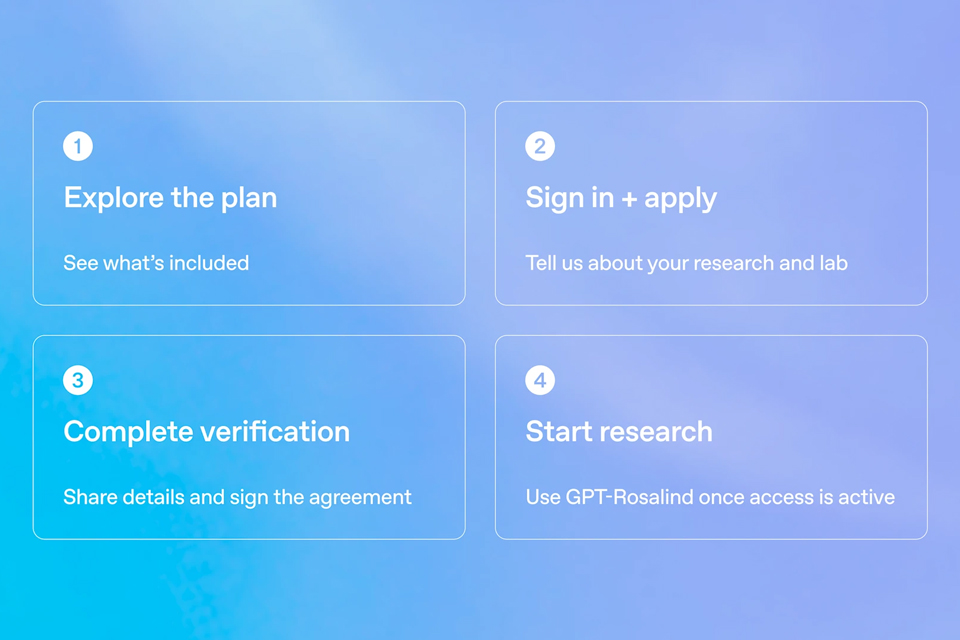
On October 15, OpenAI announced the Rosalind Academic Plan, giving approved US university labs free access to…
A Qiita article compared automated red-teaming methods for LLM apps — GCG, PAIR, and TAP — using mock implemen…

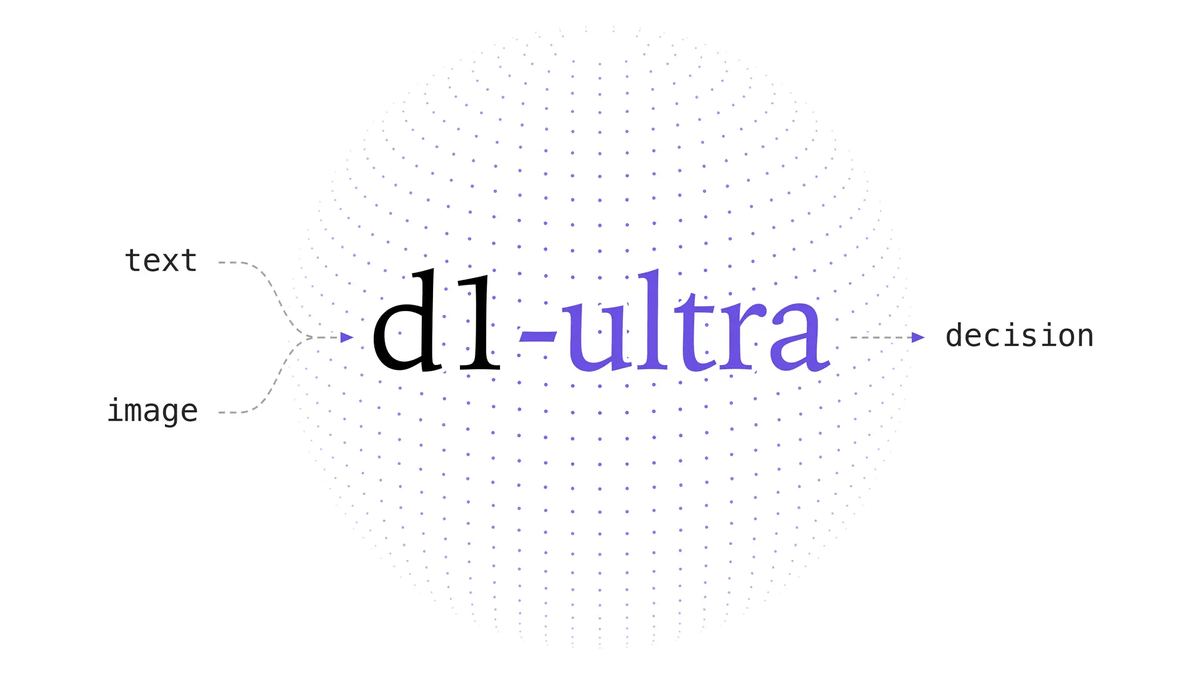
Liquid AI released d1-ultra on October 15, 2026, an upgraded open-weights decision model that averaged 76.7 ac…
Circlia started a proof-of-concept for TASTE SIGNAL: visitors to Holland Village Cafe FUKUOKA taste cookies an…

In a webinar hosted by French Mathematical Society president Isabelle Gallagher, Fields Medal winner Hugo Dumi…

