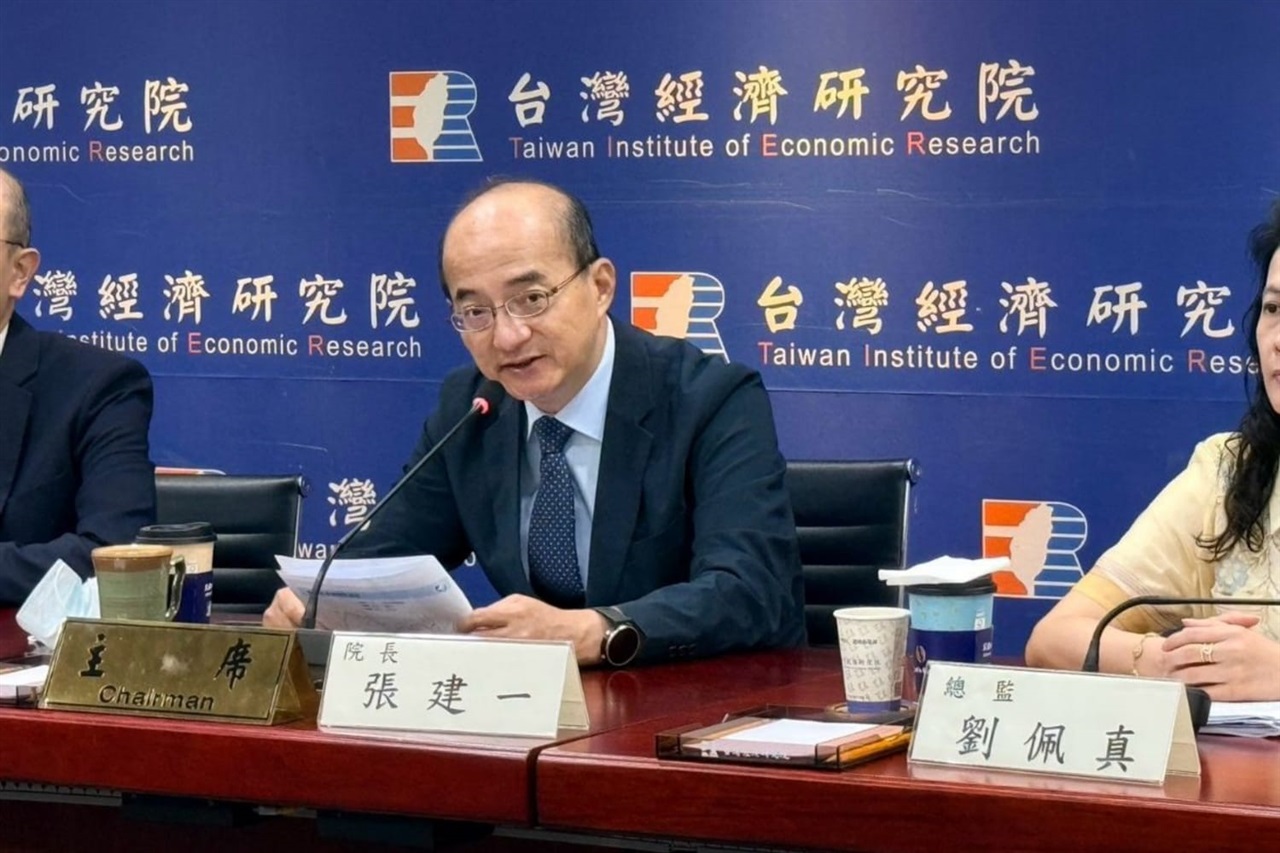
Taiwan's official economic research institute has raised its 2026 GDP growth forecast to 10.38%, reflecting expected strength in the semiconductor sector tied to artificial intelligence demand. At the same time, the institute flagged that the AI investment boom itself poses a major uncertainty for the global economy and financial markets, suggesting confidence in Taiwan's near-term prospects is tempered by concerns about sustainability.
Summaries like this, in your inbox every morning.
Sign up free →What happened
The Taiwan Institute of Economic Research lifted its forecast for Taiwan's 2026 gross domestic product (GDP) growth to 10.38%, citing the artificial intelligence investment boom as a major uncertainty for the global economy and financial markets.
Why it matters
Taiwan is a critical hub for semiconductor manufacturing and chip supply—the foundation of AI infrastructure—so its growth outlook signals confidence in sustained demand for computing hardware. The institute's warning about AI investment risks suggests even optimistic forecasters see potential instability ahead.
What to watch
The timing of this forecast revision and its specific 10.38% figure underscore how tightly Taiwan's economic prospects are now linked to the global AI expansion cycle.
The Taiwan Institute of Economic Research announced an upward revision to its economic outlook, raising the forecast for Taiwan's 2026 gross domestic product (GDP) growth to 10.38%. The revision reflects expectations of sustained strength in Taiwan's semiconductor sector, which stands at the center of the global artificial intelligence infrastructure build-out.
Simultaneously, the institute flagged a critical risk to that outlook: the artificial intelligence investment boom itself has become a major source of uncertainty for the global economy and financial markets. This warning signals that while Taiwan's economy is positioned to benefit significantly from AI-related semiconductor demand in 2026, the underlying investment cycle driving that demand may not be as stable as the growth forecast suggests. The institute's dual message—optimistic on Taiwan's near-term prospects while cautious about the global AI investment trajectory—reflects the tension between robust current demand and questions about the durability of what has become one of the world's largest capital allocation trends.
Taiwan's economy has become deeply intertwined with global artificial intelligence infrastructure investment. The Taiwan Institute of Economic Research's decision to raise its 2026 GDP growth forecast to 10.38% reflects confidence that AI-driven demand for semiconductors will remain robust through next year. Taiwan dominates advanced chip manufacturing, making it the primary beneficiary of the world's capital flowing into AI hardware and infrastructure.
However, the institute's simultaneous warning about AI investment boom risks introduces a counterweight to that optimism. By flagging the AI cycle as a major source of uncertainty for global financial markets, the institute acknowledges that the very growth engine lifting Taiwan's forecast could prove unsustainable or subject to sharp reversals. This dual message—raised growth targets paired with explicit caution about the sector's stability—suggests Taiwan's economy is now riding a wave of exceptional but potentially volatile demand.
AI-summarized, only the topics you pick — one digest a day via Email, Slack, or Discord.
Free · takes 30 seconds · unsubscribe anytime
No comments yet. Be the first to share your thoughts!
Log in to join the discussion



Get curated AI news from 200+ sources delivered daily to your inbox. Free to use.
Get Started FreeFree · takes 30 seconds · unsubscribe anytime
