What happened
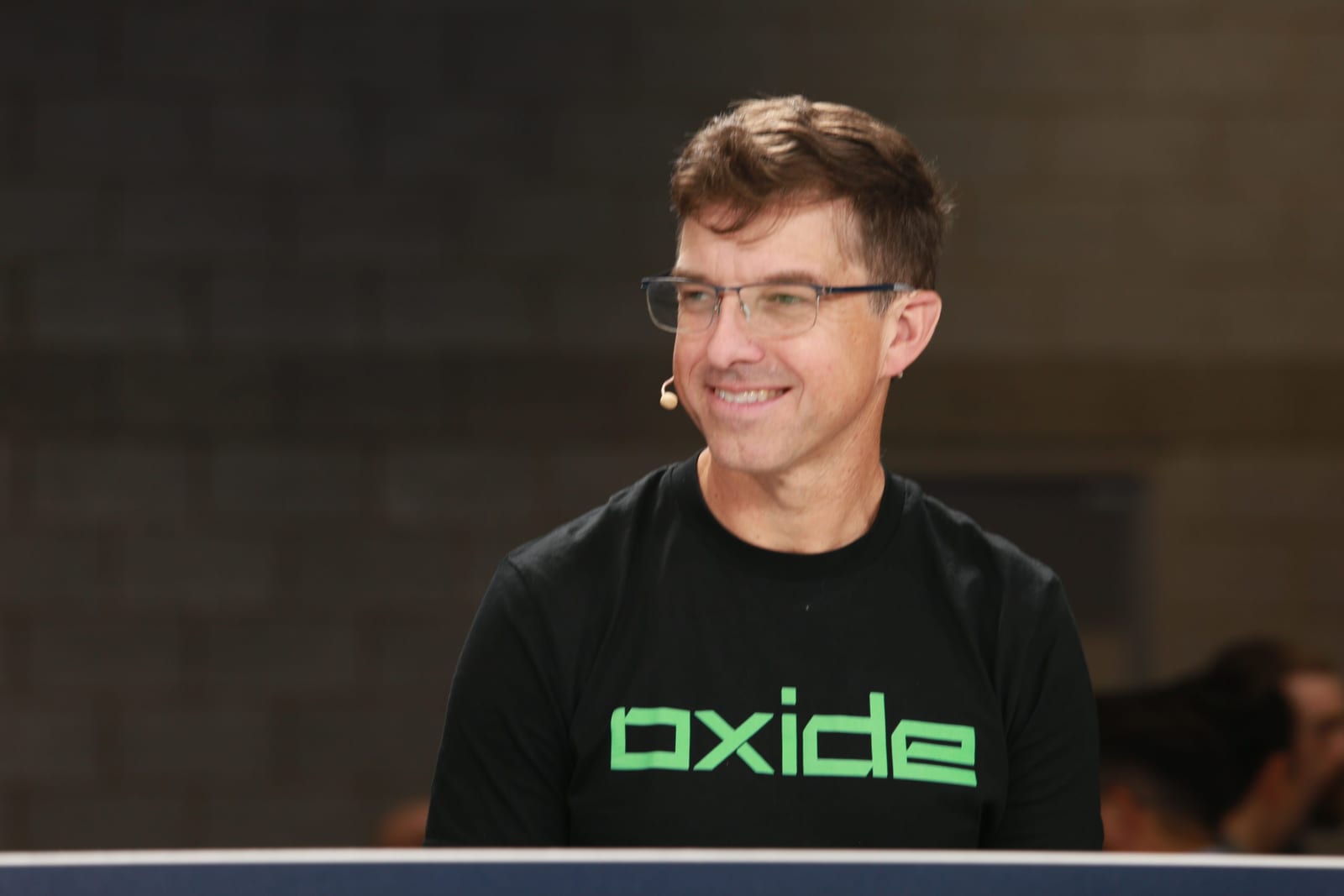
Oxide Computer Co., which raised $445 million in October to expand rack production, built its business on the idea that enterprises at scale will want to own their computers, co-founder and CTO Bryan Cantrill told theCUBE at SC26.
Why it matters
Cantrill said the shift favors companies that designed early for on-premises cloud infrastructure, as agentic AI workloads drive compute demand and enterprises want models on hardware they control.
Summaries like this, every morning.
Oxide Computer’s argument lands as agentic AI workloads drive an explosion in compute demand. Cantrill said economics remains the main reason to bring compute in-house, but where models live is a close second, making the model plane a data governance decision as much as an infrastructure one. He pointed to a real enterprise drive toward open-weight models so data does not leave the premises.
Security is the other half of Oxide’s pitch. The company stripped the UEFI BIOS and baseboard management controller out of its rack to shrink the attack surface and built public cloud-grade multi-tenancy in from the start, which Cantrill said gives enterprises a perimeter for isolating agentic workloads. The same racks can also absorb legacy virtualization workloads from customers reacting to pricing changes at Broadcom’s VMware business, letting enterprises run old and new applications on one general-purpose platform.
Oxide’s October raise of $445 million to expand rack production is a bet that this ownership model scales. Cantrill framed the case around flexibility for economic, security and latency reasons, all inside the customer’s own data center.
Pick your industry and the AI tools you use, and get news related to your work every day.
Free · 30 seconds with Google · unsubscribe anytimeWhat is AIToday? →
Ask AI anything about this article. The AI reads this article, earlier AIToday articles, and Wikipedia, and cites its sources. Q&As are published on this page for other readers too.
OpenAI now requires gateways and routers that provide third-party access to its AI models to be reviewed and a…
Anthropic shares traded as low as $83.15 on Friday, down more than 14% on their second day of trading, leaving…
Running the official harness, Claude Opus 5.5 wrote an ARC model with no gradient descent and no forward calls…
A Zenn article by Hiromi lays out Continuous Reasoning Acquisition (CRA), a design for capturing veteran judgm…
Major US tech companies are refocusing generative AI competition from answer quality toward agent capability…
Trump said at a Friday press conference after his summit with Xi Jinping and Vladimir Putin that companies bui…