What happened
OpenAI's Astra model recently solved 10 longstanding problems in mathematics and theoretical computer science—including quantum game theory and sphere packing in higher dimensions—and published detailed documentation. The company initially claimed no progress had been made on these problems in the last 10 years, though one paper later revealed they had built heavily on work by two prior researchers, a credit OpenAI quietly changed after publication.
Why it matters
These are problems mathematicians genuinely care about and have spent years trying to solve; researchers told The Verge that if a human mathematician had solved any single one, it would likely secure an academic career. The speed of AI's shift from being unable to count letters in "strawberry" to solving professional-level abstract math in just six months to a year has triggered an existential crisis in the field about what mathematicians do and their future role, similar to what software engineering has grappled with for the past five years.
What to watch
The critical unknown is how many problems OpenAI attempted before achieving these 10 solutions—a figure the company knows but has not disclosed. The replicability of this feat and whether the models can solve another 10 remain unanswered, making it unclear whether this represents a sustained capability or a narrow breakthrough.
Summaries like this, in your inbox every morning.
The rapid shift in AI's mathematical capabilities represents a fundamental recalibration of what large language models can do. As recently as 2024, the conventional wisdom was that AI models were particularly bad at math—unable even to count letters in simple words like "strawberry." Yet within six to twelve months, models reached what researchers describe as professional-level performance on problems mathematicians have genuinely cared about and spent years trying to solve. This mirrors a pattern seen earlier in software engineering, where AI moved from being a curiosity to a tool that can handle significant professional work in a compressed timeframe.
The nature of the problems Astra solved offers clues to how this acceleration happened. The breakthrough problems are almost entirely self-contained theoretical puzzles where the work can be verified by running the proof again. There is no need for world knowledge or real-world intelligence; the system can apply horsepower and compute to a well-bounded problem space. This explains why AI excels at abstract mathematics while still being unable to reliably count or tell time—skills that require basic arithmetic or grounding in the external world, not high-level reasoning connections. Meanwhile, the mathematician community has noted that some areas, such as topology, may still be weak points for the models, confirming that the breakthrough is uneven across the discipline.
Pick your industry and the AI tools you use, and get news related to your work every day.
Free · 30 seconds with Google · unsubscribe anytimeWhat is AIToday? →
Ask AI anything about this article. The AI reads this article, earlier AIToday articles, and Wikipedia, and cites its sources. Q&As are published on this page for other readers too.
Amazon introduced Bee Frontier, a wearable personal AI, for $74.99 in Onyx, Lavender and Sage, and Bee Eclipse…

Citi has become the latest US bank to restrict AI agents from accessing accounts, per the Financial Times

Aparna Nair, IBM's chief talent, leadership, and culture officer, said generalists alone "will cut it" in the…

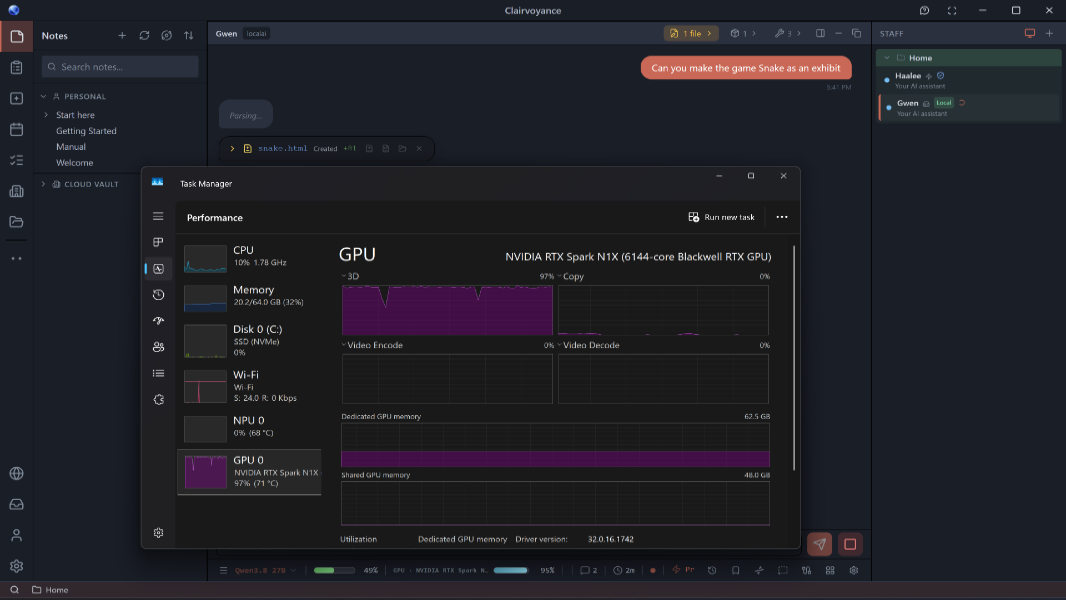
Microsoft and Nvidia are promoting RTX Spark, a new class of Windows PCs for local AI, with a top configuratio…
Dell says its AI Data Platform uses a four-engine architecture and a Unified Semantic Layer to connect siloed…

Microsoft AI CEO Mustafa Suleyman told employees that MAI-Base-2, announced Thursday, is a stronger pre-traine…